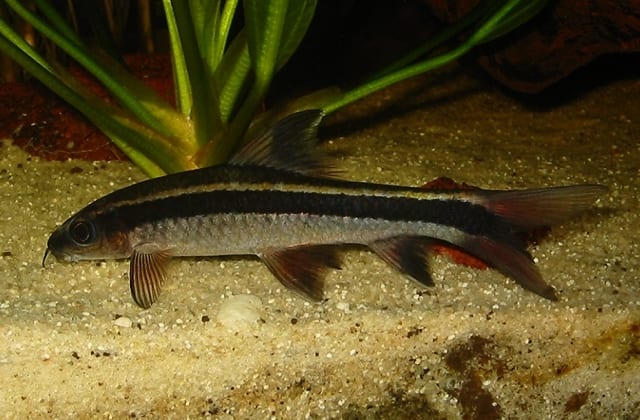
 © Mirko Hartig / CC BY-SA 2.0 de
Flying Fox
The Flying Fox is a bottom-dwelling cyprinid native to Southeast Asia, prized for its golden-brown body marked by a bold black stripe and a gilded line, with fins that fade to white at the tips. Active and streamlined, it spends much of its time patrolling the lower and mid levels of the tank. Juveniles are generally peaceful and can be kept with tankmates, but as they mature they become increasingly territorial, chasing off other Flying Foxes or similarly shaped fish. With a lifespan of 15 years or more and an adult size of up to 16cm, this is a long-term commitment best suited to intermediate keepers who can plan ahead for its space and temperament needs.
View Flying Fox encyclopedia →0% commission on your first sales!Register by September 30, 2026 and your first 2 sales are commission-free!
Breeder Wanted!
List on BreederDirect and sell directly to customers nationwide!
Our 6 Transparency Commitments
All Tropical Fish listings include water quality, temperament, and tank size information from verified Breeder.
- Origin Disclosed
- Real Photos
- Water Quality Disclosed
- Recommended Tank Size
- Temperament Disclosed
- Breed Line Disclosed
Browse all 301 breeds
Water Type
Care Level
No listings match your filters
Adjust your filters, or get notified when new listings arrive.
Getting alerts is free with a member account. When new listings match your saved search, we'll notify you by email and in-app.
Browse other categories
Verified breeders (preview)
Are you raising tropical fish?
Register as a breeder and connect with buyers directly.
Apply as a breederFlying Fox key facts
- Care level
- Intermediate
- Lifespan
- Over 15 years
- Size
- Up to 16cm TL
- Temperature
- 20〜26℃
- Diet
- Sinking dried foods, frozen foods and vegetable matter
- Tank
- Seriously Fish suggests a 120 x 45cm base of about 243 litres and FishBase a minimum tank length of 100cm. Driftwood and rock that give cover and break sight lines help it settle. Prioritise floor area.
- Water Temperature & Quality
- Seriously Fish gives 20-26C, pH 6.0-7.5 and 2-12 dGH, while FishBase records pH 6.5-7.0, 5-8 dH and 24-26C. It prefers soft, acidic to neutral water and a mature, settled tank.
- Tank Mates
- Juveniles hide, but territoriality grows with age and it harries similarly shaped fish. Do not keep it with its own kind or congeners. Loaches of Chromobotia, Botia, Syncrossus and Yasuhikotakia are reported to be left alone.
- Diet & Feeding
- An omnivore taking worms, crustaceans, insects and plant matter. Use sinking dried food as the staple with frozen bloodworm, Artemia and a plant-based food. Its value as an algae grazer is limited.
- Breeding & Spawning
- Adults fight hard, so home breeding is almost unreported, and traded fish come mainly from Southeast Asian farms.
- Health & Notes
- It is easily confused with the similarly shaped Siamese flying fox of the genus Crossocheilus, and buying this species for algae control will disappoint. It can live beyond fifteen years. The IUCN rates it Least Concern and it is not listed by CITES.
About Flying Fox
Flying Fox: a bottom-dwelling cyprinid with a golden-brown body, black stripe, and gold line. An intermediate-level tropical fish that grows territorial with age, living 15+ years and reaching up to 16cm.
7 things to know before welcoming a Flying Fox
1Best Kept Solo
As Flying Foxes mature, they become increasingly territorial and will chase after other Flying Foxes or similarly shaped fish. If you're considering keeping more than one, give them a spacious tank with plenty of hiding spots and visual barriers.
2A Bottom Dweller
This bottom-dwelling cyprinid stays active in the lower and mid levels of the tank. Driftwood and rockwork that create varied terrain help bring out its natural behavior.
3Sensitive to Water Changes
Flying Foxes can be sensitive to sudden shifts in water quality or temperature. Take time to acclimate new arrivals slowly, and avoid abrupt changes during routine maintenance.
4Choose Tankmates Carefully
Juveniles are generally calm, but adults can turn aggressive toward fish of similar shape or coloring, not just their own kind. Fish with a different body shape that occupy the middle or upper water column tend to coexist more peacefully.
5Plan for the Long Haul
With a lifespan of 15 years or more and a maximum size of around 16cm, this is a long-term commitment. Think ahead about tank size and available space before bringing one home.
6A Helpful Algae Grazer
Omnivorous by nature, Flying Foxes will graze on algae, biofilm, and leftover food in the tank. A balanced prepared diet supplemented with occasional plant-based food works well as they grow.
7Watch for Jumping
Startled fish may leap suddenly, so an open-top tank is risky for this species. Keep a tight-fitting lid and seal any gaps to prevent jumping incidents.
Frequently asked questions about Flying Fox
- Q.Is the Flying Fox a good fish for beginners?
- A.The Flying Fox is generally considered better suited to intermediate aquarists. Its water quality needs and the territorial behavior it develops with age call for a bit more attention than many other tropical fish, so some prior keeping experience is helpful.
- Q.Can Flying Foxes be kept with other fish?
- A.Juveniles are fairly peaceful, but adults tend to chase both their own kind and fish of similar body shape. When choosing tankmates, pick fish with a different body shape and provide a spacious tank with plenty of hiding places.
- Q.How big do Flying Foxes get?
- A.They can grow to around 16cm at maximum. Plan for a tank size that will comfortably accommodate an adult before bringing one home.
- Q.How long do Flying Foxes live?
- A.Under good care, they can live 15 years or more. Because of this, it's worth planning for a long-term commitment before getting one.
- Q.Are there any legal restrictions on keeping Flying Foxes?
- A.Flying Foxes are not subject to CITES.
Useful tools for Flying Fox care
Learn more about Flying Fox in the encyclopedia
View Flying Fox encyclopedia entry →
Care difficulty, lifespan, size and diet — all basics covered.
Flying Fox related articles
See more Flying Fox articles →More in this category
Can't find the one you're looking for?
Post your wishes for free and breeders with matching animals will contact you with introductions.