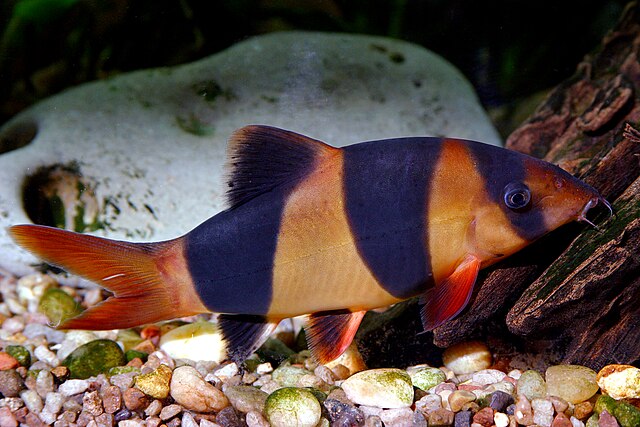
 © Vlad Butsky from San Jose, CA, USA / CC BY 2.0
Clown Loach
The Clown Loach is a striking bottom-dweller known for its bold orange-and-black banding. A member of the loach family, it swims with a distinctive wriggling motion and has an unusual habit of resting on its side at the bottom of the tank. Kept in a group rather than alone, clown loaches become noticeably more active and show more of their natural, playful behavior. They're generally peaceful and mix well with other community fish, though they grow large enough that a spacious tank becomes necessary as they mature. Considered an intermediate-level fish, they reward attentive water quality management and plenty of hiding spots with a long-lasting companionship.
View Clown Loach encyclopedia →0% commission on your first sales!Register by September 30, 2026 and your first 2 sales are commission-free!
Breeder Wanted!
List on BreederDirect and sell directly to customers nationwide!
Our 6 Transparency Commitments
All Tropical Fish listings include water quality, temperament, and tank size information from verified Breeder.
- Origin Disclosed
- Real Photos
- Water Quality Disclosed
- Recommended Tank Size
- Temperament Disclosed
- Breed Line Disclosed
Browse all 301 breeds
Water Type
Care Level
No listings match your filters
Adjust your filters, or get notified when new listings arrive.
Getting alerts is free with a member account. When new listings match your saved search, we'll notify you by email and in-app.
Browse other categories
Verified breeders (preview)
Are you raising tropical fish?
Register as a breeder and connect with buyers directly.
Apply as a breederAbout Clown Loach
The Clown Loach is a striking orange-and-black banded bottom-dweller that thrives in groups and sleeps lying on its side — a popular intermediate-level community fish.
7 things to know before welcoming a Clown Loach
1Keep Them in a Group
Clown loaches tend to hide and stay inactive when kept alone. Housing them in a group lets them display the natural, playful behavior they're known for.
2Sleeping on Its Side Is Normal
Resting on the substrate is a normal behavior unique to clown loaches. New owners are often startled and think the fish has died, but it's nothing to worry about if the fish is otherwise healthy.
3They Grow Quite Large
Adults reach 15 to 30 cm in length. Even if you start with a small juvenile, plan ahead for a tank spacious enough to accommodate its full adult size.
4A Long-Term Companion
With a lifespan of 15 to 25 years, a clown loach can become a long-term member of the household. Think through your long-term care plans before bringing one home.
5Provide Plenty of Hiding Spots
As a bottom-dwelling fish, clown loaches feel more secure with several hiding spots such as driftwood or ceramic tubes. Watching them gradually emerge from cover is part of the fun.
6Sinking Tablets Are the Staple Diet
A diet centered on sinking tablets, supplemented with frozen bloodworms, suits clown loaches well. Since they feed slowly along the bottom, keep an eye on competition from other fish at feeding time.
7Generally Peaceful Tankmates
Clown loaches are generally peaceful and mix well with similarly sized fish. That said, some fish may nip at their fins, so introduce tankmates gradually and watch how they interact.
Frequently asked questions about Clown Loach
- Q.Is the Clown Loach suitable for beginners?
- A.It's generally considered an intermediate-level fish. With basic water quality management, group housing, and adequate tank space, less experienced keepers can still succeed with them.
- Q.Is it sick if it sleeps lying on its side?
- A.No, this is a normal behavior commonly seen in healthy clown loaches. Still, watch for other signs like color changes or loss of appetite that could indicate a problem.
- Q.How many should I keep together?
- A.Keeping several together is recommended over a single fish. A group setting encourages the active, natural behavior clown loaches are known for.
- Q.How big do they eventually get?
- A.Adults reach roughly 15 to 30 cm. Choose your tank size with their full adult size in mind, not just how big they are when you bring them home.
- Q.What should I feed them?
- A.Sinking tablets as a staple, supplemented with frozen bloodworms, work well. They feed slowly along the bottom of the tank.
Useful tools for Clown Loach care
Learn more about Clown Loach in the encyclopedia
View Clown Loach encyclopedia entry →
Care difficulty, lifespan, size and diet — all basics covered.
More in this category
Can't find the one you're looking for?
Post your wishes for free and breeders with matching animals will contact you with introductions.