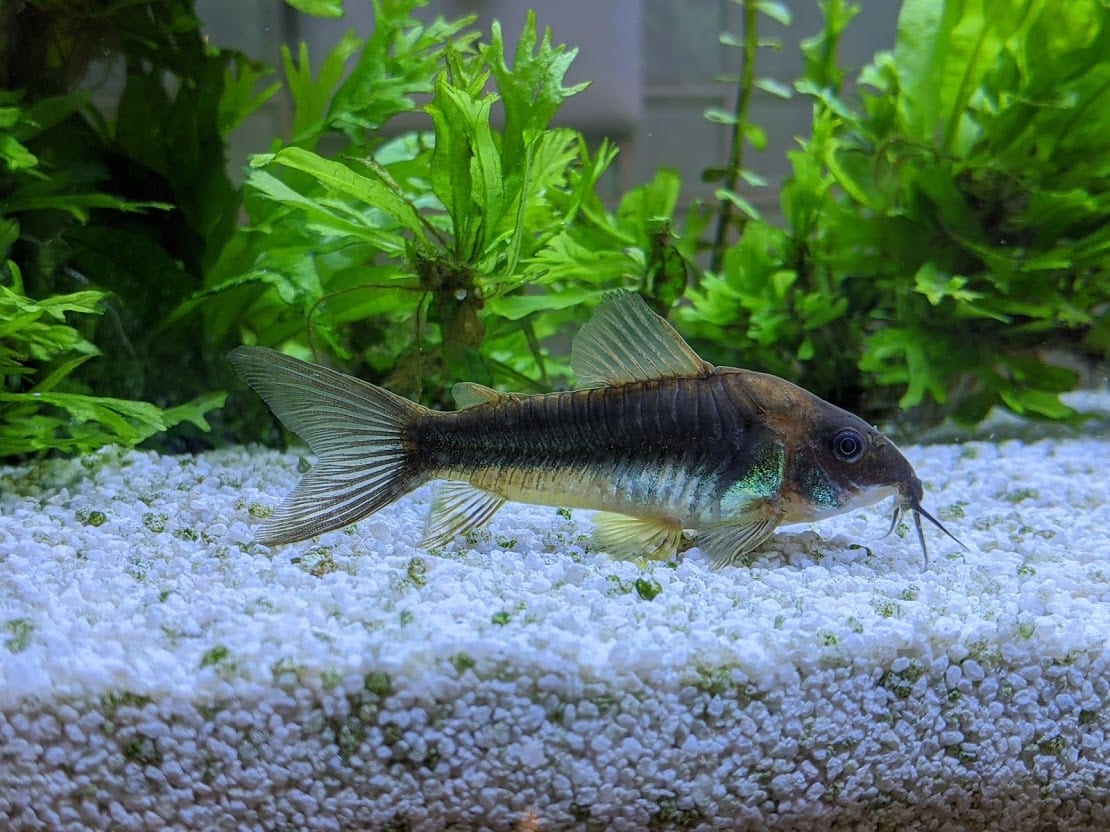
 © Andrew Keller / CC0
Bronze Corydoras
The Bronze Corydoras is one of the most recognizable members of the Corydoras genus, prized for the metallic copper sheen that runs along its flanks and a subtle greenish gloss near the shoulders. Hardy and adaptable to a wide range of water temperatures and pH levels, it's a forgiving choice for anyone new to keeping tropical fish. Corys move in loose groups, foraging along the substrate with an endearing, busy motion that makes them a favorite bottom-dwelling addition to community tanks. Albino and long-finned variants are also widely available, giving keepers more ways to enjoy this classic species.
View Bronze Corydoras encyclopedia →0% commission on your first sales!Register by September 30, 2026 and your first 2 sales are commission-free!
Breeder Wanted!
List on BreederDirect and sell directly to customers nationwide!
Our 6 Transparency Commitments
All Tropical Fish listings include water quality, temperament, and tank size information from verified Breeder.
- Origin Disclosed
- Real Photos
- Water Quality Disclosed
- Recommended Tank Size
- Temperament Disclosed
- Breed Line Disclosed
Browse all 301 breeds
Water Type
Care Level
No listings match your filters
Adjust your filters, or get notified when new listings arrive.
Getting alerts is free with a member account. When new listings match your saved search, we'll notify you by email and in-app.
Browse other categories
Verified breeders (preview)
Are you raising tropical fish?
Register as a breeder and connect with buyers directly.
Apply as a breederBronze Corydoras key facts
- Care level
- Beginner-friendly
- Lifespan
- 5-8 years
- Size
- 6.5-7.5cm
- Temperature
- 21〜27℃
- Diet
- Sinking dried foods, frozen bloodworm, Tubifex
- Tank
- An 80 x 30cm base, about 72 litres, is the guide. Use fine rounded sand to protect the barbels and keep it scrupulously clean. The fish gulps air at the surface, so never block access to it.
- Water Temperature & Quality
- 21-27C, pH 6.0-8.0, 2-15dGH. FishBase records 25-28C, pH 6.0-8.0 and 5-19dH in the wild.
- Tank Mates
- Peaceful and gregarious; keep at least four to six. It mixes well with peaceful small and medium fishes, but not with larger species that will take its food on the bottom.
- Diet & Feeding
- A foraging omnivore. Offer sinking dried food plus frozen bloodworm and Tubifex. It must never be expected to live on leftovers or to clean the tank.
- Breeding & Spawning
- Use two males per female. Once females are gravid, make a 50-70 percent water change with cooler water and raise oxygenation and flow. Eggs are laid on glass, fine-leaved plants or spawning mops.
- Health & Notes
- Assessed Least Concern by the IUCN Red List. Artificially dyed and short-bodied specimens are in circulation; both place a burden on the fish and are best avoided.
About Bronze Corydoras
The Bronze Corydoras (Corydoras aeneus) is a hardy, beginner-friendly catfish prized for its coppery metallic sheen, making a popular bottom-dwelling addition to community tanks.
7 things to know before welcoming a Bronze Corydoras
1Choose Smooth Substrate
Bronze Corydoras use their barbels to sift through the substrate while foraging. Sharp or angular gravel can wear down these sensitive whiskers, so smooth, fine sand or rounded gravel is a safer choice.
2Keep Them in Groups
These catfish are naturally social and do best when kept in a group of several individuals rather than alone. A larger group encourages more natural, confident behavior and reduces stress.
3Offer Sinking Foods
As bottom-dwellers, they may struggle to get enough food from flakes that stay on the surface. Sinking pellets or wafers help ensure they get a fair share without excess leftover food fouling the water.
4Hardy, But Avoid Sudden Changes
While hardy and tolerant of a range of temperatures and pH levels, sudden shifts in water parameters can still cause temporary restlessness. Acclimate them slowly whenever you change the water.
5Peaceful Community Fish
Calm and non-aggressive, Bronze Corydoras rarely bother other fish and mix well with most community tank residents. Since they stick mainly to the bottom, they share space easily with mid- and top-swimming species.
6Surface Trips Are Normal
Occasional dashes to the surface for a gulp of air are a normal part of their intestinal breathing, not a sign of distress. If this happens unusually often, it's worth checking your water quality.
7Albino and Long-Fin Types
Beyond the classic bronze coloring, albino forms and long-finned variants are also available. Choosing which look you prefer is part of the fun before bringing one home.
Frequently asked questions about Bronze Corydoras
- Q.Is this species suitable for beginners?
- A.Yes, Bronze Corydoras are hardy and tolerant of a wide range of water temperatures and pH levels, making them a good choice for first-time tropical fish keepers. That said, they don't love sudden changes in water quality, so acclimate them carefully.
- Q.How many should I keep together?
- A.Since they're naturally social, keeping several individuals together tends to bring out calmer, more natural behavior. Add as many as your tank size can comfortably support.
- Q.Can they live with other tropical fish?
- A.Their calm, non-aggressive temperament makes them easy to mix with most other tropical fish. Because they stay mainly at the bottom, they rarely compete for space with mid- or top-swimming tankmates.
- Q.How big do they grow?
- A.Adults typically reach about 6.5 to 7.5 cm in length. Keep this size in mind when planning your tank layout and choosing tankmates.
- Q.How are albino or long-finned types different?
- A.They share the same care requirements and temperament — the difference is mainly in coloring and fin shape. The classic bronze-colored form is what's typically meant by the "Bronze Corydoras."
Useful tools for Bronze Corydoras care
Learn more about Bronze Corydoras in the encyclopedia
View Bronze Corydoras encyclopedia entry →
Care difficulty, lifespan, size and diet — all basics covered.
More in this category
Can't find the one you're looking for?
Post your wishes for free and breeders with matching animals will contact you with introductions.