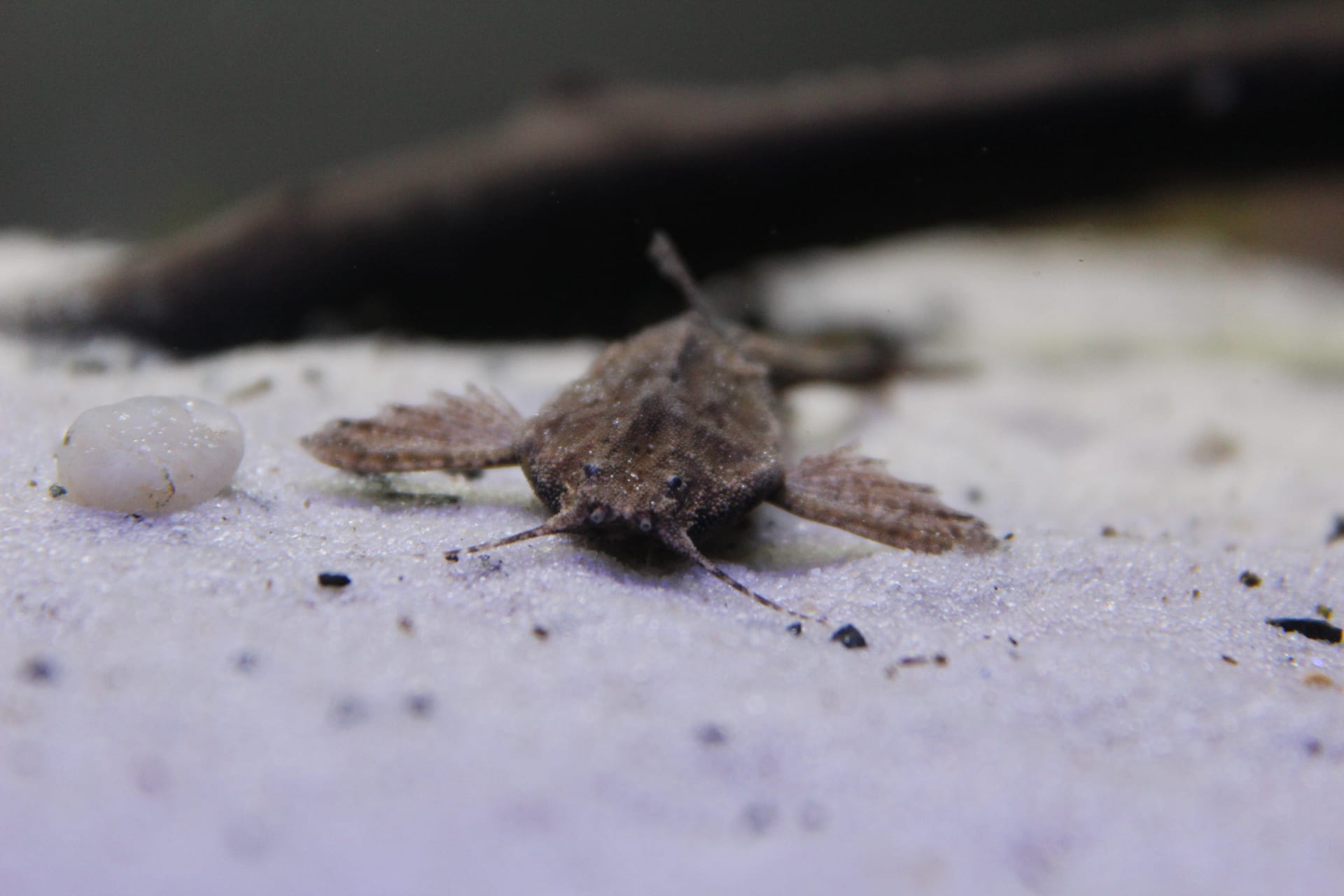
 © Kacper Aleksander / CC BY-SA 4.0
Banjo Catfish
The Banjo Catfish is a small South American catfish known for its flattened, leaf-like body and long, slender tail, an appearance that helps it blend in among fallen leaves on the riverbed. By day it buries itself in the sand and stays almost motionless, only emerging after dark to forage along the bottom, which makes it fascinating to watch as its behavior shifts with the light. Peaceful by nature, it never bothers tankmates and works well in a community setup. A thick layer of fine sand is essential, since the fish needs somewhere soft to burrow into. Its understated coloring and quiet, low-key presence make it a favorite among aquarists who enjoy watching fish at a relaxed pace.
View Banjo Catfish encyclopedia →0% commission on your first sales!Register by September 30, 2026 and your first 2 sales are commission-free!
Breeder Wanted!
List on BreederDirect and sell directly to customers nationwide!
Our 6 Transparency Commitments
All Tropical Fish listings include water quality, temperament, and tank size information from verified Breeder.
- Origin Disclosed
- Real Photos
- Water Quality Disclosed
- Recommended Tank Size
- Temperament Disclosed
- Breed Line Disclosed
Browse all 301 breeds
Water Type
Care Level
No listings match your filters
Adjust your filters, or get notified when new listings arrive.
Getting alerts is free with a member account. When new listings match your saved search, we'll notify you by email and in-app.
Browse other categories
Verified breeders (preview)
Are you raising tropical fish?
Register as a breeder and connect with buyers directly.
Apply as a breederBanjo Catfish key facts
- Care level
- Intermediate
- Lifespan
- 3-6 years
- Size
- 11-15cm
- Temperature
- 20〜27℃
- Diet
- Sinking dried foods, frozen bloodworm, Tubifex
- Tank
- 60 x 38 x 30cm (about 68 litres) or larger. Provide a deep bed of fine, rounded sand so it can bury itself, with driftwood and leaf litter for cover.
- Water Temperature & Quality
- 20-27C, pH 5.8-7.8, 2-20 dGH. Aim for the upper end of the temperature range for a more active fish.
- Tank Mates
- Unaggressive and will not predate on smaller fish. It tolerates conspecifics and is equally content kept singly or in a group.
- Diet & Feeding
- Offer sinking dried foods plus frozen bloodworm and Tubifex just before lights-out. It feeds slowly, so make sure faster tank mates do not take everything first.
- Breeding & Spawning
- Rarely bred in aquaria. Spawning has been reported from groups of at least six mature fish, with eggs hatching in around three days.
- Health & Notes
- Staying buried and out of sight for days on end is normal behaviour. Check now and then at feeding time that it is not losing condition.
About Banjo Catfish
Banjo Catfish care guide: a small South American catfish with a flattened, leaf-mimicking body. It burrows in sand by day and forages at night, and its peaceful temperament suits community tanks.
7 things to know before welcoming a Banjo Catfish
1Fine sand substrate
Banjo Catfish spend their days buried in sand to hide from view. A generous layer of fine-grained sand lets them display this natural behavior and helps keep stress low.
2A nocturnal rhythm
During the day they stay hidden and barely move. Once the lights go down, they become active and start foraging, so evening or after-dark is the best time to watch them.
3Peaceful and community-friendly
This catfish never bothers other fish. Paired with equally calm tankmates, it fits well into a relaxed community tank.
4Provide hiding spots
Beyond burrowing in sand, they also appreciate driftwood and leaf litter to shelter under. Multiple hiding spots help them feel secure during daylight hours.
5Feed them after dark
They eat very little during the day, so offering sinking food around lights-out or at night works best. Choose food that reaches the bottom so it does not go to waste.
6Plan for their adult size
Adults reach roughly 11 to 15 cm in length. Despite their slender shape, choose a tank with enough floor space as well as swimming room.
7Best for intermediate keepers
Because their behavior shifts dramatically between day and night, and feeding timing takes some judgment, this species suits intermediate keepers. Basic water-quality know-how goes a long way.
Frequently asked questions about Banjo Catfish
- Q.They are barely visible during the day, is that normal?
- A.Yes, burying themselves in sand and staying still during the day is completely normal for this species. It is not a sign of illness; they simply become active after dark.
- Q.What fish can they be kept with?
- A.Thanks to their peaceful nature, they pair well with similarly sized, non-aggressive fish. Avoid housing them with aggressive species or fish too small to be safe tankmates.
- Q.What and when should I feed them?
- A.Sinking pellets or frozen food offered around lights-out or at night work well. They eat little during the day, so watch for uneaten food.
- Q.What kind of sand should I use?
- A.Fine-grained sand that will not scratch their bodies is best. A thick layer lets them display their natural burrowing and hiding behavior.
- Q.Is this species subject to any legal restrictions?
- A.The Banjo Catfish is not subject to CITES.
Useful tools for Banjo Catfish care
Learn more about Banjo Catfish in the encyclopedia
View Banjo Catfish encyclopedia entry →
Care difficulty, lifespan, size and diet — all basics covered.
More in this category
Can't find the one you're looking for?
Post your wishes for free and breeders with matching animals will contact you with introductions.