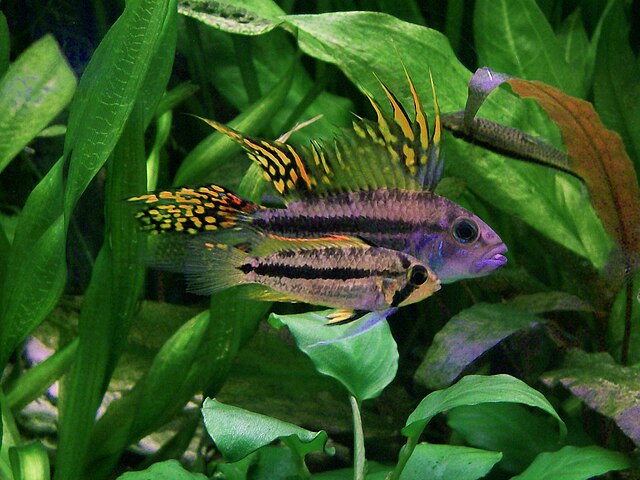
Cockatoo Dwarf Cichlid
The Cockatoo Dwarf Cichlid (Apistogramma cacatuoides) is a small, colorful cichlid native to South America. Mature males develop dramatically elongated dorsal and anal fins, splashed with vivid orange, blue, and yellow. Their signature display, fin-spreading during courtship or territorial standoffs, makes them a favorite among aquarists who enjoy watching natural cichlid behavior up close. They can be somewhat territorial, but given hiding spots and kept as a pair or in a harem setup, they settle into calm, engaging tank residents. Readily accepting frozen and prepared foods, and relatively easy to breed, this species is a popular starting point for hobbyists curious about keeping dwarf cichlids.
View Cockatoo Dwarf Cichlid encyclopedia →0% commission on your first sales!Register by September 30, 2026 and your first 2 sales are commission-free!
Breeder Wanted!
List on BreederDirect and sell directly to customers nationwide!
Our 6 Transparency Commitments
All Tropical Fish listings include water quality, temperament, and tank size information from verified Breeder.
- Origin Disclosed
- Real Photos
- Water Quality Disclosed
- Recommended Tank Size
- Temperament Disclosed
- Breed Line Disclosed
Browse all 301 breeds
Water Type
Care Level
No listings match your filters
Adjust your filters, or get notified when new listings arrive.
Getting alerts is free with a member account. When new listings match your saved search, we'll notify you by email and in-app.
Browse other categories
Verified breeders (preview)
Are you raising tropical fish?
Register as a breeder and connect with buyers directly.
Apply as a breederCockatoo Dwarf Cichlid key facts
- Care level
- Intermediate
- Lifespan
- 3-5 years
- Size
- 5-8cm
- Temperature
- 24〜28℃
- Diet
- Frozen food, Pellets
- Water
- Slightly acidic to neutral (pH 5.5-7.0)
- Water Temperature & Quality
- Maintain 24-28°C. It stays in good condition in soft, slightly acidic to neutral water and is hardy and easy to keep.
- Diet & Feeding
- Readily eats frozen and prepared foods. It takes food easily and is a good entry-level dwarf cichlid.
- Breeding & Egg-laying
- Cave spawner that lays eggs in a dedicated cave or a hole in driftwood. Breeding females are extremely aggressive and chase even the male away from the nest.
- Notes
- Cave-like hides become spawning sites
- Tank Mates & Compatibility
- Polygamous, so a harem setup with one male and several females each holding their own territory works well.
About Cockatoo Dwarf Cichlid
A small South American dwarf cichlid known for its elongated fins, vivid coloring, and fin-spreading courtship display. Lives 3-5 years and grows to 5-8cm, popular with first-time cichlid keepers.
7 things to know before welcoming a Cockatoo Dwarf Cichlid
1Prefers Soft, Slightly Acidic Water
Coming from soft-water regions of South America, this species does best in stable, slightly acidic to neutral water. Sudden swings in water quality can stress the fish, so give extra attention to filter cycling and regular maintenance.
2Provide Plenty of Hiding Spots
Because this cichlid is territorial, the tank should include several hiding spots such as driftwood, clay pipes, or coconut shelters. Breaking up sightlines helps reduce tension between individuals and lets each fish claim its own space.
3One Male, Several Females
Males fight fiercely over territory, so keeping more than one male per tank is not recommended. A common setup is one male with several females, or a single breeding pair.
4Fin-Spreading Displays
Mature males spread their fins wide during courtship or territorial disputes, a display known as fin-spreading. Combined with shifting body colors, it's one of the most distinctive behaviors to watch for in this species.
5Choose Tankmates Carefully
Timid small fish or shrimp fry can become targets of predation or aggression. If keeping tankmates, choose species of similar size and swimming level, and provide ample hiding places before observing how they interact.
6Readily Eats Frozen & Prepared Food
This species readily accepts both frozen and prepared foods, so getting it feeding is usually straightforward. Rotating a few different food types helps provide a more balanced diet.
7Breeding Is Approachable
This cichlid favors clay pipes or unglazed pots as spawning sites, and breeding in a home aquarium is achievable once conditions are right. After hatching, you can often watch the female tending closely to her fry.
Frequently asked questions about Cockatoo Dwarf Cichlid
- Q.Is this species suitable for beginners?
- A.It's generally considered better suited to hobbyists with some prior experience. Water quality management and careful tankmate selection require a bit more attention, so prior experience with small fish or other cichlids is helpful.
- Q.How big a tank do I need?
- A.A single pair can be kept in a tank around 30-45cm. If you're keeping a harem with multiple females or adding plenty of hiding spots, a bit more space is recommended.
- Q.Can it be kept with other fish?
- A.It can often share a tank with calm, mid-to-upper level fish. That said, it's fairly territorial and may attack small fish or shrimp fry, so choose tankmates carefully.
- Q.How long does it live?
- A.Typically around 3 to 5 years. Actual lifespan can vary depending on water quality and daily care.
- Q.What should I feed it?
- A.A diet centered on frozen and prepared foods works well and needs no special live food. Just aim for variety to keep the diet balanced.
Useful tools for Cockatoo Dwarf Cichlid care
Learn more about Cockatoo Dwarf Cichlid in the encyclopedia
View Cockatoo Dwarf Cichlid encyclopedia entry →
Care difficulty, lifespan, size and diet — all basics covered.
More in this category
Can't find the one you're looking for?
Post your wishes for free and breeders with matching animals will contact you with introductions.