Source: Wikimedia Commons
Apistogramma Cacatuoides
IntermediateApistogramma cacatuoides
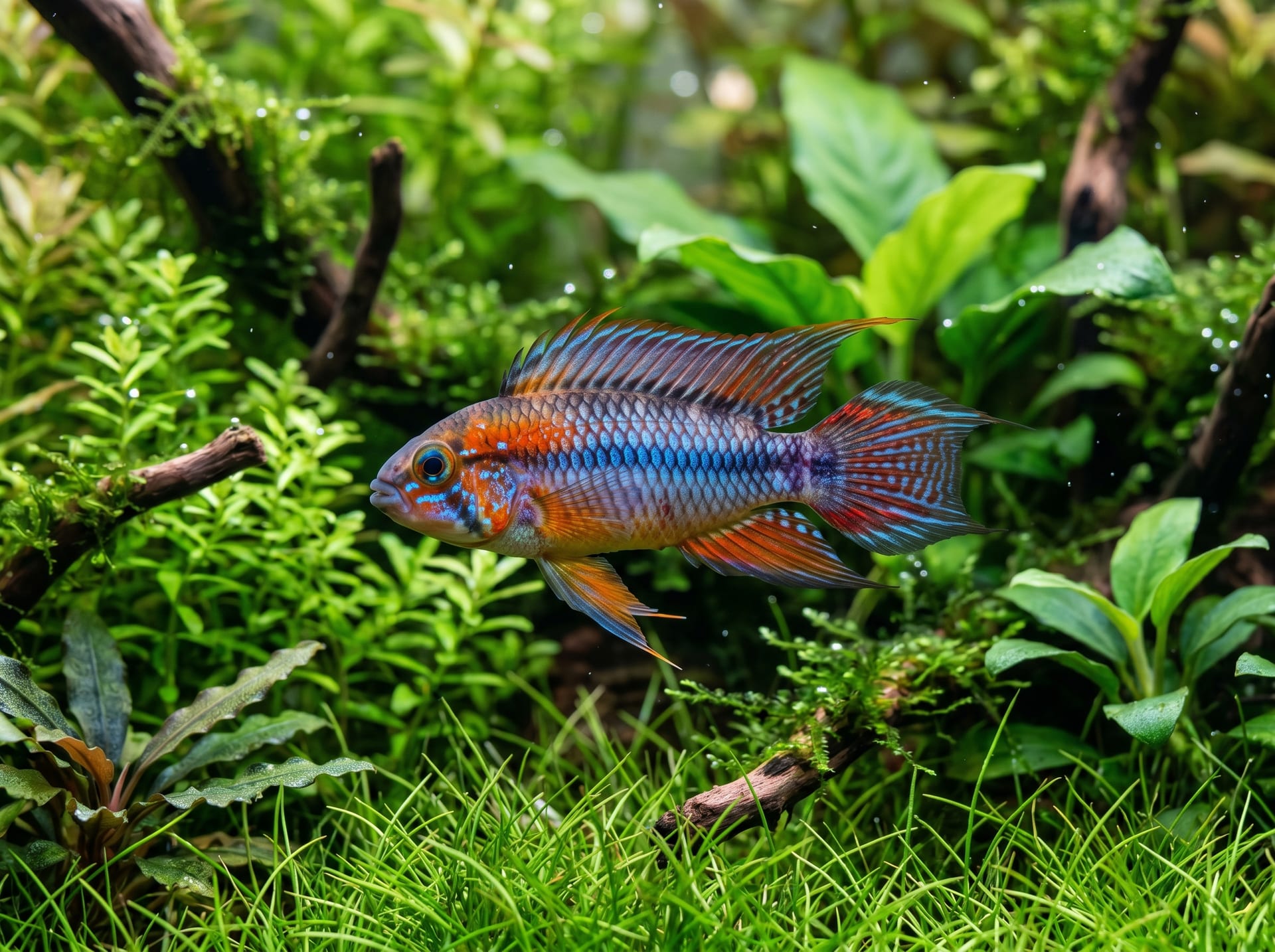
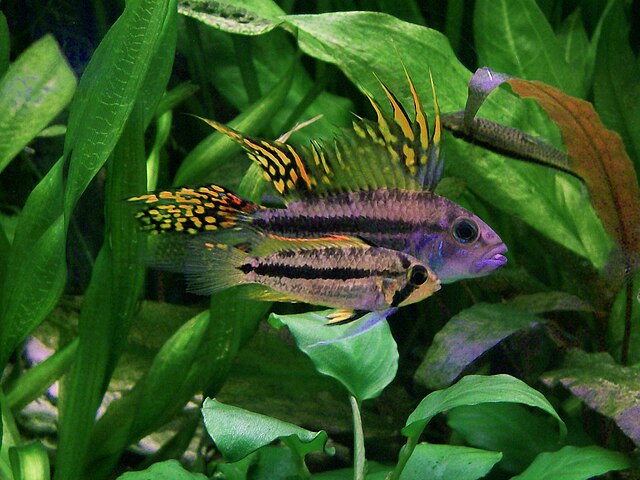
A dwarf cichlid spreading vivid orange fins. Male fin spreading display is spectacular.
Difficulty
Intermediate
Temperature
22〜28℃
Lifespan
3-5 years
Size
5-8cm
Diet
Frozen food, Pellets
About
Apistogramma cacatuoides, the cockatoo dwarf cichlid, is native to the upper Amazon River basin in Peru, Colombia, and Brazil. Males reach 5–8 cm and are renowned for the dramatically elongated anterior rays of the dorsal fin — flaring like the crest of a cockatoo parrot, the namesake feature. During courtship and territorial displays, males spread their vivid red, orange, and yellow fins in a spectacular fan — one of the most dramatic visual displays in dwarf cichlid keeping. Numerous selectively bred varieties are available, including double red, orange flash, and gold forms. Cave-spawning behavior is typical: females deposit eggs in coconut shells or driftwood hollows and defend the territory ferociously — even chasing away the male. The species naturally practices polygyny; harem-style keeping with one male and multiple females in separate territories is a rewarding advanced approach. Among the most accessible Apistogramma species, cacatuoides is often recommended as an entry point into dwarf cichlid breeding.
Lifespan of the Apistogramma Cacatuoides
The Apistogramma Cacatuoides lives 3-5 years.
Size of the Apistogramma Cacatuoides
The Apistogramma Cacatuoides grows to 5-8cm.
Temperature & humidity for the Apistogramma Cacatuoides
The ideal water temperature for the Apistogramma Cacatuoides is 24〜25℃.
Water conditions should be slightly acidic to neutral (pH 5.5–7.0) at 24–28°C in soft water.
Basic Info
Origin
upper Amazon River basin (Peru, Colombia, Brazil)
Care Specifications
References & Sources
Edited & verified by: BreederDirect editorial team
The taxonomic, regulatory, and husbandry data on this page are compiled and verified against the authoritative primary sources below.
Taxonomy & Authority
Regulations & Conservation Status
Not CITES-listed
Sources: FishBase / Seriously Fish / CITES Appendices (Checklist)
Regulations may change. Always verify the latest information with the relevant authorities.
Apistogramma Cacatuoides Listings
Loading latest listingsFind listings for this species