AI-generated image
Ancient Fish (Gar / Butterflyfish)
IntermediateLepisosteus spp. / Pantodon buchholzi
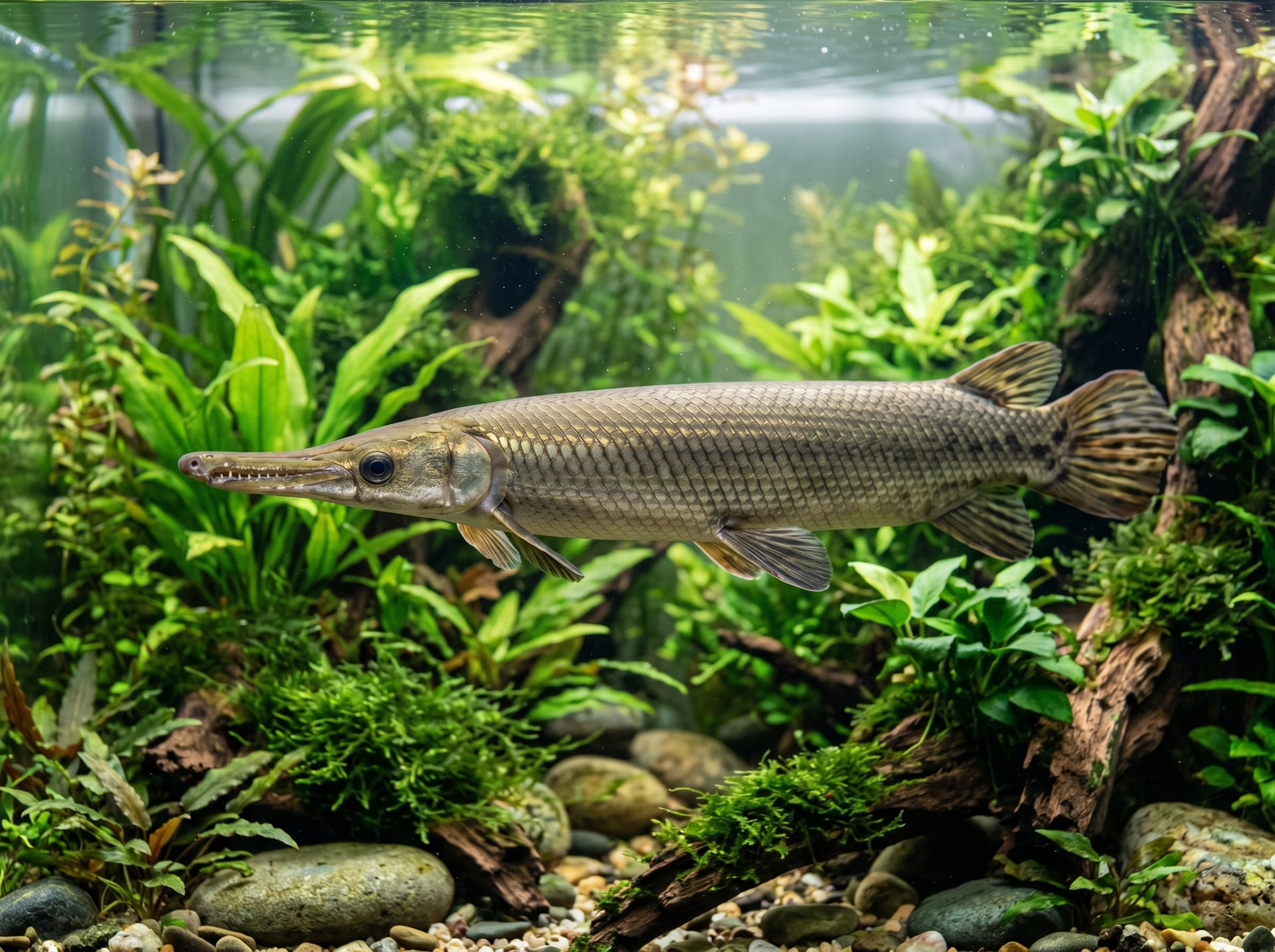
Ancient lineage fish displaying primitive morphology. Gars feature elongated snouts and strong predatory behavior; butterflyfish display surface-feeding habits. Both require spacious tanks to accommodate significant growth and behavioral needs.
Difficulty
Intermediate
Temperature
23〜28℃
Diet
Carnivorous: live foods, frozen foods and pellets for large fish
About
"Ancient fish" is a collective term for primitive freshwater species that have survived for hundreds of millions of years with relatively little change in form; in the aquarium hobby this typically includes gars (Lepisosteus and related genera) and the African butterflyfish (Pantodon buchholzi). Gars, native to North and Central America, have elongated armored bodies, hard ganoid scales, and long crocodile-like snouts, and some species grow large enough to require very spacious tanks. The African butterflyfish, found in West Africa, spreads its large pectoral fins like wings and ambushes prey just beneath the water surface — a striking and unusual behavior. All of these fish are strongly carnivorous, favoring live foods or prepared foods for predatory fish, and care must be taken with tankmates small enough to be eaten. Ancient fish are generally hardy and long-lived, but their adult size, swimming space, and preference for calm surface water (low current, for surface-dwelling species) mean husbandry should be tailored to each species. Slightly acidic to neutral water with good filtration and regular water changes keeps them stable. When acquiring one, confirm the exact species and research its specific temperature, diet, and tank-size requirements individually.
Source: Wikipedia (CC BY-SA 4.0)
Basic Info
Origin
North and Central America (gars) and West Africa (African butterflyfish)
Temperature
23〜28℃
Diet
Carnivorous: live foods, frozen foods and pellets for large fish
Care Guide
Container & Tank
References & Sources
Edited & verified by: BreederDirect editorial team
The taxonomic, regulatory, and husbandry data on this page are compiled and verified against the authoritative primary sources below.
Regulations & Conservation Status
Domestic law: The gar family (Lepisosteidae — all gar species) included in this group has been designated an Invasive Alien Species under Japan's Invasive Alien Species Act since April 2018; keeping, storage, transport, sale and release are prohibited in principle (permit required). The butterfly fish Pantodon buchholzi is not subject to the restriction.
Only the family Lepisosteidae is designated as a specified invasive species. Since this is a composite slug, the invasiveSpecies flag is not set; the scope is limited to a note. CITES status is unrecorded because the species cannot be specified.
Sources: Ministry of the Environment: List of Designated Invasive Species
Regulations may change. Always verify the latest information with the relevant authorities.
Ancient Fish (Gar / Butterflyfish) Listings
Loading latest listingsFind listings for this species