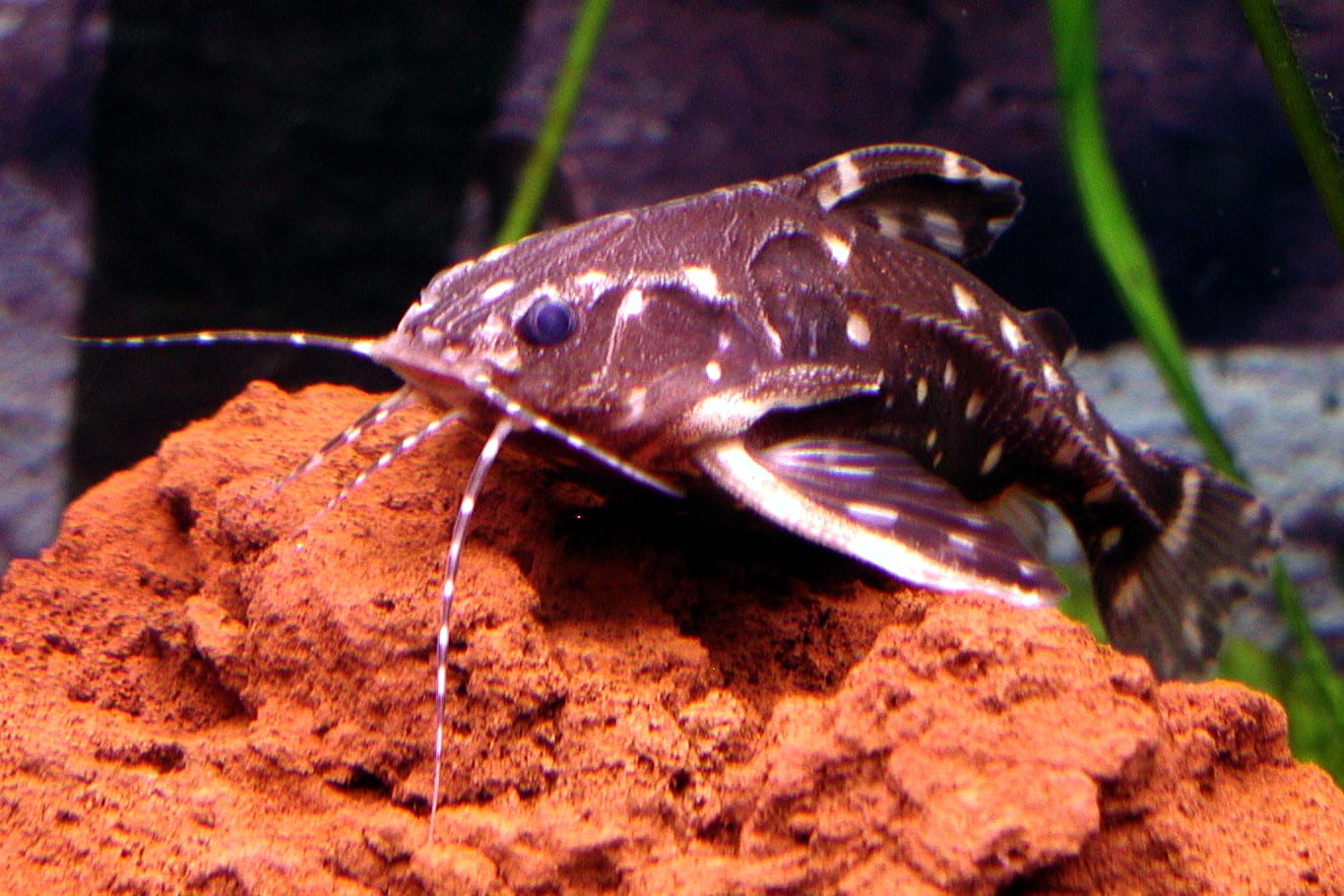
 © Pit one / Public domain
Spotted Raphael Catfish
The Spotted Raphael Catfish is a small South American catfish known for its striking black body covered in white polka dots. During the day it tends to hide away in driftwood or rock crevices, only becoming active and exploring the tank after the lights go out. It's a hardy fish that isn't fussy about food and can tolerate a fairly wide range of water conditions, making it a forgiving choice for anyone new to keeping catfish. While it can be kept alone, housing four or more together tends to make the group bolder, so they're more likely to come out and be seen during the day too. With its playful spotted pattern and habit of peeking out from hiding spots, it's a charming addition to a community tank.
View Spotted Raphael Catfish encyclopedia →0% commission on your first sales!Register by September 30, 2026 and your first 2 sales are commission-free!
Breeder Wanted!
List on BreederDirect and sell directly to customers nationwide!
Our 6 Transparency Commitments
All Tropical Fish listings include water quality, temperament, and tank size information from verified Breeder.
- Origin Disclosed
- Real Photos
- Water Quality Disclosed
- Recommended Tank Size
- Temperament Disclosed
- Breed Line Disclosed
Browse all 301 breeds
Water Type
Care Level
No listings match your filters
Adjust your filters, or get notified when new listings arrive.
Getting alerts is free with a member account. When new listings match your saved search, we'll notify you by email and in-app.
Browse other categories
Verified breeders (preview)
Are you raising tropical fish?
Register as a breeder and connect with buyers directly.
Apply as a breederSpotted Raphael Catfish key facts
- Care level
- Beginner-friendly
- Lifespan
- 6-10 years
- Size
- 15cm
- Temperature
- 22〜26℃
- Diet
- Sinking pellets and tablets, frozen bloodworm, Tubifex
- Tank
- 120 x 30cm (about 108 litres) or larger. Include several pieces of driftwood or pipework as shelter, over a substrate of smooth sand.
- Water Temperature & Quality
- 22-26C, pH 5.5-7.5, 1-20 dGH. It tolerates a wide range, but watch for water quality dropping from uneaten food.
- Tank Mates
- Peaceful and easily combined with medium-sized Amazonian species, although adults may consume very small fry.
- Diet & Feeding
- Base the diet on good quality sinking pellets or tablets, supplemented with frozen bloodworm, Tubifex and earthworms.
- Breeding & Spawning
- There are no reports of breeding in the hobby other than through artificial hormone induction.
- Health & Notes
- The dorsal and pectoral spines are sharp and tangle easily in nets, so move the fish in a container.
About Spotted Raphael Catfish
The Spotted Raphael Catfish is a hardy, nocturnal South American catfish with a striking black-and-white spotted pattern, well suited to beginner aquarists.
7 things to know before welcoming a Spotted Raphael Catfish
1Nocturnal by Nature
This catfish is a nocturnal species that spends most of the daylight hours resting inside driftwood, rock crevices, or shelters. It becomes active once the lights go out, so watching the tank after dark is the best way to see its natural behavior.
2Provide Hiding Spots
Because it's a shy fish by nature, provide multiple hiding places such as driftwood, rock formations, or ceramic tubes. Having enough secure spots to retreat to helps keep stress low and supports its overall health.
3Keep in Groups of 4+
A single fish tends to stay hidden almost all the time, but keeping four or more together seems to make them feel more secure, so they're more likely to come out even during the day. It's worth planning for a tank large enough to house a small group.
4Hardy and Not Picky
This is a hardy fish that can tolerate a fair range of water conditions and isn't fussy about food. It readily eats sinking pellets and a variety of other foods, making it manageable even for someone keeping a catfish for the first time.
5Whiskers Help It Forage
It uses the barbels around its mouth to locate food on the substrate even in the dark. Since it's most active at night, feeding around lights-out or after dark lets you see its natural foraging behavior.
6Handle With Care (Spines)
It has stiff spines on its pectoral and dorsal fins, which can easily snag in aquarium nets. When moving the fish or doing tank maintenance, work slowly and carefully to avoid tangling those spines in the net.
7Plan for Its Adult Size
It grows to around 15 cm in length as an adult, so it's important to plan tank size and hiding space with that eventual size in mind before you bring one home.
Frequently asked questions about Spotted Raphael Catfish
- Q.It barely shows itself during the day—is that normal?
- A.Yes, that's completely normal. As a nocturnal fish, it typically rests in its hideout during the day and becomes active at night. Checking on it after the lights go out is the best way to confirm it's doing well.
- Q.Can it be kept with other tropical fish?
- A.It has a peaceful temperament and generally does well alongside other non-aggressive fish of a similar size. Just be cautious with very small tankmates, as they could potentially be mistaken for food.
- Q.What should I feed it?
- A.Sinking pellets work well as a base diet, and since it's a hardy, non-picky eater it will accept a variety of foods. Feeding at night or around lights-out helps reduce the amount of uneaten food left behind.
- Q.Is it better to keep several together?
- A.It's not required, but keeping four or more together tends to make them bolder, so they come out more often even during the day. If you have the tank space, keeping a small group is a nice option.
- Q.How big does it eventually get?
- A.It grows to about 15 cm in length once fully grown. It's a good idea to plan your tank size and hiding space around that adult size before bringing one home.
Useful tools for Spotted Raphael Catfish care
Learn more about Spotted Raphael Catfish in the encyclopedia
View Spotted Raphael Catfish encyclopedia entry →
Care difficulty, lifespan, size and diet — all basics covered.
More in this category
Can't find the one you're looking for?
Post your wishes for free and breeders with matching animals will contact you with introductions.