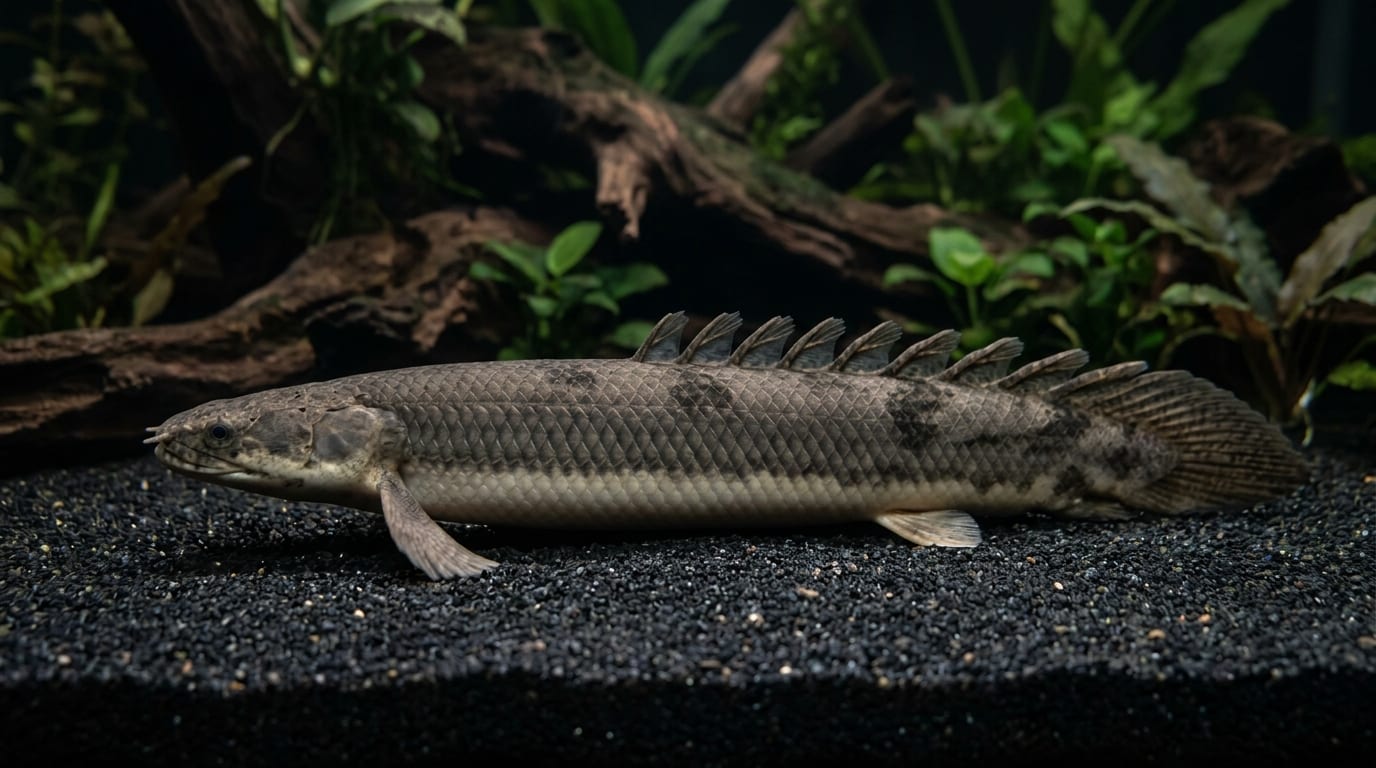
West African Bichir
The West African Bichir (Polypterus retropinnis) is a small member of the ancient Polypterus lineage, its dark brown body patterned with fine speckles. Native to the Ogooué and Congo river systems in Africa, it gets its species name from the way its small dorsal finlets cluster toward the rear of its back. Like other bichirs, it breathes air using a lung-like organ, periodically rising to the surface for a breath — a habit that gives it a distinctly prehistoric feel. Mostly active after dark, it often "walks" along the substrate using its paired fins. Generally calm and easygoing, some individuals grow comfortable enough to approach their keeper at feeding time, making this a rewarding species for hobbyists who enjoy close observation.
View West African Bichir encyclopedia →0% commission on your first sales!Register by September 30, 2026 and your first 2 sales are commission-free!
Breeder Wanted!
List on BreederDirect and sell directly to customers nationwide!
Our 6 Transparency Commitments
All Tropical Fish listings include water quality, temperament, and tank size information from verified Breeder.
- Origin Disclosed
- Real Photos
- Water Quality Disclosed
- Recommended Tank Size
- Temperament Disclosed
- Breed Line Disclosed
Browse all 301 breeds
Water Type
Care Level
No listings match your filters
Adjust your filters, or get notified when new listings arrive.
Getting alerts is free with a member account. When new listings match your saved search, we'll notify you by email and in-app.
Browse other categories
Verified breeders (preview)
Are you raising tropical fish?
Register as a breeder and connect with buyers directly.
Apply as a breederAbout West African Bichir
The West African Bichir is an ancient African fish from the Ogooué and Congo river systems, known for its dark, finely speckled body. This air-breathing, nocturnal species grows up to 34cm and suits intermediate keepers.
7 things to know before welcoming a West African Bichir
1Escape-Proof Your Tank
Bichirs can squeeze through surprisingly narrow gaps and are known escape artists. Use a tight-fitting lid and seal any gaps around filter tubing or cords to keep your fish safely inside.
2Needs Access to the Surface
This species has a lung-like organ and regularly rises to gulp air at the surface. Leave enough space between the water line and the lid so it can breathe comfortably.
3Be Careful Mixing Tankmates
Fish small enough to fit in its mouth may be eaten, so choose tankmates of a similar size or larger. Since it is nocturnal and tends to hide, providing shelter will help it feel secure.
4Nocturnal by Nature
It tends to stay still in hiding spots during the day and becomes active after dark. Provide driftwood or ceramic shelters so it has places to retreat and feel secure.
5Feeding Takes Patience
Individuals may take time to accept prepared foods at first. Start with frozen bloodworms or similar meaty foods, then gradually mix in pellets as it becomes accustomed to feeding.
6Plan for Its Adult Size
This species can reach up to 34cm in standard length, so a tank sized for a juvenile will quickly become too small. Plan ahead for its adult size when choosing an aquarium.
7Can Grow Comfortable With You
While often shy at first, individuals may grow accustomed to their surroundings and approach the front of the tank at feeding time. This species rewards patient, hands-off keeping.
Frequently asked questions about West African Bichir
- Q.Is this fish suitable for beginners?
- A.This species is considered suitable for intermediate keepers rather than beginners. It has bichir-specific care needs, such as escape prevention and water quality management, that benefit from some prior experience.
- Q.How large does it grow?
- A.It can reach up to 34cm in standard length. It's best to choose an aquarium with its adult size in mind from the start.
- Q.Can it live with other fish?
- A.It can be kept with tankmates of a similar size. However, smaller fish that fit in its mouth may be preyed upon, so choose tankmates carefully.
- Q.What does it eat?
- A.It prefers meaty foods, and keepers typically start feeding with items like frozen bloodworms. Once accustomed, it may also accept prepared pellet foods.
- Q.Is this species regulated under CITES?
- A.No, the West African Bichir is not a CITES-listed species.
Useful tools for West African Bichir care
Learn more about West African Bichir in the encyclopedia
View West African Bichir encyclopedia entry →
Care difficulty, lifespan, size and diet — all basics covered.
More in this category
Can't find the one you're looking for?
Post your wishes for free and breeders with matching animals will contact you with introductions.