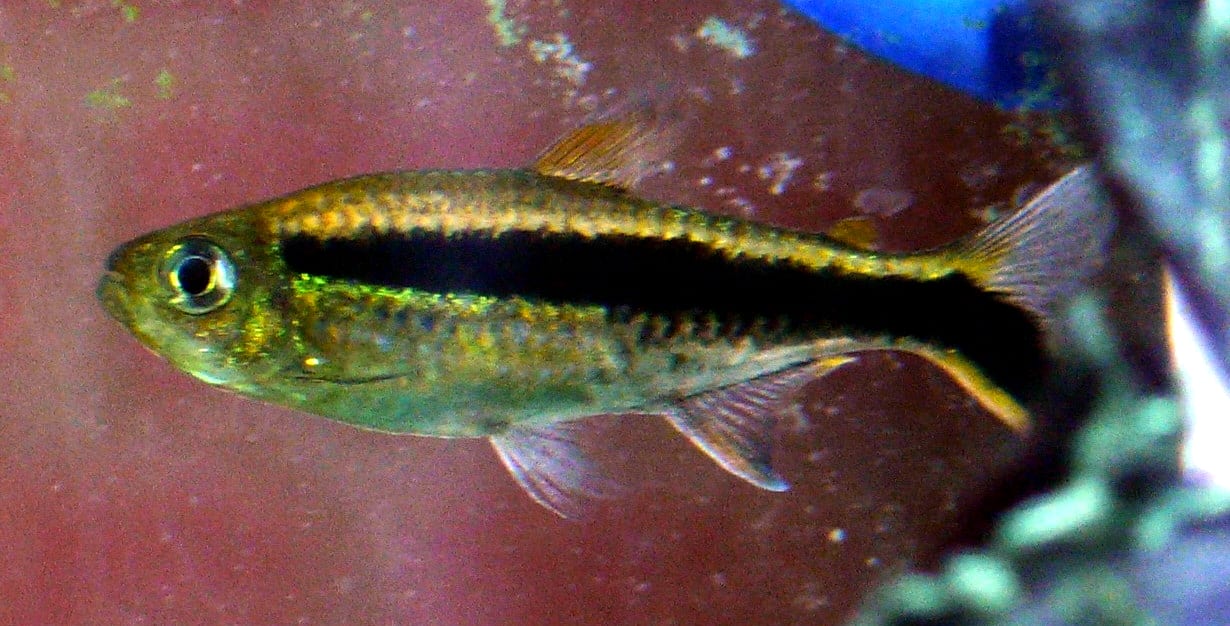
 © Andrew Gray / CC BY-SA 3.0
Penguin Tetra
The Penguin Tetra is a small characin known for its silvery body and the bold black stripe that runs in a straight line from the base of the tail fin to the gill cover. It swims with its head tilted slightly upward, a posture that, combined with its coloring, gives it a penguin-like look and inspired its name. Calm and hardy, it gets along well with other fish and adapts easily to aquarium life, making it a great choice for beginners. Because it's a natural schooling fish, keeping several together lets you enjoy watching them swim as a coordinated group.
View Penguin Tetra encyclopedia →0% commission on your first sales!Register by September 30, 2026 and your first 2 sales are commission-free!
Breeder Wanted!
List on BreederDirect and sell directly to customers nationwide!
Our 6 Transparency Commitments
All Tropical Fish listings include water quality, temperament, and tank size information from verified Breeder.
- Origin Disclosed
- Real Photos
- Water Quality Disclosed
- Recommended Tank Size
- Temperament Disclosed
- Breed Line Disclosed
Browse all 301 breeds
Water Type
Care Level
No listings match your filters
Adjust your filters, or get notified when new listings arrive.
Getting alerts is free with a member account. When new listings match your saved search, we'll notify you by email and in-app.
Browse other categories
Verified breeders (preview)
Are you raising tropical fish?
Register as a breeder and connect with buyers directly.
Apply as a breederPenguin Tetra key facts
- Care level
- Beginner-friendly
- Lifespan
- 3-5 years
- Size
- About 3.6cm SL
- Temperature
- 22〜28℃
- Diet
- Dried foods, frozen bloodworm, Daphnia
- Tank
- Seriously Fish suggests a base of at least 60 by 38cm, about 68 litres. It uses the middle and upper water, so leave open space near the surface, soften the light with floating plants and keep the tank covered against jumping.
- Water Temperature & Quality
- Seriously Fish gives 22-28C and 0-20 dGH; FishBase gives pH 6.0-8.0, 5-19 dH and 22-28C. It is adaptable and farmed fish are undemanding.
- Tank Mates
- Peaceful and suited to small Hemigrammus and Hyphessobrycon tetras, pencilfish, Apistogramma, Corydoras and loricariids. It loses out to boisterous or large fish. Keep six at minimum and preferably ten or more.
- Diet & Feeding
- FishBase records worms, small insects and crustaceans in the wild. It takes dried food readily, and frozen bloodworm and Daphnia improve colour. It is quick to pick food from near the surface.
- Breeding & Spawning
- Breeding is fairly easy. Spawn them in a dimly lit separate tank with fine-leaved plants or a mesh base and remove the adults. FishBase reports a large number of eggs in the aquarium, hatching in about twenty to twenty-four hours.
- Health & Notes
- FishBase lists it as IUCN Least Concern, not on the CITES appendices and harmless to people. It will jump when startled, so a close-fitting lid is needed. It is easily confused with its congener T. obliqua.
About Penguin Tetra
A small characin with a silvery body and a bold black stripe, the Penguin Tetra is calm, hardy, and easy for beginners to keep. Here's what to know before bringing one home.
7 things to know before welcoming a Penguin Tetra
1Best Kept in Groups
Penguin Tetras are natural schoolers. Keeping a small group together lets them display their characteristic synchronized swimming and results in calmer, more natural behavior than keeping just one or two.
2Peaceful and Sociable
This fish is gentle and low in aggression, making it a good tankmate for other small, similarly sized fish. Avoid housing it with boisterous or fin-nipping species, which can cause stress or injury.
3Provide Hiding Spots
Adding plants or driftwood gives the fish places to retreat to, helping shier individuals settle in. A varied layout also makes it easier to watch their natural schooling behavior.
4Watch for Jumping
Penguin Tetras can dart and leap when startled, sometimes jumping clear of the water. A tight-fitting lid is recommended to prevent them from jumping out of an open tank.
5Feed Small Amounts Often
Offering a balanced diet, including some plant-based food, in small portions several times a day helps keep the whole school well-fed and healthy.
6Acclimate Slowly
When introducing them to a new tank, take time to gradually match water temperature and chemistry. This species can be sensitive to sudden changes, so a slow, careful acclimation process is worthwhile.
7Give Them Swimming Room
Adults reach only about 3.6 cm in body length, but as active schooling fish they appreciate plenty of horizontal swimming space to move around freely.
Frequently asked questions about Penguin Tetra
- Q.Is the Penguin Tetra suitable for beginners?
- A.Yes — it's a hardy fish that adapts well to aquarium conditions, and it's generally considered an easy species for beginners. As long as you keep up with basic tank maintenance, it's a manageable fish even for a first-time keeper.
- Q.Can it be kept with other fish?
- A.Its calm temperament makes it a good tankmate for other small, similarly sized fish. It's best to avoid housing it with aggressive or fin-nipping species.
- Q.How many should be kept together?
- A.Since it's a schooling fish, keeping several together rather than just one or two lets it display its natural group-swimming behavior. The right number depends on the size of your tank.
- Q.How big does it get?
- A.Adults reach a standard length of about 3.6 cm, making this a compact species. Its small size means it can be kept comfortably even in a relatively modest tank.
- Q.Are there any legal restrictions on keeping this fish?
- A.The Penguin Tetra is not subject to CITES.
Useful tools for Penguin Tetra care
Learn more about Penguin Tetra in the encyclopedia
View Penguin Tetra encyclopedia entry →
Care difficulty, lifespan, size and diet — all basics covered.
More in this category
Can't find the one you're looking for?
Post your wishes for free and breeders with matching animals will contact you with introductions.