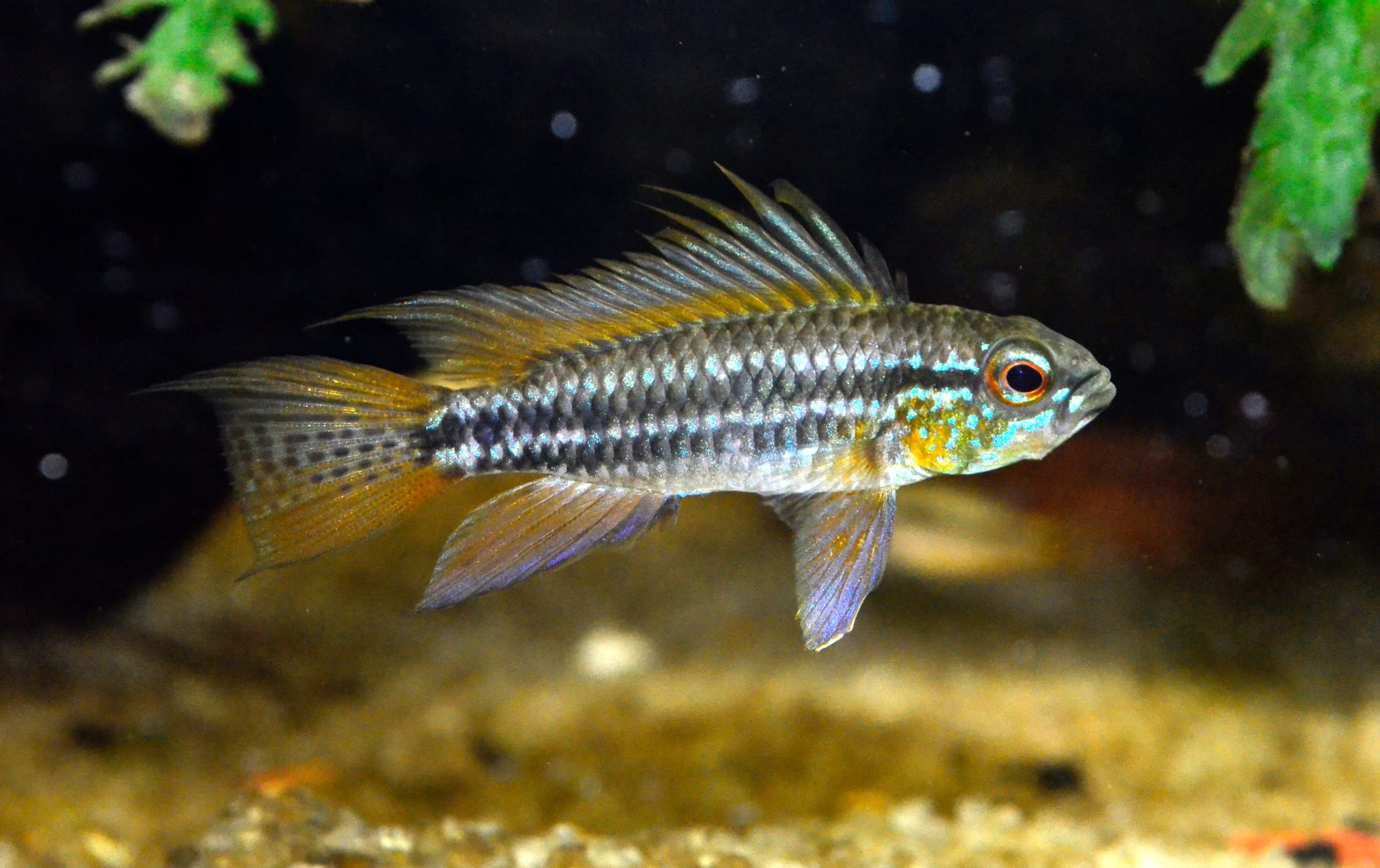
 © Britzke / CC BY-SA 2.0
Banded Dwarf Cichlid
The Apistogramma vitaeniata, known in English as the Banded Dwarf Cichlid, is a small cichlid found only in the blackwater habitats of Peru and neighboring parts of Brazil. Mature males develop gracefully elongated tips on the upper and lower edges of the tail fin, paired with two dark stripes running along the body for a distinctly refined look. Males can be territorial, but with a well-planned aquascape and captive-bred stock, they can be kept solo or introduced to a community tank. Because they thrive in soft, slightly acidic water, they call for some prior experience with water chemistry, placing them among the intermediate-level cichlids. The more time you spend observing them, the more character they reveal, making this a rewarding species for anyone drawn to the world of Apistogramma.
View Banded Dwarf Cichlid encyclopedia →0% commission on your first sales!Register by September 30, 2026 and your first 2 sales are commission-free!
Breeder Wanted!
List on BreederDirect and sell directly to customers nationwide!
Our 6 Transparency Commitments
All Tropical Fish listings include water quality, temperament, and tank size information from verified Breeder.
- Origin Disclosed
- Real Photos
- Water Quality Disclosed
- Recommended Tank Size
- Temperament Disclosed
- Breed Line Disclosed
Browse all 301 breeds
Water Type
Care Level
No listings match your filters
Adjust your filters, or get notified when new listings arrive.
Getting alerts is free with a member account. When new listings match your saved search, we'll notify you by email and in-app.
Browse other categories
Verified breeders (preview)
Are you raising tropical fish?
Register as a breeder and connect with buyers directly.
Apply as a breederBanded Dwarf Cichlid key facts
- Care level
- Intermediate
- Lifespan
- 3-5 years
- Size
- Males about 7.5cm, females about 5.5cm standard length
- Temperature
- 22〜29℃
- Diet
- Live and frozen Artemia, Daphnia and bloodworm, plus prepared foods
- Tank
- A pair can be kept from 60x30cm, about 54 litres, with caves and spawning sites made from driftwood, leaf litter and pipes.
- Water Temperature & Quality
- 22-29C, pH 4.5-7.0 and 0-5 dGH. Coming from blackwater, it does best where driftwood and leaf litter keep the water soft and slightly acidic.
- Tank Mates
- Captive-raised fish suit community tanks. Wild specimens are best alone or with small dither fishes, and should not be mixed with other Apistogramma.
- Diet & Feeding
- Largely carnivorous on benthic invertebrates. Base the diet on live and frozen Artemia, Daphnia and chironomid larvae, with dried foods alongside.
- Breeding & Spawning
- A substrate spawner laying in crevices or cavities. The female guards eggs and fry and becomes aggressive afterwards, so the male may need removing in smaller tanks.
- Health & Notes
- Locality populations are traded under names such as 'Tefe'. Check the labelling so that different localities are not crossed.
About Banded Dwarf Cichlid
A small blackwater cichlid native to Peru and Brazil, the Banded Dwarf Cichlid (Apistogramma vitaeniata) features elongated fin tips and twin dark stripes in males. It favors soft, acidic water and suits intermediate keepers.
7 things to know before welcoming a Banded Dwarf Cichlid
1Recreating Blackwater Conditions
Apistogramma vitaeniata comes exclusively from the blackwater habitats of Peru and neighboring Brazil, so it does best in soft, slightly acidic water. Driftwood and dried leaves can help stabilize pH and mimic its natural environment. Because sudden shifts in water chemistry are stressful for this species, change water gradually and carefully.
2Telling Males from Females
Mature males develop elongated tips on the upper and lower edges of the tail fin, along with two dark stripes running along the body. Females tend to have a rounder, fuller body shape and may show a yellowish breeding coloration. Fin shape is usually the easiest way to tell the sexes apart.
3Territoriality and Hiding Spots
Males tend to establish their own territory, and housing multiple males together often leads to conflict. Providing several visual breaks with driftwood, rocks, or plants gives each fish a place to retreat and helps keep the tank calmer. Captive-bred individuals are generally considered easier to keep in a mixed-species tank.
4Breeding Behavior to Expect
Like many Apistogramma species, paired individuals may show parental care, guarding eggs and fry together. If you're hoping to breed them, small caves such as ceramic pots or tubes can serve as good spawning sites. Territorial behavior tends to intensify during this period, so watch the tank closely.
5Feeding Tips
A mix of prepared foods along with frozen or live foods tends to improve appetite. Some individuals eat lightly, so offering smaller portions more frequently helps prevent leftover food from fouling the water. Varying the diet also supports coloration and overall condition.
6Preparing the Tank Beforehand
Have water conditioners and a substrate such as soil-based aquarium substrate ready in advance to help maintain soft, acidic water. Set up hiding spots like shelters or driftwood before bringing your fish home, and let the water stabilize first. Take your time acclimating them when introducing them to a new tank.
7Everyday Health Checks
Sudden changes in water quality or temperature can affect this species' condition, so keep an eye on fin posture and appetite during daily observation. Clamped fins or unusual hiding can be early signs that water conditions need attention. If symptoms persist, it's a good idea to consult a knowledgeable shop or veterinarian.
Frequently asked questions about Banded Dwarf Cichlid
- Q.Is this fish suitable for beginners?
- A.This species is generally considered better suited to intermediate keepers, so it's a good idea to master basic water quality management first. If you're comfortable maintaining stable, soft, slightly acidic water, it's a rewarding fish to work with.
- Q.Can it be kept with other fish?
- A.Captive-bred individuals are generally considered suitable for community tanks. That said, males tend to be territorial, so providing hiding spots and thoughtful aquascaping is important.
- Q.How can I tell males and females apart?
- A.Mature males develop elongated tips on the tail fin along with two dark stripes along the body. Females tend to have a rounder body shape, making fin shape the easiest way to distinguish the sexes.
- Q.What water conditions does it need?
- A.Aim to recreate the soft, slightly acidic blackwater conditions of its native habitat. Driftwood and dried leaves can help keep the water stable.
- Q.Is this species regulated under CITES?
- A.Apistogramma vitaeniata is not subject to CITES.
Useful tools for Banded Dwarf Cichlid care
Learn more about Banded Dwarf Cichlid in the encyclopedia
View Banded Dwarf Cichlid encyclopedia entry →
Care difficulty, lifespan, size and diet — all basics covered.
More in this category
Can't find the one you're looking for?
Post your wishes for free and breeders with matching animals will contact you with introductions.