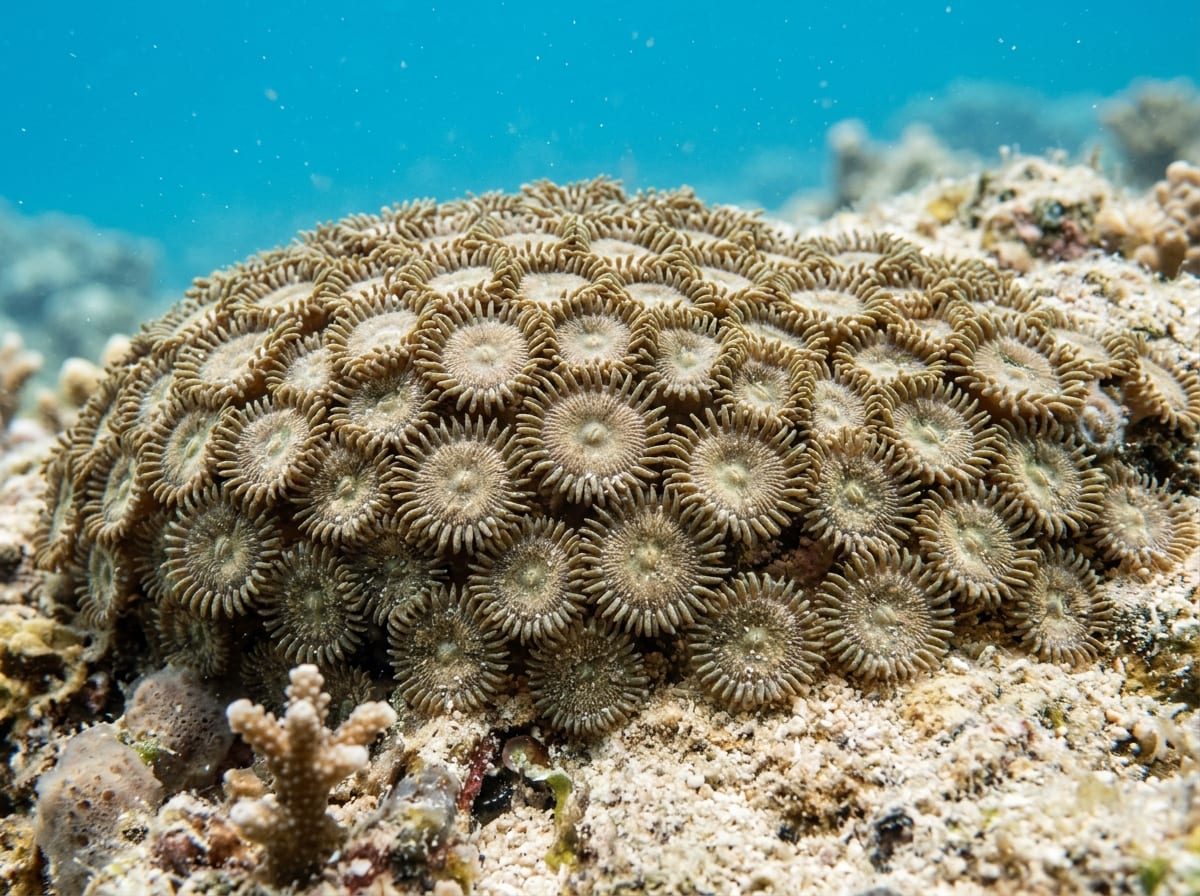
Button Polyp (Palythoa leseuri)
Button Polyp (Palythoa leseuri) is a zoanthid that reinforces its body wall by embedding sand grains, which gives it a distinctive gritty texture. Each polyp measures about 1.5 cm across, and the species can also be found in the shallow waters around Okinawa. Palythoa relatives attach to rock and form colonies, so a healthy group makes a neat carpet of open polyps. Some members of the genus contain palytoxin, a potent toxin, so gloves and eye protection are essential when handling them. It is rated for intermediate keepers, so it suits someone who is already comfortable with basic coral care.
View Button Polyp (Palythoa leseuri) encyclopedia →Breeder Wanted!
List on BreederDirect and sell directly to customers nationwide!
BreederDirect's 6 Transparency Commitments
Our Breeder sellers disclose detailed care specs for all Coral listings. We prioritize Aquacultured/CB specimens, verify WYSIWYG photos, and provide difficulty ratings—avoiding wild-caught.
- Aquacultured
- WYSIWYG Photo
- Difficulty Disclosed
- Frag/Colony
- Care Info Included
- Trade name shown
Browse all 241 breeds
Difficulty
Verified breeders wanted for Coral
Breeders are signing up now ahead of launch. Subscribe to be notified when new listings go live.
Getting alerts is free with a member account. When new listings match your saved search, we'll notify you by email and in-app.
Browse other categories
Verified breeders (preview)
Button Polyp (Palythoa leseuri) key facts
- Care level
- Intermediate
- Size
- Polyps about 1.5 cm wide (Gifu University science teaching database)
- Temperature
- 24〜27℃
- Diet
- Photosynthesis (zooxanthellae) plus feeding
- Lighting
- Most Palythoa host zooxanthellae (paper in PMC). Find a spot bright enough for the polyps to open fully.
- Flow & Placement
- It spreads over rock by its coenenchyme and can overgrow other corals, so place it on a separate rock (SA Health).
- Water Temperature & Quality
- Aim for 24-27°C and salinity 33-35 ppt (SG 1.023-1.025).
- Diet & Feeding
- Beyond photosynthesis, fine frozen food offered while the polyps are open can supplement it.
- Health & Cautions
- Treat it as containing palytoxin. Never handle it bare-handed; wear thick rubber gloves and eye protection and work under water. Avoid breaking, scrubbing or scalding rock, which creates splashes or steam (SA Health).
About Button Polyp (Palythoa leseuri)
Button Polyp (Palythoa leseuri): a sand-encrusted zoanthid with polyps about 1.5 cm wide. Learn its traits, handling precautions, why it suits intermediate keepers, and what to check before you bring one home.
7 things to know before welcoming a Button Polyp (Palythoa leseuri)
1Sand-Covered Body
The defining trait of this species is that it embeds sand grains in its body wall to reinforce itself. Each polyp is about 1.5 cm across, and the sand-covered surface looks quite different from that of smooth-bodied corals. Check the listing photos for how open the polyps are and what the surface looks like.
2Handle With Care
Some members of the genus Palythoa contain palytoxin, a potent toxin. Wear gloves and eye protection when handling them, avoid touching your eyes or mouth, and wash your hands afterward. If you feel unwell after contact, consult a medical professional.
3Rated for Intermediate Keepers
This species is listed as suited to intermediate keepers. Care goes more smoothly if you already have experience with basic water-quality management and lighting for corals. If it would be your first coral, talk to the breeder about care before deciding.
4Light and Water Flow
Because it is found in shallow waters, including around Okinawa, it is best placed where it gets good light and water movement. Avoid putting it straight under strong light; let it adjust gradually. Watch how open the polyps are each day, and reconsider the placement if they stay closed for several days.
5Colonies and Spacing
Palythoa relatives attach to rock and form colonies. Each polyp is small, about 1.5 cm wide, but a colony can spread over time. Leave some space between it and neighboring corals when planning your layout.
6Lifespan Data Is Limited
Little documentation exists on its lifespan, so there is no reliable figure to go by. Rather than counting on a long-term track record, watch and log how each specimen does over time. Photos and notes on how the polyps open and spread make changes easier to spot.
7What to Check Before Buying
In the listing photos, look at whether the polyps are open, whether the body looks badly shrunken, and whether the rock or base it is attached to is stable. It also helps to message the breeder about the conditions and feeding it has been kept under, so you can match its setup after it arrives. Have gloves and eye protection ready before it arrives.
Frequently asked questions about Button Polyp (Palythoa leseuri)
- Q.Can a beginner keep Button Polyp?
- A.It is listed as suited to intermediate keepers, so it is safer to get it once you are comfortable with basic coral care. If you are a beginner, ask the breeder for care tips before deciding.
- Q.I heard it can be toxic. How should I handle it?
- A.Some members of the genus Palythoa contain the potent toxin palytoxin, so wear gloves and eye protection when handling them. Do not touch your eyes or mouth with hands that have been in contact, and wash your hands afterward. If you feel unwell, consult a medical professional.
- Q.How big are the polyps?
- A.According to the Gifu University science teaching materials database, the polyp width is about 1.5 cm. Because it forms colonies, the overall spread varies from one colony to another.
- Q.Where in the tank should I place it?
- A.Since it is found in shallow waters, including around Okinawa, a spot with good light and water movement is the basic choice. Colonies can spread, so leave some distance from neighboring corals.
- Q.How long does it live?
- A.Little documentation exists on its lifespan, so there is no reliable figure to go by. Observe it regularly and keep a record of any changes in its condition.
Useful tools for Button Polyp (Palythoa leseuri) care
Learn more about Button Polyp (Palythoa leseuri) in the encyclopedia
View Button Polyp (Palythoa leseuri) encyclopedia entry →
Care difficulty, lifespan, size and diet — all basics covered.
Button Polyp (Palythoa leseuri) related articles
See more Button Polyp (Palythoa leseuri) articles →More in this category
Can't find the one you're looking for?
Post your wishes for free and breeders with matching animals will contact you with introductions.