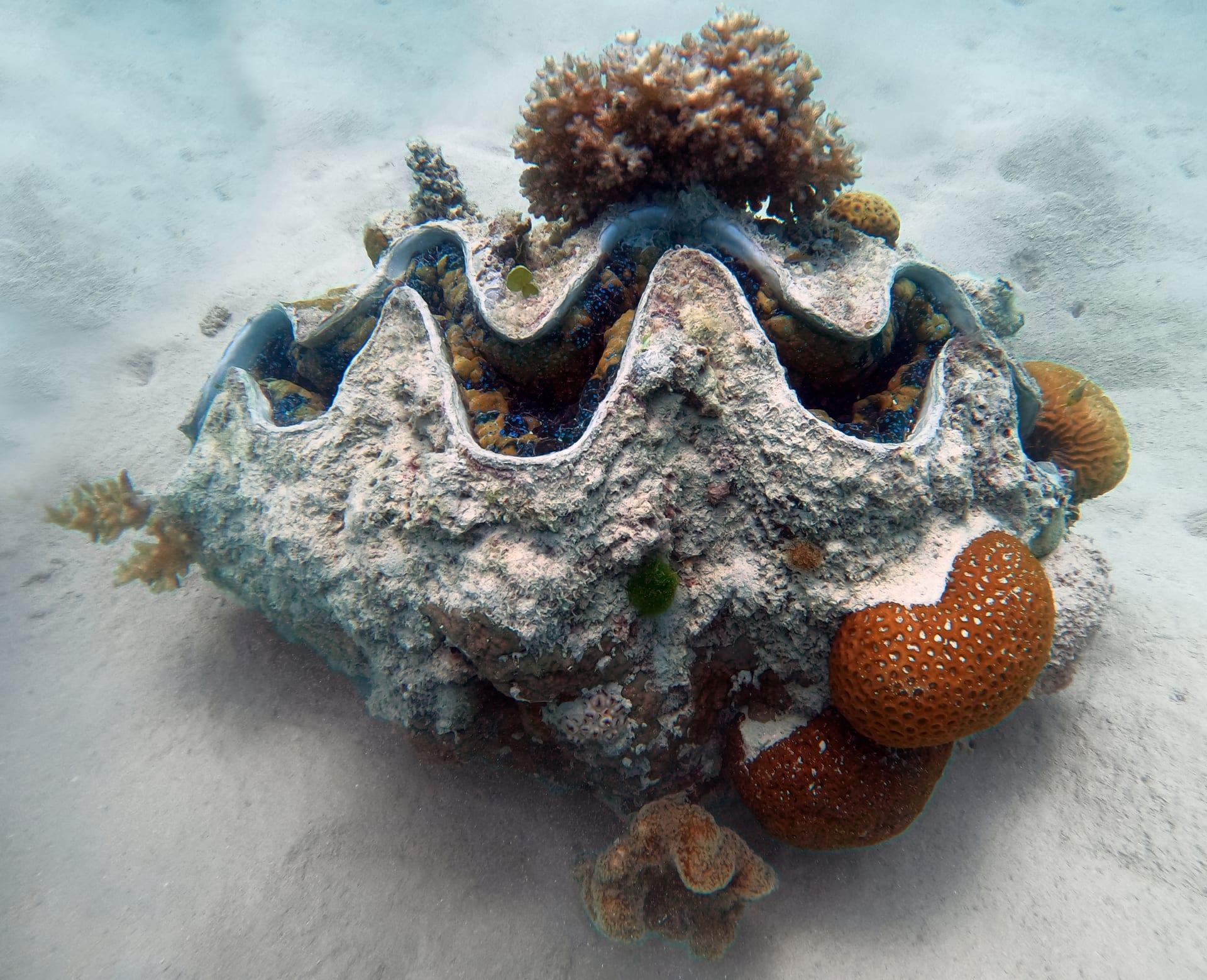
 © Charles J. Sharp / CC BY-SA 4.0
Giant Clam (Tridacna Gigas)
The Giant Clam (Tridacna gigas) is the largest living bivalve, with shells that can reach up to 137 cm across in the wild. Its mantle is a striking canvas of brown and gold, patterned with iridescent blue-green markings — a color show created by symbiotic algae living in its tissue, which brighten under strong light. Content to sit anchored in place, gently drawing water through its shell, it brings a calm, statement presence to a tank. That said, this is an advanced-level species that demands strong lighting and stable water chemistry, and it is also recognized by the IUCN as Critically Endangered (CR), making it a genuinely special animal to keep.
View Giant Clam (Tridacna Gigas) encyclopedia →0% commission on your first sales!Register by September 30, 2026 and your first 2 sales are commission-free!
Breeder Wanted!
List on BreederDirect and sell directly to customers nationwide!
Br-Choku's 6 Transparency Standards
Our Breeder sellers disclose detailed care specs for all Coral listings. We prioritize Aquacultured/CB specimens, verify WYSIWYG photos, and provide difficulty ratings—avoiding wild-caught.
- Aquacultured
- WYSIWYG Photo
- Difficulty Disclosed
- Frag/Colony
- Care Info Included
- Trade name shown
Browse all 210 breeds
Difficulty
Verified breeders wanted for Coral
Breeders are signing up now ahead of launch. Subscribe to be notified when new listings go live.
Getting alerts is free with a member account. When new listings match your saved search, we'll notify you by email and in-app.
Browse other categories
Verified breeders (preview)
Giant Clam (Tridacna Gigas) key facts
- Care level
- Advanced
- Size
- Shell length to 137cm
- Temperature
- 24〜27℃
- Diet
- Mainly photosynthesis by the zooxanthellae in its mantle; small specimens also filter-feed on phytoplankton.
- Lighting
- LiveAquaria lists high lighting. Its mantle area is large and its dependence on photosynthesis correspondingly high, so it needs lighting that covers the whole tank strongly.
- Flow & Placement
- LiveAquaria lists low to medium flow and a bottom-to-middle position. It is heavy, so set it directly on a stable base that will not shift, and allow for its footprint once grown.
- Water Temperature & Quality
- Water 24-27C, specific gravity 1.023-1.025 (33-35 ppt), KH 8-12, calcium 400-450 ppm, magnesium 1280-1350 ppm. Shell growth consumes calcium heavily, so dose and test for it consistently.
- Feeding
- Most of its nutrition comes from photosynthesis by the zooxanthellae in its mantle. Adults need little feeding, but specimens under about 5 cm rely more on filter feeding and benefit from added phytoplankton.
- Notes
- Reaching 137 cm, it cannot realistically be kept for life in an aquarium. The IUCN lists it as Critically Endangered, and as a member of the Tridacnidae it falls under the blanket CITES Appendix II listing; trade requires permits and is limited to cultured specimens. A mantle that will not open, retracted edges, or no response to light all signal trouble. Severing the byssus is usually fatal, so never force a clam off the rock it has attached to. Check at night for parasitic pyramidellid snails around the shell gape and remove them.
About Giant Clam (Tridacna Gigas)
An introduction to the Giant Clam (Tridacna gigas), the world's largest living bivalve — its striking blue-green mantle patterns, advanced-level care requirements, and status as an IUCN Critically Endangered species.
7 things to know before welcoming a Giant Clam (Tridacna Gigas)
1Strong Lighting Is Essential
The mantle hosts symbiotic algae that photosynthesize and supply much of the clam's nutrition. Without reef-grade lighting comparable to what corals need, it's difficult to keep one healthy long-term.
2Best Suited to a Mature Reef Tank
It needs the same calcium and alkalinity management as a coral reef system. It's best introduced into a well-established tank with stable parameters rather than a newly set-up one.
3Growth in a Tank Is Slow and Limited
In the wild, shells can reach up to 137 cm, but reaching that size under home aquarium conditions isn't realistic. It's common for growth to stay modest compared with the size at which it was acquired.
4Avoid Moving It Once Settled
It anchors itself firmly to live rock with byssal threads and tends to stay in one spot. Moving a settled clam around repeatedly can stress it, so it's worth planning its placement carefully from the start.
5Watch for Tankmates That Nip the Mantle
Some fish and crustaceans have a habit of picking at the mantle, which can injure it. It's worth checking the temperament of potential tankmates before adding them to the same tank.
6Provide Good Flow and Room to Sit
Moderate water flow helps it extend its mantle fully. Give it enough surrounding space, keeping its eventual size in mind when choosing a spot.
7A Species Recognized as Critically Endangered
The species is classified as Critically Endangered (CR) by the IUCN. Bringing one home means understanding that rarity and committing to long-term, attentive care.
Frequently asked questions about Giant Clam (Tridacna Gigas)
- Q.Will it grow as large in a tank as in the wild?
- A.In the wild, shells can reach up to 137 cm, but growing one that large in a home aquarium isn't realistic. How much it grows also depends heavily on the tank environment.
- Q.What do I need to feed it?
- A.Since the symbiotic algae in its mantle produce most of its nutrition through photosynthesis, feeding needs are minimal as long as lighting is strong. Care mainly centers on maintaining good water quality and light.
- Q.Can a beginner keep this species?
- A.This is considered an advanced-level species that requires stable water quality management and strong lighting. It's best approached after gaining experience keeping corals or marine fish.
- Q.Can it be kept alongside fish and corals?
- A.It can generally live alongside other reef tank inhabitants, but should not be combined with species known to nip at the mantle. Review the full stocking plan of the tank before adding one.
- Q.Is it best not to move it once placed?
- A.Because it anchors to rock with byssal threads, moving it frequently causes stress. Choose its placement carefully at the start and keep it in the same spot going forward.
Useful tools for Giant Clam (Tridacna Gigas) care
Learn more about Giant Clam (Tridacna Gigas) in the encyclopedia
View Giant Clam (Tridacna Gigas) encyclopedia entry →
Care difficulty, lifespan, size and diet — all basics covered.
Giant Clam (Tridacna Gigas) related articles
Giant Clam (Tridacna) Breeding and Spawning Induction Guide | Spat Rearing and Legal Regulations
A comprehensive guide to spawning induction (temperature cycling method), fertilization and larval settlement mechanics, spat rearing after metamorphosis (microalgae and zooxanthellae establishment), and CITES regulations in Japan—essential knowledge for successful captive breeding of giant clams.
Giant Clam (Tridacna) Care Guide | Light Intensity, Water Flow, and Water Quality Management
A comprehensive guide to caring for Giant Clams (Tridacna) with beautiful mantles. We introduce the characteristics of representative species such as Maxima Clams and Fluted Giant Clams, necessary light intensity, water quality, attachment methods to substrate, and tips for long-term care in detail.
More in this category
Can't find the one you're looking for?
Post your wishes for free and breeders with matching animals will contact you with introductions.