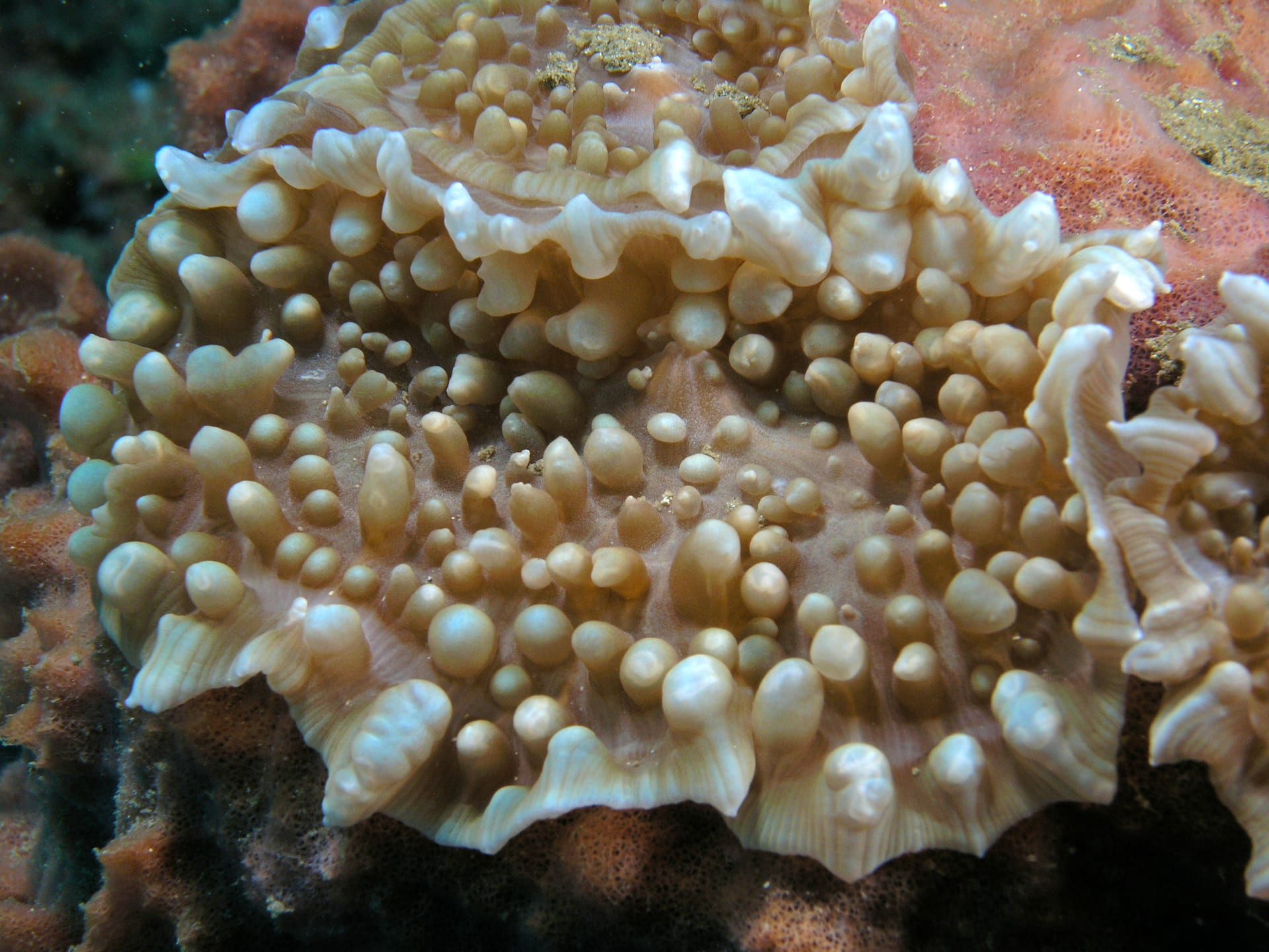
 © Nhobgood Nick Hobgood / CC BY-SA 3.0
Giant Elephant Ear (Amplexidiscus)
The Giant Elephant Ear is a large corallimorph, the sole species in its genus, capable of spreading its soft oral disc to a diameter of up to 40cm. Its disc is lined with short, cone-shaped tentacles, and when prey makes contact, the edges fold inward to close it into a rounded shape — a distinctive feeding motion to watch. Its color ranges from pale beige to brown, giving it a striking, understated presence in the tank. Considered beginner-friendly, it rewards keepers who enjoy observing subtle changes in texture and movement over time.
View Giant Elephant Ear (Amplexidiscus) encyclopedia →0% commission on your first sales!Register by September 30, 2026 and your first 2 sales are commission-free!
Breeder Wanted!
List on BreederDirect and sell directly to customers nationwide!
Br-Choku's 6 Transparency Standards
Our Breeder sellers disclose detailed care specs for all Coral listings. We prioritize Aquacultured/CB specimens, verify WYSIWYG photos, and provide difficulty ratings—avoiding wild-caught.
- Aquacultured
- WYSIWYG Photo
- Difficulty Disclosed
- Frag/Colony
- Care Info Included
- Trade name shown
Browse all 210 breeds
Difficulty
Verified breeders wanted for Coral
Breeders are signing up now ahead of launch. Subscribe to be notified when new listings go live.
Getting alerts is free with a member account. When new listings match your saved search, we'll notify you by email and in-app.
Browse other categories
Verified breeders (preview)

Giant Elephant Ear (Amplexidiscus) key facts
- Care level
- Beginner-friendly
- Size
- Up to about 40 cm in diameter
- Temperature
- 24〜26℃
- Diet
- Nutrition from its zooxanthellae plus benthic invertebrates, crustaceans, worms, echinoderms and even fish that it traps.
- Lighting
- LiveAquaria lists Rhodactis mushrooms as low to moderate light corals, and this species is kept the same way. It shrinks under strong light.
- Flow & Placement
- Place it on the bottom or low rockwork in low to moderate flow. It expands to 40 cm across, so keep other corals well away.
- Water Temperature & Quality
- Water 24-26C, specific gravity 1.023-1.025 (salinity 33-35 ppt), pH 8.1-8.4, KH 8-12. Iodine and trace elements are recommended.
- Feeding
- Its large disc makes it an efficient predator. Offer brine shrimp or chopped seafood near the mouth with tweezers; the disc closes into a ball after feeding.
- Notes
- It eats small fish and shrimps that touch the disc, and sleeping fish have been caught this way, so avoid siting it where fish rest at night. Having no skeleton, it is not covered by the CITES coral listings.
About Giant Elephant Ear (Amplexidiscus)
The Giant Elephant Ear is a large corallimorph reaching up to 40cm across, known for its soft oral disc and distinctive closing motion. A beginner-friendly choice for reef tanks.
7 things to know before welcoming a Giant Elephant Ear (Amplexidiscus)
1Plan for its mature size
As an adult, its oral disc can spread to roughly 40cm across, so it needs plenty of clearance from surrounding live rock and other corals. Choose a placement spot with room to grow into.
2Captures prey that touches its disc
It waits with its disc extended, lined with short, cone-shaped tentacles. When prey touches it, the edges fold inward and lift, closing into a rounded shape — a natural feeding behavior worth observing.
3Understand its tendency to move
Like other corallimorphs, it may slowly relocate using its pedal disc in response to environmental changes. Check its position periodically, since its relationship to neighboring corals can shift over time.
4Enjoy its color variation
Coloration varies between individuals, from pale beige to brown. Even under the same conditions, its appearance can shift with lighting and condition, making daily observation part of the enjoyment.
5Hardy and approachable for beginners
This species is considered beginner-friendly, making it approachable for those new to coral keeping. That said, don't rely on its hardiness alone — consistent basic water quality management is still important.
6Prepare your tank environment first
Before bringing one home, prepare a tank with stable water quality and enough space to accommodate its eventual size. Acclimate it carefully to avoid sudden environmental changes.
7Keep distance from other corals
Since its widely spreading disc can come into contact with nearby corals, it's important to plan spacing carefully from the start of aquascaping. Because it may also relocate over time, regular position checks are worthwhile.
Frequently asked questions about Giant Elephant Ear (Amplexidiscus)
- Q.Can beginners keep a Giant Elephant Ear?
- A.It's classified as beginner-friendly and is approachable for those new to coral keeping. Maintaining consistent basic water quality is key to keeping it healthy long-term.
- Q.How large does it grow as an adult?
- A.Its oral disc can reach up to roughly 40cm in diameter at maturity. It's important to leave ample space from surrounding live rock and other corals when placing it.
- Q.Why does it sometimes close into a ball shape?
- A.When prey touches its disc, which is lined with short, cone-shaped tentacles, the edges fold inward and lift to close it into a rounded shape. This is a natural feeding behavior.
- Q.Why does coloration vary between individuals?
- A.Coloration varies naturally between individuals, from pale beige to brown. Even the same individual can appear different depending on lighting and condition.
- Q.Are there any legal restrictions on keeping this species?
- A.The Giant Elephant Ear is not subject to CITES. There are no other notable legal restrictions to mention.
Useful tools for Giant Elephant Ear (Amplexidiscus) care
Learn more about Giant Elephant Ear (Amplexidiscus) in the encyclopedia
View Giant Elephant Ear (Amplexidiscus) encyclopedia entry →
Care difficulty, lifespan, size and diet — all basics covered.
More in this category
Can't find the one you're looking for?
Post your wishes for free and breeders with matching animals will contact you with introductions.