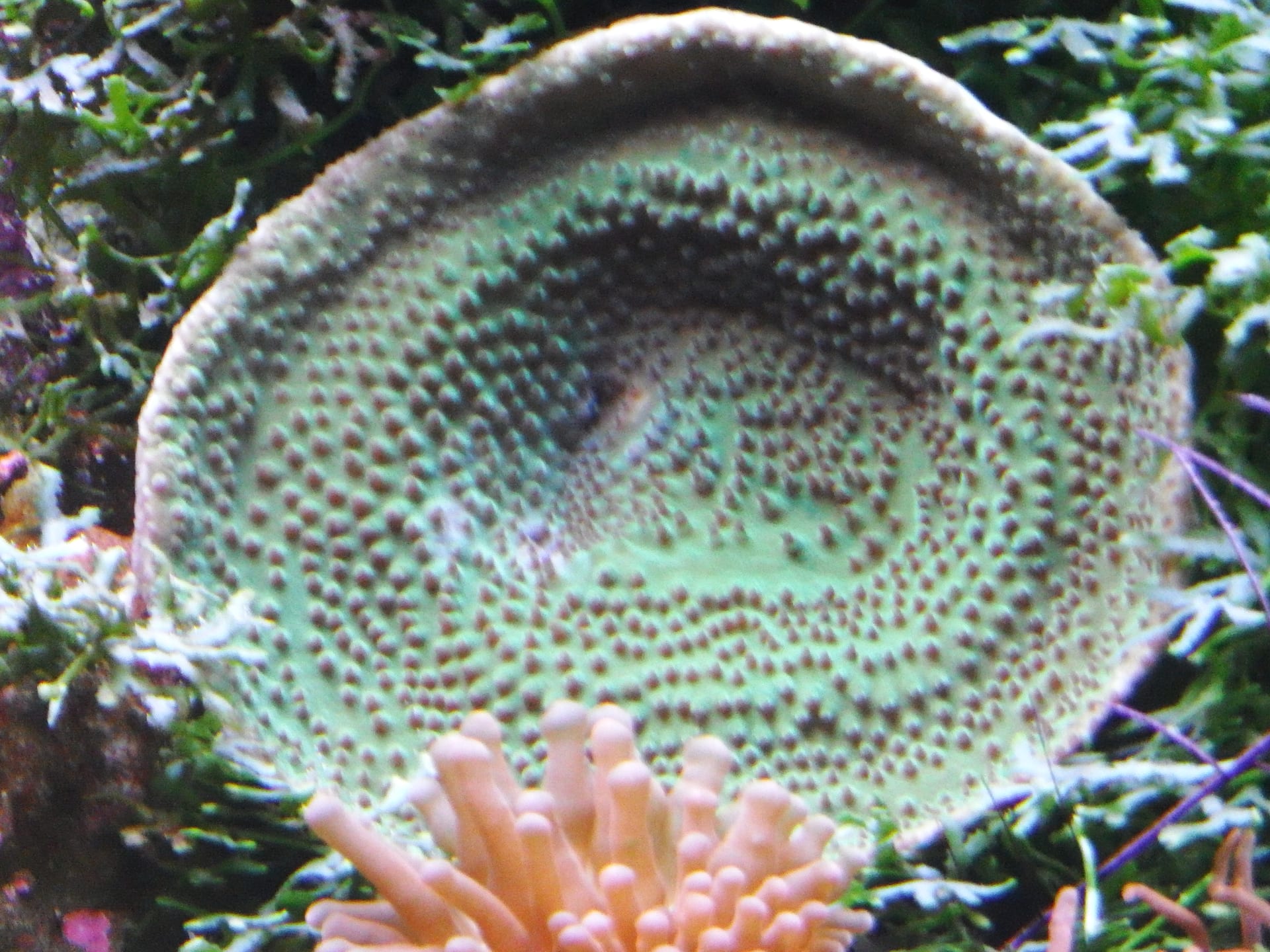
 © Josuevg / CC BY-SA 4.0
Turbinaria Peltata
Turbinaria peltata, known as the disc coral, forms striking colonies of thick, flat plates that stack and overlap into a tiered, layered structure, a shape that adds real dimension to a reef tank. Its corallites sit only on one side of each plate, roughly 3 to 5 mm across, and the thick, 1 cm tentacles keep the polyps extended even in daylight, unlike many stony corals that close up when the lights are on. Hardy and adaptable, it's a popular choice for anyone new to coral keeping who wants to add texture and depth to their aquarium.
View Turbinaria Peltata encyclopedia →0% commission on your first sales!Register by September 30, 2026 and your first 2 sales are commission-free!
Breeder Wanted!
List on BreederDirect and sell directly to customers nationwide!
Br-Choku's 6 Transparency Standards
Our Breeder sellers disclose detailed care specs for all Coral listings. We prioritize Aquacultured/CB specimens, verify WYSIWYG photos, and provide difficulty ratings—avoiding wild-caught.
- Aquacultured
- WYSIWYG Photo
- Difficulty Disclosed
- Frag/Colony
- Care Info Included
- Trade name shown
Browse all 210 breeds
Difficulty
Verified breeders wanted for Coral
Breeders are signing up now ahead of launch. Subscribe to be notified when new listings go live.
Getting alerts is free with a member account. When new listings match your saved search, we'll notify you by email and in-app.
Browse other categories
Verified breeders (preview)
About Turbinaria Peltata
Turbinaria peltata, the disc coral, features tiered flat plates and daytime-open polyps. Hardy and beginner-friendly, it's a popular reef tank choice.
7 things to know before welcoming a Turbinaria Peltata
1Place It in Bright Light
As a reef-building coral, Turbinaria peltata does best where it receives moderate to fairly strong lighting. Because its flat plates stack at an angle, positioning it to catch light efficiently helps keep its coloration healthy.
2Keep Water Flow Gentle
The tiered, plate-like shape can trap debris and detritus if water flow is too weak. Aim for gentle, well-distributed flow across the colony to keep the plate surfaces clean.
3Polyps Stay Open by Day
Its thick tentacles, about 1 cm long on corallites roughly 3 to 5 mm across, stay extended even during the day, unlike many corals that close up in daylight. This makes it easy to watch the coral's condition and response during feeding.
4Leave Room to Grow
Colonies spread outward as new plates form and can reach several meters across in the wild. Give it enough space in the tank and keep some distance from neighboring corals as it expands.
5Handle the Plates Gently
The thin, flat skeletal plates chip easily at the edges, so handle the coral carefully when transporting it or rearranging your aquascape. Support it from underneath rather than lifting it by the edges.
6Stable Water Chemistry Matters
Like most reef-building corals, it's sensitive to sudden swings in calcium, alkalinity, and magnesium. Regular water changes and testing help keep conditions consistent.
7Watch It Closely After Arrival
Polyps often stay retracted right after introduction to a new tank but tend to open gradually as the coral settles in. Keep an eye on its response to water quality and lighting for the first few days to a week.
Frequently asked questions about Turbinaria Peltata
- Q.Is this coral suitable for beginners?
- A.Yes, Turbinaria peltata is generally considered a beginner-friendly, hardy coral. With stable water quality and moderate lighting and flow, it's a relatively easy species to start with.
- Q.How large does it grow?
- A.Each corallite is about 3 to 5 mm across, but the colony grows outward as new plates form and can reach several meters in the wild. Growth speed in an aquarium varies depending on tank conditions.
- Q.Do the polyps ever close during the day?
- A.When newly introduced or under stress, the polyps may stay retracted even in daylight. Once the coral settles into its environment, it typically keeps its tentacles extended during the day as usual.
- Q.Is this species regulated under CITES?
- A.No, Turbinaria peltata is not subject to CITES.
- Q.Can it be placed near other corals?
- A.Since colonies spread outward as they grow, it's best to leave adequate space between it and neighboring corals. Plan your aquascape with its future growth in mind.
Useful tools for Turbinaria Peltata care
Learn more about Turbinaria Peltata in the encyclopedia
View Turbinaria Peltata encyclopedia entry →
Care difficulty, lifespan, size and diet — all basics covered.
More in this category
Can't find the one you're looking for?
Post your wishes for free and breeders with matching animals will contact you with introductions.