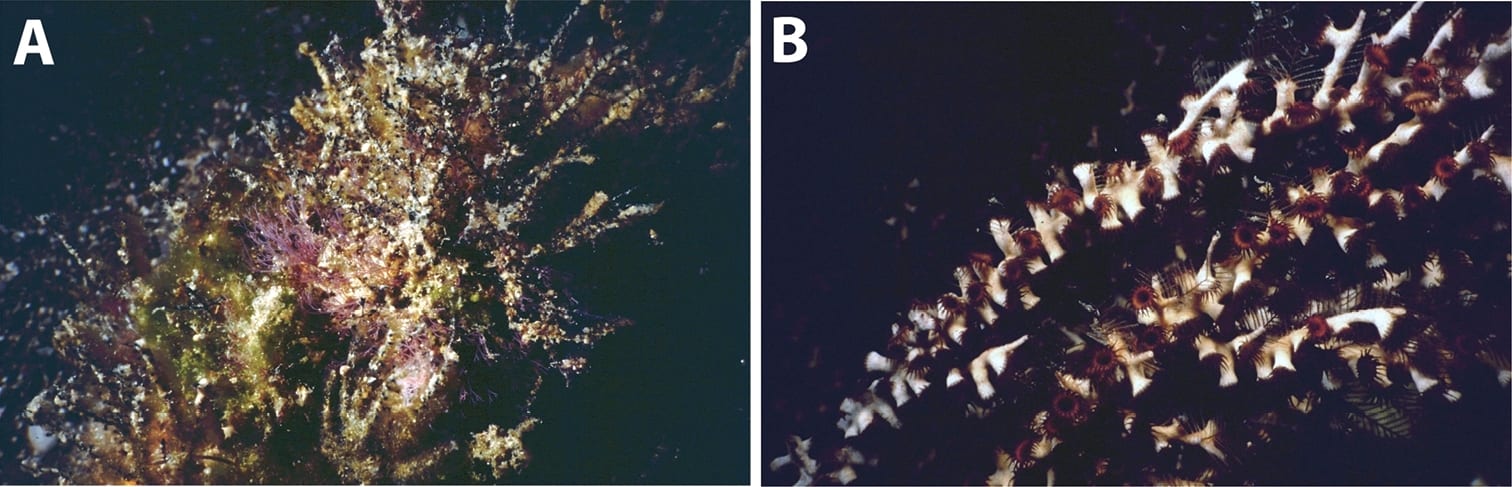
 © James Reimer, Angelo Poliseno, Bert Hoeksema / CC BY 4.0
Yellow Polyps (Parazoanthus)
Yellow Polyps are small zoantharians that open bright yellow oral discs at the tip of a slender stalk. A thin mat of tissue creeps across the rock, with each polyp rising up individually to create a distinctive look. The species has long been sold under its former scientific name, Parazoanthus gracilis, and remains a favorite among reef keepers. It's hardy and tolerates changing conditions reasonably well, making it a popular beginner coral that adds a vivid yellow accent to any tank. As it spreads into a colony, it gradually covers more of the surrounding rock, which is part of its appeal.
View Yellow Polyps (Parazoanthus) encyclopedia →0% commission on your first sales!Register by September 30, 2026 and your first 2 sales are commission-free!
Breeder Wanted!
List on BreederDirect and sell directly to customers nationwide!
Br-Choku's 6 Transparency Standards
Our Breeder sellers disclose detailed care specs for all Coral listings. We prioritize Aquacultured/CB specimens, verify WYSIWYG photos, and provide difficulty ratings—avoiding wild-caught.
- Aquacultured
- WYSIWYG Photo
- Difficulty Disclosed
- Frag/Colony
- Care Info Included
- Trade name shown
Browse all 210 breeds
Difficulty
Verified breeders wanted for Coral
Breeders are signing up now ahead of launch. Subscribe to be notified when new listings go live.
Getting alerts is free with a member account. When new listings match your saved search, we'll notify you by email and in-app.
Browse other categories
Verified breeders (preview)
Yellow Polyps (Parazoanthus) key facts
- Care level
- Beginner-friendly
- Size
- Polyps 1-2cm tall
- Temperature
- 24〜27℃
- Diet
- Takes zooplankton and finely divided foods. Offer powdered or liquid coral foods and brine shrimp regularly.
- Lighting
- Moderate lighting is sufficient. Intense light is not required, and it will grow on the sides of live rock or in shaded positions.
- Flow & Placement
- Give moderate randomised flow and place it at mid-height on the rockwork. It spreads across rock, so in a reef tank keep it on an isolated rock to limit its range.
- Water Temperature & Quality
- Water 24-27C, specific gravity 1.023-1.025 (33-35 ppt), KH 8-12. Colour and spread are steadier with a trace of nutrients present than in ultra-low-nutrient water.
- Feeding
- It responds well to zooplankton and finely divided foods. Powdered or liquid coral foods and brine shrimp a few times a week keep its growth steady. The genus is regarded as having little reliance on zooxanthellae, so do not skip feeding.
- Notes
- The trade name derives from the old binomial Parazoanthus gracilis and does not match the currently accepted Hydrozoanthus gracilis. It spreads across rock once established, so site it with care. It is not listed in the CITES Appendices.
About Yellow Polyps (Parazoanthus)
A hardy zoanthid known for its bright yellow oral disc atop a slender stalk. It spreads as a thin mat across rock and forms colorful clusters, making it a popular, beginner-friendly coral.
7 things to know before welcoming a Yellow Polyps (Parazoanthus)
1Prefers gentle light and flow
Yellow Polyps do better under moderate lighting and flow rather than intense conditions. Placing them where light and current aren't too direct helps the polyps stay open and healthy.
2Spreads to form colonies
The thin mat of tissue creeps across rock over time, producing more polyps as it spreads. Leave some open space around the placement site so the colony has room to grow naturally.
3Polyps close when stressed
Changes in water quality or physical disturbance can cause the polyps to close up and retract. They typically reopen within hours to a few days, so patience while conditions stabilize is key.
4Give neighbors some space
As the colony spreads, it can come into contact with other corals or live rock and compete for space. Leaving a reasonable gap when placing it makes long-term management easier.
5Acclimate slowly at arrival
This species is sensitive to sudden changes in water parameters, so slow drip acclimation is recommended. The polyps may stay closed right after introduction but usually settle within a few days.
6Feeding is rarely necessary
Most of its energy comes from photosynthetic zooxanthellae, so regular feeding isn't essential. Offering occasional fine plankton food is optional but not required.
7Handle with gloves, not bare hands
As a general precaution for corals in the order Zoantharia, wear gloves when fragging or handling the colony directly, and avoid getting its fluids in your eyes or mouth. Washing your hands afterward is good practice.
Frequently asked questions about Yellow Polyps (Parazoanthus)
- Q.Is the Yellow Polyp suitable for beginners?
- A.Yes, it's considered a beginner-friendly coral thanks to its hardiness and tolerance for changing conditions. With basic water quality maintenance, it's easy to grow and enjoy as it spreads into a colony.
- Q.How big does it get?
- A.Each individual polyp reaches about 1 to 2 cm in height. While a single polyp is small, the colony spreads across the rock surface as it multiplies.
- Q.Can it be kept with other corals in the same tank?
- A.Generally yes, but as the colony spreads it may come into contact with neighboring corals. Leaving some space when placing it helps avoid competition later on.
- Q.Does it need to be fed?
- A.Not really — most of its energy comes from photosynthetic zooxanthellae. Occasional feeding with fine plankton food is optional but not required.
- Q.Is it subject to any regulations?
- A.Yellow Polyps are not subject to CITES.
Useful tools for Yellow Polyps (Parazoanthus) care
Learn more about Yellow Polyps (Parazoanthus) in the encyclopedia
View Yellow Polyps (Parazoanthus) encyclopedia entry →
Care difficulty, lifespan, size and diet — all basics covered.
More in this category
Can't find the one you're looking for?
Post your wishes for free and breeders with matching animals will contact you with introductions.