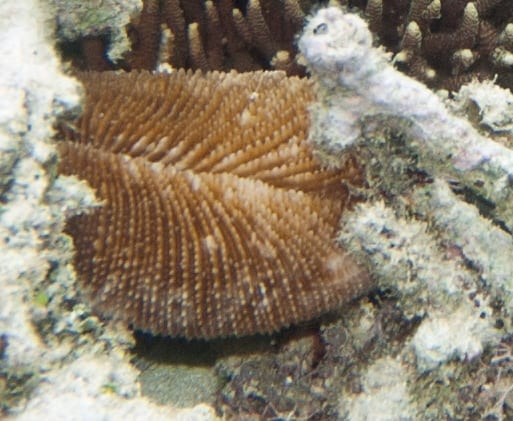
 © Paul Asman and Jill Lenoble / CC BY 2.0
Ctenactis
The Ctenactis coral, known in Japan as Togekusabiraishi, is a solitary coral recognized by its elongated, oval-shaped form. It typically grows to about 25 cm long and 10 cm wide, with a single mouth usually opening along the central groove that runs down its body. Thick primary septa lined with large, triangular tooth-like ridges give it a distinctive sculptural look rarely seen in other corals. Its coloring is usually a soft light brown, lending a calm, natural presence to a reef tank. Because it lives as a single polyp rather than forming colonies, it's relatively flexible to place within an aquarium, and it's generally considered beginner-friendly, making it an approachable choice for those just starting out with coral keeping.
View Ctenactis encyclopedia →0% commission on your first sales!Register by September 30, 2026 and your first 2 sales are commission-free!
Breeder Wanted!
List on BreederDirect and sell directly to customers nationwide!
Br-Choku's 6 Transparency Standards
Our Breeder sellers disclose detailed care specs for all Coral listings. We prioritize Aquacultured/CB specimens, verify WYSIWYG photos, and provide difficulty ratings—avoiding wild-caught.
- Aquacultured
- WYSIWYG Photo
- Difficulty Disclosed
- Frag/Colony
- Care Info Included
- Trade name shown
Browse all 210 breeds
Difficulty
Verified breeders wanted for Coral
Breeders are signing up now ahead of launch. Subscribe to be notified when new listings go live.
Getting alerts is free with a member account. When new listings match your saved search, we'll notify you by email and in-app.
Browse other categories
Verified breeders (preview)
About Ctenactis
Ctenactis is a solitary, elongated oval coral that grows to about 25 cm long and 10 cm wide, with light brown coloring and triangular tooth-like ridges. It's considered beginner-friendly.
7 things to know before welcoming a Ctenactis
1Free-Living on the Sand
Ctenactis doesn't attach to rock like many corals — it lives freely on sand or rubble. In your tank, simply resting it on the substrate lets it behave naturally.
2Grows Quite Large
This is a relatively large solitary coral, reaching about 25 cm in length and 10 cm in width at full size. Plan ahead for enough open space around it as it matures.
3Tentacles Extend at Night
It tends to keep its tentacles retracted during the day but extends them noticeably at night or during feeding. Give it enough clearance from neighboring corals so extended tentacles don't make contact.
4Distinctive Mouth and Septa
A single mouth typically opens along the central groove running down its body, flanked by thick primary septa lined with large, triangular tooth-like ridges. This intricate skeletal structure is one of its most striking features.
5Prefers Gentle Flow and Light
Overly strong water flow can stress its tissue, so moderate, steady flow works best. Lighting doesn't need to be intense — a calmer environment tends to suit long-term care.
6Typically Light Brown
Its base coloring is a soft light brown rather than a bright fluorescent shade. This understated tone can work well as a quiet accent alongside more colorful corals.
7Approachable for Beginners
This species is generally considered beginner-friendly among corals. That said, it's still a living animal, so consistent attention to water quality and flow remains important.
Frequently asked questions about Ctenactis
- Q.Is Ctenactis coral suitable for beginners?
- A.Yes, it's generally considered a beginner-friendly coral. That said, basic care like maintaining good water quality and flow is still essential.
- Q.How large does it grow?
- A.At full size, it typically reaches about 25 cm in length and 10 cm in width. It keeps its elongated oval shape as it grows larger.
- Q.Can it be placed near other corals?
- A.Since it can extend its tentacles, especially at night, it's best to leave enough space between it and neighboring corals. As a solitary species that doesn't form colonies, it does offer some flexibility in placement.
- Q.What does its coloring look like?
- A.Its base color is typically a soft light brown. The large, triangular tooth-like ridges along its thick primary septa add to its distinctive look.
- Q.Is it subject to CITES?
- A.Ctenactis is not subject to CITES. It's worth keeping in mind when considering this coral for your tank.
Useful tools for Ctenactis care
Learn more about Ctenactis in the encyclopedia
View Ctenactis encyclopedia entry →
Care difficulty, lifespan, size and diet — all basics covered.
More in this category
Can't find the one you're looking for?
Post your wishes for free and breeders with matching animals will contact you with introductions.