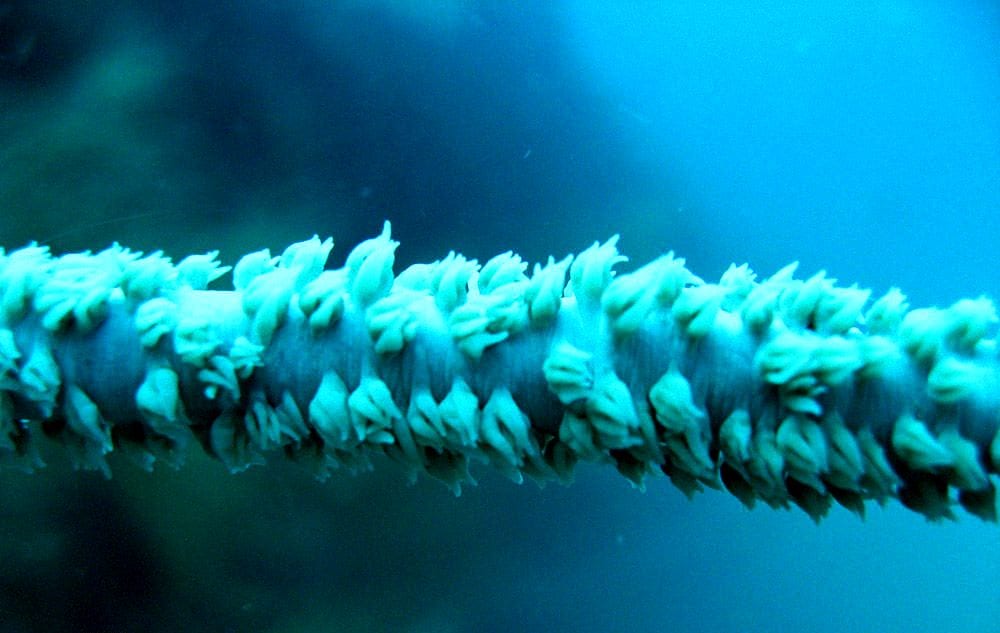
 © Chaloklum Diving / CC BY 3.0
Junceella (Sea Whip)
Junceella, also known as the sea whip, is an octocoral that grows as a single unbranched stem, rising straight up like a slender whip rather than forming a branching colony. Its thin, upright colonies come in white or pale yellow and are typically found clustered along current-swept slopes, making a striking, minimalist accent in a reef tank. Unlike many corals, it lacks zooxanthellae, so it cannot rely on photosynthesis and needs to be fed several times a day to stay healthy. Because of this feeding commitment and the water-quality care it demands, Junceella is generally considered a species best suited to experienced reefkeepers.
View Junceella (Sea Whip) encyclopedia →0% commission on your first sales!Register by September 30, 2026 and your first 2 sales are commission-free!
Breeder Wanted!
List on BreederDirect and sell directly to customers nationwide!
Br-Choku's 6 Transparency Standards
Our Breeder sellers disclose detailed care specs for all Coral listings. We prioritize Aquacultured/CB specimens, verify WYSIWYG photos, and provide difficulty ratings—avoiding wild-caught.
- Aquacultured
- WYSIWYG Photo
- Difficulty Disclosed
- Frag/Colony
- Care Info Included
- Trade name shown
Browse all 210 breeds
Difficulty
Verified breeders wanted for Coral
Breeders are signing up now ahead of launch. Subscribe to be notified when new listings go live.
Getting alerts is free with a member account. When new listings match your saved search, we'll notify you by email and in-app.
Browse other categories
Verified breeders (preview)
Junceella (Sea Whip) key facts
- Care level
- Advanced
- Temperature
- 24〜27℃
- Diet
- Zooplankton and phytoplankton (feeding is mandatory; it does not photosynthesise)
- Lighting
- No zooxanthellae, so lighting is unnecessary; a shaded position is fine.
- Flow & Placement
- Give strong random flow and anchor the base firmly so the slender colony does not topple.
- Water Temperature & Quality
- 24-27 C and 1.022-1.025 specific gravity. Heavy feeding fouls water, so maintain skimming and water changes.
- Feeding
- Feed phytoplankton and fine zooplankton several times a day; it declines without regular feeding.
- Notes
- Balancing feeding with water quality makes it advanced. Exposed axis means tissue loss; review flow and feeding.
About Junceella (Sea Whip)
Junceella (sea whip) is an unbranched, whip-like octocoral that lacks zooxanthellae and needs feeding several times a day, making it best suited to experienced reefkeepers.
7 things to know before welcoming a Junceella (Sea Whip)
1An Unbranched, Whip-Like Form
The defining feature of Junceella is its single, unbranched stem that grows straight up like a whip, rather than branching out like many other octocorals. This gives it a distinctive silhouette in any reef layout.
2No Zooxanthellae — Feeding Is Essential
Unlike most corals, Junceella does not host zooxanthellae, so it cannot get its nutrition from light alone. Keeping it healthy requires feeding it plankton-like foods several times a day.
3Prefers Strong Water Flow
In the wild, this species clusters on current-swept slopes, so providing adequate water flow in the aquarium is important. Aim for flow that reaches the colony without blasting it directly, so the polyps can catch food more easily.
4Slender White or Pale Yellow Colonies
Colonies are thin and typically white or pale yellow. The coloring is more understated than many other corals, but the slender, upright growth gives it a quiet yet distinctive presence.
5Best Suited to Experienced Keepers
Because of the feeding demands and water-quality care involved, Junceella is considered a species best suited to experienced keepers. It's best to gain some coral-keeping experience before bringing one home.
6Stable Water Quality Matters
Because frequent feeding can add to the bioload, regular water changes and attentive filtration are important. Neglecting nutrient management can affect the health of the colony.
7Plan Your Feeding Routine First
Before bringing one home, it's worth planning exactly when and how often you can feed it each day. Consider whether your daily schedule realistically allows for consistent, repeated feedings.
Frequently asked questions about Junceella (Sea Whip)
- Q.Can beginners keep this coral?
- A.Junceella lacks zooxanthellae and needs to be fed multiple times a day, so it's generally considered suitable for experienced keepers. It's a good idea to gain some coral-keeping experience first.
- Q.How often does it need to be fed?
- A.Because it lacks zooxanthellae and can't rely on photosynthesis, it needs to be fed multiple times a day. It's worth thinking ahead about whether you can commit to that routine consistently.
- Q.What kind of water flow does it need?
- A.In the wild it grows on current-swept slopes, so providing moderate water flow in the tank is beneficial. Avoid aiming a strong current directly at the polyps.
- Q.Is the lack of branching a sign of illness?
- A.No, growing as a single unbranched stem is completely normal for this species. It's not a sign of illness — it's one of its defining characteristics.
- Q.Where does this species live in the wild?
- A.Junceella is an octocoral that clusters on current-swept slopes in the wild. It grows as a single unbranched stem, rising straight up like a whip.
Useful tools for Junceella (Sea Whip) care
Learn more about Junceella (Sea Whip) in the encyclopedia
View Junceella (Sea Whip) encyclopedia entry →
Care difficulty, lifespan, size and diet — all basics covered.
More in this category
Can't find the one you're looking for?
Post your wishes for free and breeders with matching animals will contact you with introductions.