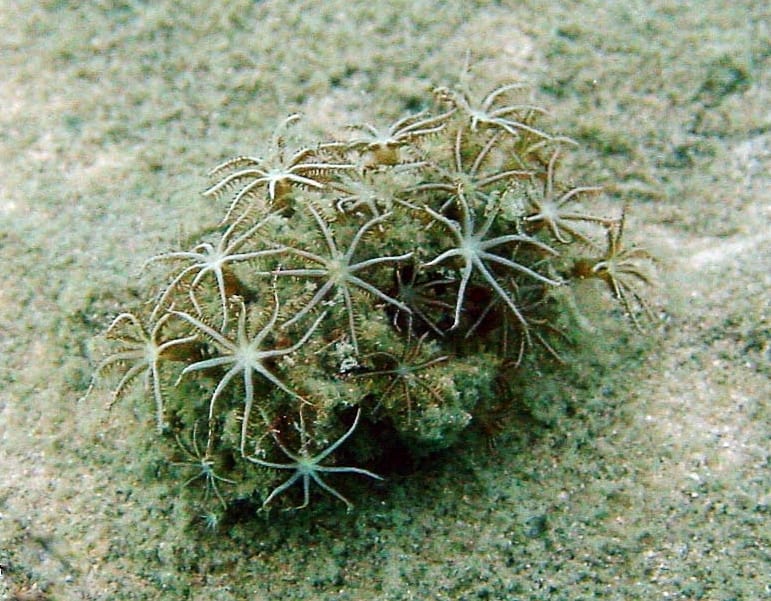
 © Chaloklum Diving / CC BY-SA 4.0
Anthelia
Anthelia is a soft coral in the Xeniidae family that grows from a thin, creeping base and sends up polyps tipped with eight feathery tentacles. Unlike many corals, its polyps rarely retract, so the tentacles stay fanned out and on display around the clock. When colonies spread, the overlapping tentacles create a striking, snowflake- or tassel-like texture across the rock. Coloration tends toward white, tan, or gray, giving it a soft, understated look that blends well into most reef layouts. It's generally considered a good choice for beginners just starting out with coral keeping.
View Anthelia encyclopedia →0% commission on your first sales!Register by September 30, 2026 and your first 2 sales are commission-free!
Breeder Wanted!
List on BreederDirect and sell directly to customers nationwide!
Br-Choku's 6 Transparency Standards
Our Breeder sellers disclose detailed care specs for all Coral listings. We prioritize Aquacultured/CB specimens, verify WYSIWYG photos, and provide difficulty ratings—avoiding wild-caught.
- Aquacultured
- WYSIWYG Photo
- Difficulty Disclosed
- Frag/Colony
- Care Info Included
- Trade name shown
Browse all 210 breeds
Difficulty
Verified breeders wanted for Coral
Breeders are signing up now ahead of launch. Subscribe to be notified when new listings go live.
Getting alerts is free with a member account. When new listings match your saved search, we'll notify you by email and in-app.
Browse other categories
Verified breeders (preview)
Anthelia key facts
- Care level
- Beginner-friendly
- Temperature
- 24〜26℃
- Diet
- Mainly nutrition from its zooxanthellae, with micro-plankton or foods for filter-feeding invertebrates offered about once a week.
- Lighting
- LiveAquaria lists Anthelia as a high-light coral needing medium to strong illumination; in low light the polyps do not extend fully.
- Flow & Placement
- LiveAquaria gives placement as bottom and flow as medium, recommending medium to strong water movement. It creeps as it spreads, so mount it on rock kept apart from other corals.
- Water Temperature & Quality
- Water 24-26C, specific gravity 1.023-1.025 (salinity 33-35 ppt), pH 8.1-8.4, KH 8-12. Iodine and trace elements are recommended.
- Feeding
- Most of its nutrition comes from photosynthesis, but LiveAquaria also calls for weekly feedings of micro-plankton or foods designed for filter-feeding invertebrates.
- Notes
- The tissue is soft and easily damaged by fish, crabs and snails or by the stings of other corals. It grows fast and blankets rockwork, so remove excess growth early. Having no stony skeleton, it is not covered by the CITES coral listings.
About Anthelia
A Xeniidae soft coral whose polyps rise from a creeping base and stay fanned open, showing eight feathery tentacles. Beginner-friendly and known for its striking snowflake-like colonies.
7 things to know before welcoming a Anthelia
1Polyps Rarely Retract
Unlike many corals, Anthelia rarely pulls its polyps in. Even when startled or exposed to shifting flow, the tentacles usually stay fanned out, so you get a near-constant view of the coral in full display.
2Best Kept in Colonies
Anthelia spreads outward from a creeping base as it grows, so its look really comes together once a colony has filled in. Grouping several polyps together produces the snowflake- or tassel-like texture the species is known for, more than any single polyp can show alone.
3Prefers Bright Light
Like many soft corals, Anthelia relies heavily on the zooxanthellae living in its tissue for nutrition through photosynthesis. When deciding where to place it in the tank, choose a spot that gets adequate light.
4Prefers Gentle Flow
Strong, turbulent water flow can cause the tentacles to pull in. Placing Anthelia somewhere with gentle, steady flow makes it easier for the polyps to stay open and on display.
5Spreads Over Surfaces
The base is creeping in habit and will gradually encrust over rock or live rock surfaces where it's placed. It helps to picture how much space a growing colony will eventually take up before choosing its spot.
6Handle With Care
Like other soft corals, Anthelia can release mucus and other secretions from its surface, so prolonged bare-handed contact is best avoided. Wearing gloves during handling is a sensible precaution.
7Give It Time After Moving
Right after acclimation or a change in placement, the polyps may stay closed or look less full for a while. Avoid moving it again during this period and give it a few days to settle in before judging how it's doing.
Frequently asked questions about Anthelia
- Q.Is Anthelia suitable for beginners?
- A.Yes, Anthelia is generally considered beginner-friendly and is a popular pick for those just starting out with coral keeping. As long as basic water quality is maintained along with suitable light and flow, it isn't a demanding species to care for.
- Q.Is it normal for the polyps to stay open all the time?
- A.Yes, that's typical. Unlike many corals, Anthelia rarely retracts its polyps, so seeing the tentacles fanned open most of the time is normal behavior for this species.
- Q.Can it be kept alongside other corals in the same tank?
- A.It can, but since Anthelia spreads outward from a creeping base, it's worth giving it some distance from neighboring corals. Planning the layout with extra space in mind helps prevent crowding as the colony grows.
- Q.What colors does Anthelia come in?
- A.It's most commonly found in white, tan, or gray tones. Rather than bold, vivid colors, it tends to have a muted look that blends easily into a reef layout.
- Q.Does it need to be fed?
- A.Like many soft corals, Anthelia is thought to get most of its nutrition from the zooxanthellae in its tissue through photosynthesis, so feeding isn't usually a major requirement. Prioritizing adequate lighting is generally more important than feeding routines.
Useful tools for Anthelia care
Learn more about Anthelia in the encyclopedia
View Anthelia encyclopedia entry →
Care difficulty, lifespan, size and diet — all basics covered.
More in this category
Can't find the one you're looking for?
Post your wishes for free and breeders with matching animals will contact you with introductions.