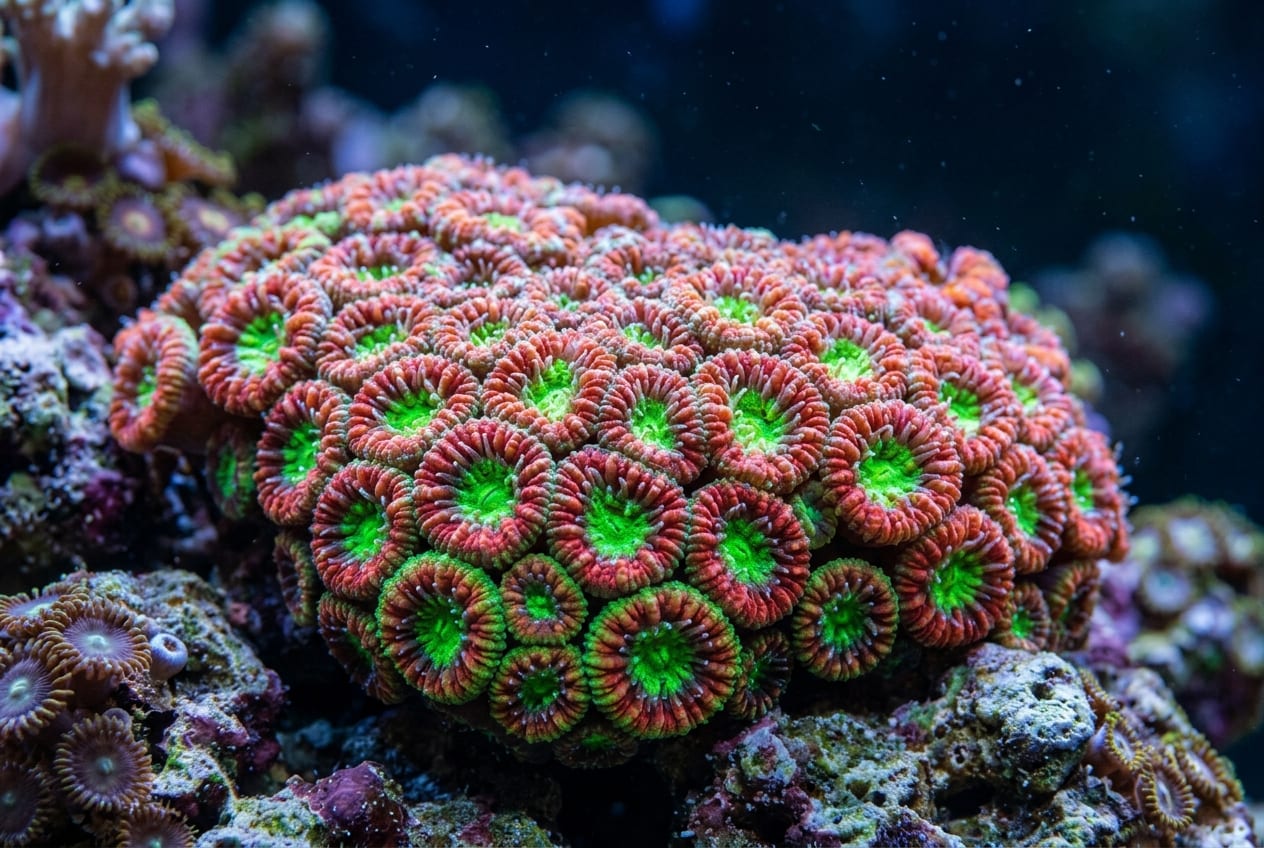
Micromussa Amakusensis
Micromussa amakusensis is a large-polyp stony (LPS) coral first described in 1990 by the researcher Veron, its species name honoring Amakusa in Kumamoto, Japan, where it was originally found. It's still widely sold under its older genus name, Acanthastrea, so hobbyists often encounter it under either label. The coral forms tightly packed clusters of small, rounded corallites, with individual colonies displaying striking green or red coloration. Its plump, fleshy texture and calm presence make it a favorite for close-up viewing in a reef tank. Combining hardiness with vivid color, it's generally considered a good choice for intermediate reefkeepers.
View Micromussa Amakusensis encyclopedia →0% commission on your first sales!Register by September 30, 2026 and your first 2 sales are commission-free!
Breeder Wanted!
List on BreederDirect and sell directly to customers nationwide!
Br-Choku's 6 Transparency Standards
Our Breeder sellers disclose detailed care specs for all Coral listings. We prioritize Aquacultured/CB specimens, verify WYSIWYG photos, and provide difficulty ratings—avoiding wild-caught.
- Aquacultured
- WYSIWYG Photo
- Difficulty Disclosed
- Frag/Colony
- Care Info Included
- Trade name shown
Browse all 210 breeds
Difficulty
Verified breeders wanted for Coral
Breeders are signing up now ahead of launch. Subscribe to be notified when new listings go live.
Getting alerts is free with a member account. When new listings match your saved search, we'll notify you by email and in-app.
Browse other categories
Verified breeders (preview)
About Micromussa Amakusensis
Micromussa amakusensis is an LPS coral with small, round corallites in vivid green or red. Also sold as Acanthastrea, it suits intermediate reefkeepers.
7 things to know before welcoming a Micromussa Amakusensis
1Watch for the old genus name
This coral is frequently sold under its former genus name, Acanthastrea, rather than Micromussa. When shopping, check whether a listing under either name refers to the same species. Searching the scientific name Micromussa amakusensis can help confirm identification.
2Rounded, tightly packed corallites
The colony is made up of small, rounded corallites packed closely together, giving the whole coral a plump, cushion-like appearance. Coloration varies between individual colonies, from green to red, which adds to the appeal of collecting different specimens.
3Best suited to intermediate keepers
This species is generally recommended once tank water parameters and live rock have settled into a stable state, rather than as a first coral for a brand-new tank. Avoid sudden shifts in water quality and keep some distance from neighboring corals and encroaching algae.
4Ease into lighting gradually
Placing this coral directly under very strong light or flow can affect its coloration and polyp extension. It's safer to start in a lower-light spot after introduction and gradually acclimate it while watching how the corallites respond.
5Supplemental feeding can help
Like other LPS corals, it hosts photosynthetic zooxanthellae but is also capable of capturing fine planktonic food. Depending on the tank environment, occasional supplemental feeding may support its coloration and growth.
6Give it space from neighbors
This coral can extend sweeper tentacles that irritate neighboring corals if placed too close together. Leaving adequate spacing when arranging your layout helps prevent this kind of interference.
7Prepare your tank in advance
Introducing this coral into a tank with stable water parameters and established live rock is an important first step toward long-term health. Deciding on placement and layout ahead of time reduces stress during introduction.
Frequently asked questions about Micromussa Amakusensis
- Q.Is Acanthastrea a different species from this coral?
- A.No, they refer to the same species. Acanthastrea is the former genus name, while the current scientific name is Micromussa amakusensis. The naming simply varies by shop, so either label refers to the same coral.
- Q.Can beginners keep this coral?
- A.It's generally considered suitable for intermediate reefkeepers rather than complete beginners. With stable water parameters and established live rock, it becomes easier to care for under attentive management.
- Q.How much light does it need?
- A.Exposing it to very strong light right away can affect its coloration and polyp extension. It's safer to start with modest lighting after introduction and gradually increase it while observing how the coral responds.
- Q.Does it need to be fed?
- A.It gets nutrition from photosynthetic zooxanthellae, but it can also capture fine planktonic food. Feeding isn't strictly required, though some keepers add supplemental feeding.
- Q.Is it safe to place near other corals?
- A.It can extend tentacles that irritate nearby corals, so it's best to leave some distance between it and other colonies. Placing it too close to neighbors may lead to interference.
Useful tools for Micromussa Amakusensis care
Learn more about Micromussa Amakusensis in the encyclopedia
View Micromussa Amakusensis encyclopedia entry →
Care difficulty, lifespan, size and diet — all basics covered.
More in this category
Can't find the one you're looking for?
Post your wishes for free and breeders with matching animals will contact you with introductions.