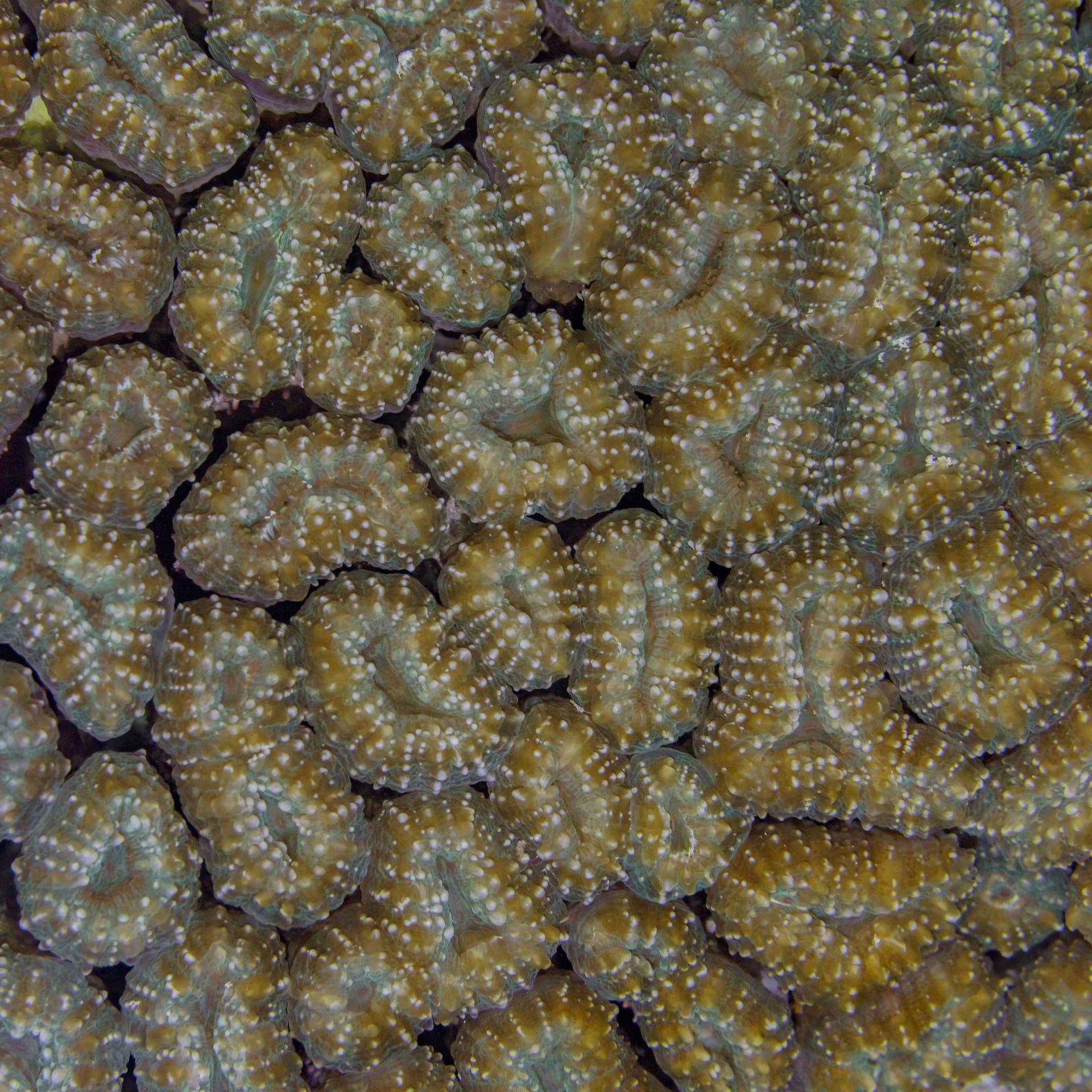
 © Diego Delso / CC BY-SA 4.0
Lobophyllia Corymbosa
Lobophyllia corymbosa is a large-polyp stony (LPS) coral found across shallow reefs from the Red Sea and East Africa through the Indo-Pacific. First described back in 1775, it's a long-established species whose polyps form as separate, cylinder-like domes rather than a continuous ridge. That sets it apart from its close relative Lobophyllia hemprichii, whose valleys run together in a more continuous pattern. Each rounded polyp stands out clearly, and its shape and coloring shift noticeably between day and night, making it a rewarding coral to watch closely. With a sturdy skeleton and a calm, undemanding disposition, it tends to settle in well for keepers who already have some experience with LPS corals.
View Lobophyllia Corymbosa encyclopedia →0% commission on your first sales!Register by September 30, 2026 and your first 2 sales are commission-free!
Breeder Wanted!
List on BreederDirect and sell directly to customers nationwide!
Br-Choku's 6 Transparency Standards
Our Breeder sellers disclose detailed care specs for all Coral listings. We prioritize Aquacultured/CB specimens, verify WYSIWYG photos, and provide difficulty ratings—avoiding wild-caught.
- Aquacultured
- WYSIWYG Photo
- Difficulty Disclosed
- Frag/Colony
- Care Info Included
- Trade name shown
Browse all 210 breeds
Difficulty
Verified breeders wanted for Coral
Breeders are signing up now ahead of launch. Subscribe to be notified when new listings go live.
Getting alerts is free with a member account. When new listings match your saved search, we'll notify you by email and in-app.
Browse other categories
Verified breeders (preview)
Lobophyllia Corymbosa key facts
- Care level
- Intermediate
- Temperature
- 24〜27℃
- Diet
- Photosynthesis via zooxanthellae plus meaty foods
- Lighting
- Moderate LED lighting; avoid abrupt changes in intensity and acclimate gradually.
- Flow & Placement
- Low to moderate flow. Direct jets damage the fleshy tissue, so place it on sand or low rock.
- Water Temperature & Quality
- Keep 24-27 C with KH 7-12 and calcium 400-450 ppm, held stable.
- Feeding
- It extends feeding tentacles at night; target-feed minced fish or shrimp onto the oral disc to promote growth.
- Notes
- Separate polyps make contact less likely, but still space it from other LPS. As a scleractinian it is CITES Appendix II.
About Lobophyllia Corymbosa
Lobophyllia corymbosa is an LPS coral from the Red Sea to Indo-Pacific shallows, known for its separate, cylinder-shaped polyps. Here's what to know before keeping this intermediate-level species.
7 things to know before welcoming a Lobophyllia Corymbosa
1Distinct Cylindrical Polyps
Each polyp forms as a separate, cylinder-like dome, unlike Lobophyllia hemprichii where the valleys run together continuously. The polyps also inflate differently between day and night, so the coral looks different depending on when you view it.
2Stinging Tentacles
Like many LPS corals, it can extend long sweeper tentacles at night that irritate neighboring corals. Leave plenty of space between it and other corals so they never make direct contact.
3Avoid Strong Direct Flow
Its fleshy tissue can be damaged by strong, direct water flow hitting it continuously. Place it where gentle, diffused flow reaches instead.
4Moderate Lighting Preferred
This coral tends to prefer moderate rather than intense lighting. Start it in a lower-light spot and gradually acclimate it as you observe its condition.
5Occasional Feeding Helps
It naturally extends its tentacles at night to catch small food particles. Occasionally offering finely chopped seafood or prepared coral foods can support its condition.
6Stable Water Parameters
As with other LPS corals, stable temperature, salinity, calcium, and alkalinity are essential to keeping it healthy. Sudden shifts in water parameters can cause the polyps to shrink or lose color.
7Acclimate Slowly
When introducing it from a different water environment, a slow drip acclimation reduces stress. After placement, watch how the polyps open over the following days and avoid handling or moving it unnecessarily.
Frequently asked questions about Lobophyllia Corymbosa
- Q.How is it different from Lobophyllia hemprichii?
- A.Lobophyllia corymbosa forms separate, cylinder-shaped polyps, while Lobophyllia hemprichii has continuous, valley-like ridges. They're closely related, but the overall colony appearance differs.
- Q.Is this coral suitable for beginners?
- A.This coral is generally considered suitable for intermediate keepers rather than complete beginners. It's best to have some experience with water quality management and LPS corals first.
- Q.Can it be placed near other corals?
- A.Since LPS corals like this one can extend stinging tentacles at night, keep it a good distance from other corals. Avoid any placement where they might come into direct contact.
- Q.Does it need to be fed?
- A.Feeding isn't strictly necessary, but it naturally catches small food with its tentacles at night. Occasionally offering chopped seafood or coral food can support its growth.
- Q.What's the origin of its scientific name?
- A.The species name Lobophyllia corymbosa was first described by Forsskål in 1775, making it a long-established name in the literature. It belongs to the family Lobophylliidae among LPS corals.
Useful tools for Lobophyllia Corymbosa care
Learn more about Lobophyllia Corymbosa in the encyclopedia
View Lobophyllia Corymbosa encyclopedia entry →
Care difficulty, lifespan, size and diet — all basics covered.
More in this category
Can't find the one you're looking for?
Post your wishes for free and breeders with matching animals will contact you with introductions.