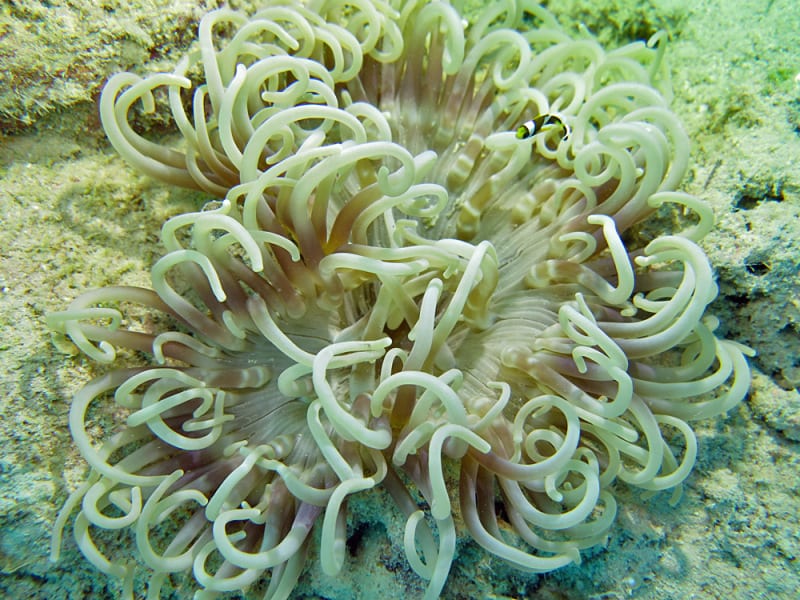
 © Anne Hoggett / CC BY 3.0
Long Tentacle Anemone
The Long Tentacle Anemone is a striking sea anemone known for its long, flowing tentacles. Compared with other species, it has relatively few tentacles, but each one shares the same size and coloring, ranging from grayish-purple to brown. The tentacles taper evenly toward their tips and sometimes twist into a gentle spiral, swaying gracefully in the current and drawing the eye in any reef tank. This species buries its column in the sand, with the lower portion taking on hues from dull orange to vivid red. Well known for hosting clownfish, it's a popular choice for aquarists who want to add movement and color to a reef setup. Because it's considered suitable for intermediate keepers, it's best introduced once you're comfortable managing water quality and lighting.
View Long Tentacle Anemone encyclopedia →0% commission on your first sales!Register by September 30, 2026 and your first 2 sales are commission-free!
Breeder Wanted!
List on BreederDirect and sell directly to customers nationwide!
Br-Choku's 6 Transparency Standards
Our Breeder sellers disclose detailed care specs for all Coral listings. We prioritize Aquacultured/CB specimens, verify WYSIWYG photos, and provide difficulty ratings—avoiding wild-caught.
- Aquacultured
- WYSIWYG Photo
- Difficulty Disclosed
- Frag/Colony
- Care Info Included
- Trade name shown
Browse all 210 breeds
Difficulty
Verified breeders wanted for Coral
Breeders are signing up now ahead of launch. Subscribe to be notified when new listings go live.
Getting alerts is free with a member account. When new listings match your saved search, we'll notify you by email and in-app.
Browse other categories
Verified breeders (preview)
Long Tentacle Anemone key facts
- Care level
- Intermediate
- Temperature
- 22〜26℃
- Diet
- Nutrition from symbiotic zooxanthellae, supplemented about once a week with meaty foods such as fish, shrimp and clam.
- Lighting
- LiveAquaria rates its lighting requirement as moderate, making it one of the less light-hungry anemones in this list.
- Flow & Placement
- LiveAquaria rates flow as medium and placement as bottom and middle, and states that it needs about four inches of sand or rubble substrate in which to hide.
- Water Temperature & Quality
- Water 22-26C, specific gravity 1.023-1.025. LiveAquaria rates its care level as moderate.
- Feeding
- Besides photosynthesis, offer small pieces of fish or mussel, crustaceans and frozen foods.
- Notes
- It is often traded under the old genus name Macrodactyla, but the current valid name in WoRMS is Radianthus doreensis. Its tentacles stick to the hand when it is disturbed. It is not listed in the CITES Appendices.
About Long Tentacle Anemone
Discover the Long Tentacle Anemone's key traits, care difficulty, and what to know before bringing one home — an intermediate-level anemone prized for its long, flowing tentacles and vividly colored base.
7 things to know before welcoming a Long Tentacle Anemone
1Long, Flowing Tentacles
The Long Tentacle Anemone lives up to its name with tentacles that stretch out and sway gracefully in the current, making it a visual centerpiece. It has relatively few tentacles, but each one matches in size and color for a cohesive look.
2Coloring from Purple-Gray to Brown
Tentacle color ranges from grayish-purple to brown and tapers evenly toward the tip. In some individuals the tentacles twist into a gentle spiral, giving each anemone its own distinct character.
3Buries Its Column in Sand
This anemone anchors itself by burying its column in the substrate, with the lower portion coloring from dull orange to vivid red. Because of this habit, a proper sand bed is an important part of its setup.
4Intermediate Care Level
This species calls for some hands-on experience managing water quality, lighting, and flow, so it's considered suitable for intermediate keepers. If this is your first anemone, it may help to build experience with reef-keeping basics first.
5Anemones Can Relocate
Like other anemone species, the Long Tentacle Anemone may move around the tank in search of a spot it likes. Leave enough open space in your aquascape so it won't come into contact with powerheads or nearby corals.
6Popular for Hosting Clownfish
This anemone is known for hosting clownfish among its tentacles, making it a favorite for aquarists who want a lively reef display. That said, successful hosting isn't guaranteed and can depend on the individual anemone and tank conditions.
7Prepare the Tank First
Make sure you have an adequately deep sand bed along with stable water quality and appropriate lighting and flow before bringing one home. Introducing it before the environment is ready can put unnecessary stress on it.
Frequently asked questions about Long Tentacle Anemone
- Q.Does having fewer tentacles mean it's sick or weak?
- A.No, having relatively few tentacles is simply a natural characteristic of this species. Rather than a sign of poor health, each tentacle typically grows to a uniform size and color.
- Q.Will it move around inside the tank?
- A.Yes, like anemones in general, it may relocate on its own in search of a preferred spot. Leaving some open space in your aquascape helps prevent contact with pump intakes or other corals.
- Q.If I keep it with clownfish, will they always host in it?
- A.This species is known for hosting clownfish, but successful hosting isn't guaranteed every time. The outcome can vary depending on the individual animals and tank environment.
- Q.Can beginners keep this anemone?
- A.The Long Tentacle Anemone is considered suitable for intermediate keepers, requiring some experience managing water quality and lighting. If you're new to keeping anemones, it may be worth building up foundational reef-keeping knowledge first.
- Q.Are there any legal restrictions on trading this species?
- A.The Long Tentacle Anemone is not subject to CITES. There are no special trade restrictions for this species.
Useful tools for Long Tentacle Anemone care
Learn more about Long Tentacle Anemone in the encyclopedia
View Long Tentacle Anemone encyclopedia entry →
Care difficulty, lifespan, size and diet — all basics covered.
More in this category
Can't find the one you're looking for?
Post your wishes for free and breeders with matching animals will contact you with introductions.