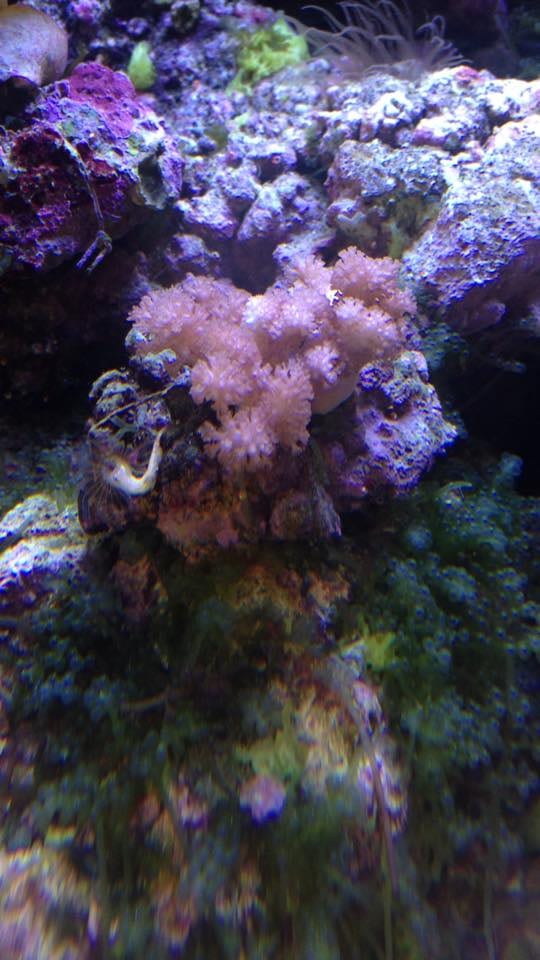
 © Aurélien JEANNE / CC BY-SA 2.0
Klyxum
Klyxum is an encrusting soft coral that spreads from a thick, trunk-like base, sending out short finger-shaped branches as it grows. Its surface has a faintly slimy texture, and coloration ranges widely from tan to pink, with polyps scattered across it so no two colonies look quite the same. It's a hardy species that's easy to keep, making it a solid pick for anyone starting out with corals — though it can be aggressive enough to kill neighboring corals, so give it plenty of room in your layout. Since individual variation in shape and color is so pronounced, part of the fun is finding a colony with just the right look.
View Klyxum encyclopedia →0% commission on your first sales!Register by September 30, 2026 and your first 2 sales are commission-free!
Breeder Wanted!
List on BreederDirect and sell directly to customers nationwide!
BreederDirect's 6 Transparency Commitments
Our Breeder sellers disclose detailed care specs for all Coral listings. We prioritize Aquacultured/CB specimens, verify WYSIWYG photos, and provide difficulty ratings—avoiding wild-caught.
- Aquacultured
- WYSIWYG Photo
- Difficulty Disclosed
- Frag/Colony
- Care Info Included
- Trade name shown
Browse all 241 breeds
Difficulty
Verified breeders wanted for Coral
Breeders are signing up now ahead of launch. Subscribe to be notified when new listings go live.
Getting alerts is free with a member account. When new listings match your saved search, we'll notify you by email and in-app.
Browse other categories
Verified breeders (preview)
Klyxum key facts
- Care level
- Beginner-friendly
- Temperature
- 24〜26℃
- Diet
- Mainly nutrition from its zooxanthellae; feeding micro-plankton or baby brine shrimp speeds growth.
- Lighting
- LiveAquaria lists colt corals as needing moderate to high light; in low light the branches stretch thin and the polyps stop opening.
- Flow & Placement
- LiveAquaria gives placement as anywhere in the tank and flow as medium to strong. It is aggressive, so keep it well away from Sinularia and Sarcophyton in particular.
- Water Temperature & Quality
- Water 24-26C, specific gravity 1.023-1.025 (salinity 33-35 ppt), pH 8.1-8.4, KH 8-12. Strontium, iodine and trace elements are recommended.
- Feeding
- Most of its nutrition comes from photosynthesis. Micro-plankton, baby brine shrimp or foods for filter-feeding invertebrates can be offered as a supplement.
- Notes
- It secretes mucus in transit, so rinse it well in seawater before adding it to the tank. It is aggressive enough to kill other soft corals, so run activated carbon to strip the compounds it releases. Having no stony skeleton, it is not covered by the CITES coral listings.
About Klyxum
Klyxum is an encrusting soft coral with finger-like branches and highly variable tan-to-pink coloring. It's hardy and beginner-friendly, but aggressive enough to harm neighboring corals, so placement matters.
7 things to know before welcoming a Klyxum
1Highly Variable Appearance
Klyxum shows striking variation in color and branch shape even within the same species. Coloration ranges from tan to pink, and the scattering of polyps differs from colony to colony. Because of this, visual identification alone can be difficult.
2Can Be Aggressive to Other Corals
Klyxum is quite aggressive, and direct contact can end up killing neighboring corals. Give it plenty of clearance from other corals in your layout. Since it tends to spread outward as it grows, it's worth planning extra space in advance.
3Slippery, Mucus-Covered Surface
The surface of Klyxum is coated in a slippery layer of mucus. This is thought to serve a protective role, so it's best to avoid touching or otherwise disturbing the coral unnecessarily.
4Beginner-Friendly to Keep
Klyxum is considered beginner-friendly and tolerates fluctuations in water quality and conditions reasonably well. It's often chosen as a first coral for people just starting out in the hobby.
5Prepare Your Tank Layout in Advance
Since this encrusting soft coral spreads outward as it grows, it helps to decide on a placement spot and surrounding space ahead of time. Flow and lighting exposure also vary by position, so check these before introducing it.
6Watch Polyp Extension as a Health Cue
Extended polyps are generally a sign that Klyxum is settling in well. If the polyps stay closed for an extended period after introduction, the flow or lighting may not suit it, so watch closely and adjust as needed.
7Species ID Can Be Uncertain
Because Klyxum varies so much in shape and color, pinning down the exact species from appearance alone can be difficult. If you have questions about naming or characteristics, it's a good idea to check with the seller before bringing one home.
Frequently asked questions about Klyxum
- Q.Can beginners keep Klyxum?
- A.Yes, Klyxum is considered a hardy, beginner-friendly soft coral. It tolerates changes in water quality reasonably well and is often chosen as an entry point into coral keeping. That said, keep in mind that it can be aggressive toward other corals.
- Q.Is it safe to keep Klyxum alongside other corals?
- A.Keeping it alongside other corals is possible, but Klyxum is quite aggressive and direct contact can kill neighboring corals. Be sure to leave plenty of space between it and other corals in your layout.
- Q.Why do individual Klyxum colonies look so different?
- A.Klyxum is known for wide variation in shape and color. Coloration ranges from tan to pink, and branch shape and polyp distribution differ from colony to colony, which makes visual identification alone difficult.
- Q.Is the slimy surface a sign of disease?
- A.No, the slippery surface is normal for Klyxum and comes from a mucus coating. This mucus is thought to serve a protective function and is not a sign of illness.
- Q.Does Klyxum fall under CITES?
- A.Klyxum is not subject to CITES.
Useful tools for Klyxum care
Learn more about Klyxum in the encyclopedia
View Klyxum encyclopedia entry →
Care difficulty, lifespan, size and diet — all basics covered.
More in this category
Can't find the one you're looking for?
Post your wishes for free and breeders with matching animals will contact you with introductions.