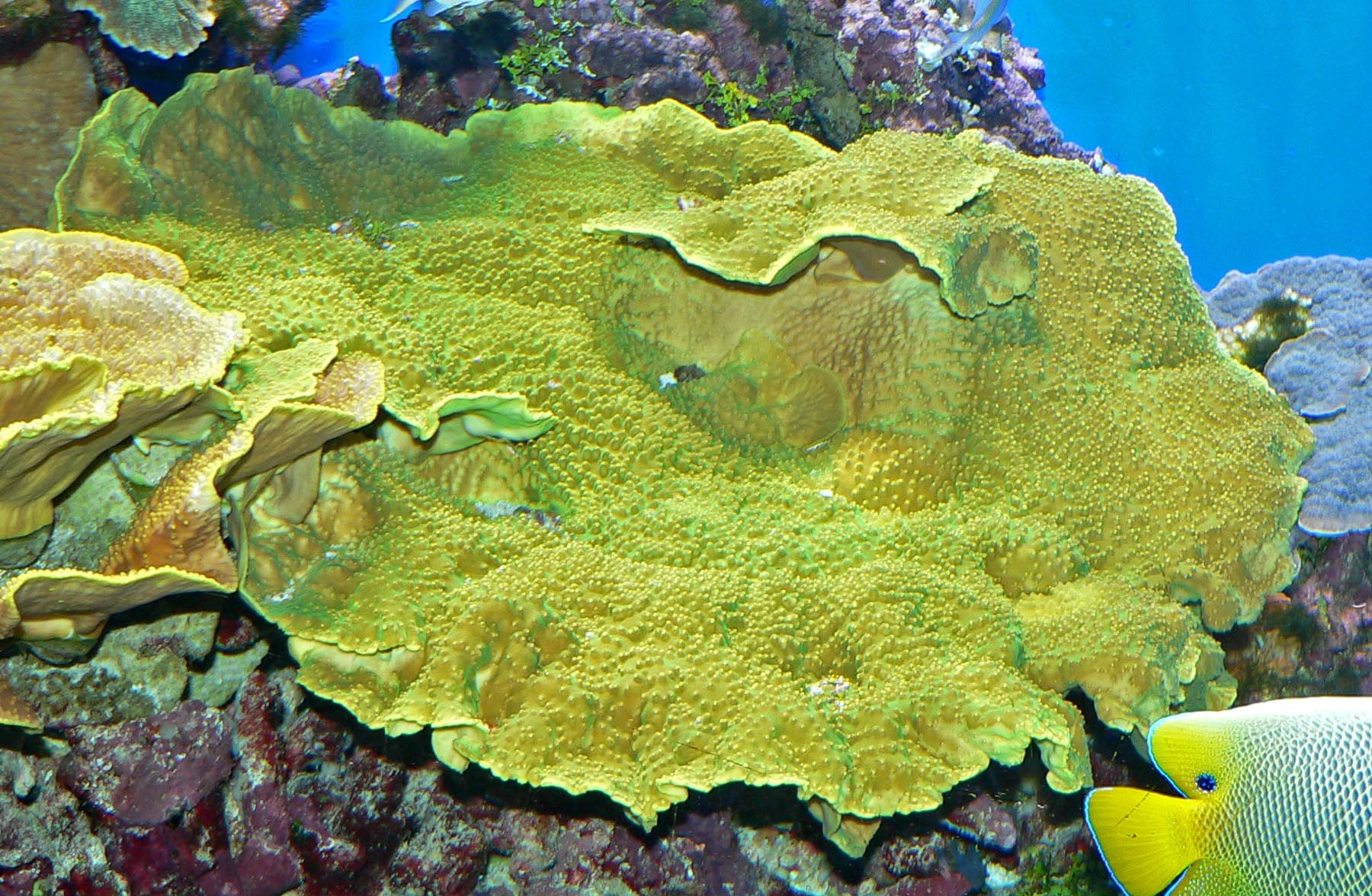
 © Stan Shebs / CC BY-SA 3.0
Yellow Scroll Coral (Turbinaria Reniformis)
The Yellow Scroll Coral (Turbinaria reniformis) is a stony coral in the family Dendrophylliidae, known for its thin, pale yellow-green plates that curl and stack into scroll-like layers as the colony grows. Its corallites are tiny, just 1.5–2mm across, and appear only on the upper surface of each plate, leaving a smooth, corallite-free rim that gives the coral its distinctive swirled silhouette. Because it hosts photosynthetic zooxanthellae, it draws much of its energy from light, and keeping it is generally considered a task for intermediate-level aquarists who can maintain stable water conditions. At night the polyps extend to feed, and the colony's form keeps evolving as it grows, which is part of its ongoing appeal.
View Yellow Scroll Coral (Turbinaria Reniformis) encyclopedia →0% commission on your first sales!Register by September 30, 2026 and your first 2 sales are commission-free!
Breeder Wanted!
List on BreederDirect and sell directly to customers nationwide!
Br-Choku's 6 Transparency Standards
Our Breeder sellers disclose detailed care specs for all Coral listings. We prioritize Aquacultured/CB specimens, verify WYSIWYG photos, and provide difficulty ratings—avoiding wild-caught.
- Aquacultured
- WYSIWYG Photo
- Difficulty Disclosed
- Frag/Colony
- Care Info Included
- Trade name shown
Browse all 210 breeds
Difficulty
Verified breeders wanted for Coral
Breeders are signing up now ahead of launch. Subscribe to be notified when new listings go live.
Getting alerts is free with a member account. When new listings match your saved search, we'll notify you by email and in-app.
Browse other categories
Verified breeders (preview)
About Yellow Scroll Coral (Turbinaria Reniformis)
Yellow Scroll Coral (Turbinaria reniformis) forms pale yellow-green plates that curl into scroll-like layers, with corallites only on the upper surface. An intermediate-level stony coral prized for its distinctive swirling growth form.
7 things to know before welcoming a Yellow Scroll Coral (Turbinaria Reniformis)
1Scroll-Like Growth
Its defining trait is the way flat plates stack and curl into scroll-like layers as the colony expands. The pattern of curling shifts with placement and angle, so the same coral keeps developing a new look over time.
2Corallites on Top Only
The tiny 1.5–2mm corallites sit only on the upper surface of each plate, leaving the underside and rim smooth and corallite-free. A clearly visible, corallite-free rim is one sign the colony is growing well.
3Balance Light and Flow
Because it hosts photosynthetic zooxanthellae, stable lighting and water flow matter for its energy supply. Sudden changes in lighting can affect its color and growth, so it's best to acclimate it gradually.
4Feeds at Night
During the day the plate-like skeleton is the main feature, but at night the polyps extend from the corallites to catch tiny plankton. Watching it shift between its daytime and nighttime appearance is part of the appeal.
5Give It Space
If its rim touches a neighboring coral, the two can sting each other, so it needs enough clearance from other corals. Since the plates spread outward as they grow, it's worth planning for that future space in advance.
6Intermediate-Level Care
It's generally considered an intermediate-level coral, requiring stable water parameters including calcium and alkalinity. Large swings in water quality can weaken the tissue along its rim, so regular testing helps.
7Colonies Reach Tens of cm
Colonies can grow to a diameter of several tens of centimeters, so it's worth planning enough open space in the aquascape before adding one. Choosing a placement that accounts for its outward, plate-like growth pays off later.
Frequently asked questions about Yellow Scroll Coral (Turbinaria Reniformis)
- Q.Is this coral suitable for beginners?
- A.It's generally rated as an intermediate-level coral, so it's best kept once you already have some experience managing water quality and lighting. With basic coral-keeping experience, it's considered relatively manageable.
- Q.How large does it eventually grow?
- A.Individual corallites stay tiny at 1.5–2mm across, but the colony as a whole can spread to a diameter of several tens of centimeters. It's a good idea to plan for that future growth space when choosing a spot for it.
- Q.Can it be placed next to other corals?
- A.Because its rim can sting neighboring corals on contact, it's best kept with adequate spacing from other colonies. Since it spreads outward as a plate, factor in that eventual reach when placing it.
- Q.Does its appearance change at night?
- A.Yes — during the day the plate-like skeleton stands out, but at night the polyps extend from the corallites to feed. Seeing it shift between its daytime and nighttime look is part of the appeal.
- Q.What should I watch for when placing it?
- A.Since it grows outward as a spreading plate, give it enough clearance from neighboring corals and tank walls as it expands. Choosing a spot with balanced light and flow also supports steady growth.
Useful tools for Yellow Scroll Coral (Turbinaria Reniformis) care
Learn more about Yellow Scroll Coral (Turbinaria Reniformis) in the encyclopedia
View Yellow Scroll Coral (Turbinaria Reniformis) encyclopedia entry →
Care difficulty, lifespan, size and diet — all basics covered.
More in this category
Can't find the one you're looking for?
Post your wishes for free and breeders with matching animals will contact you with introductions.