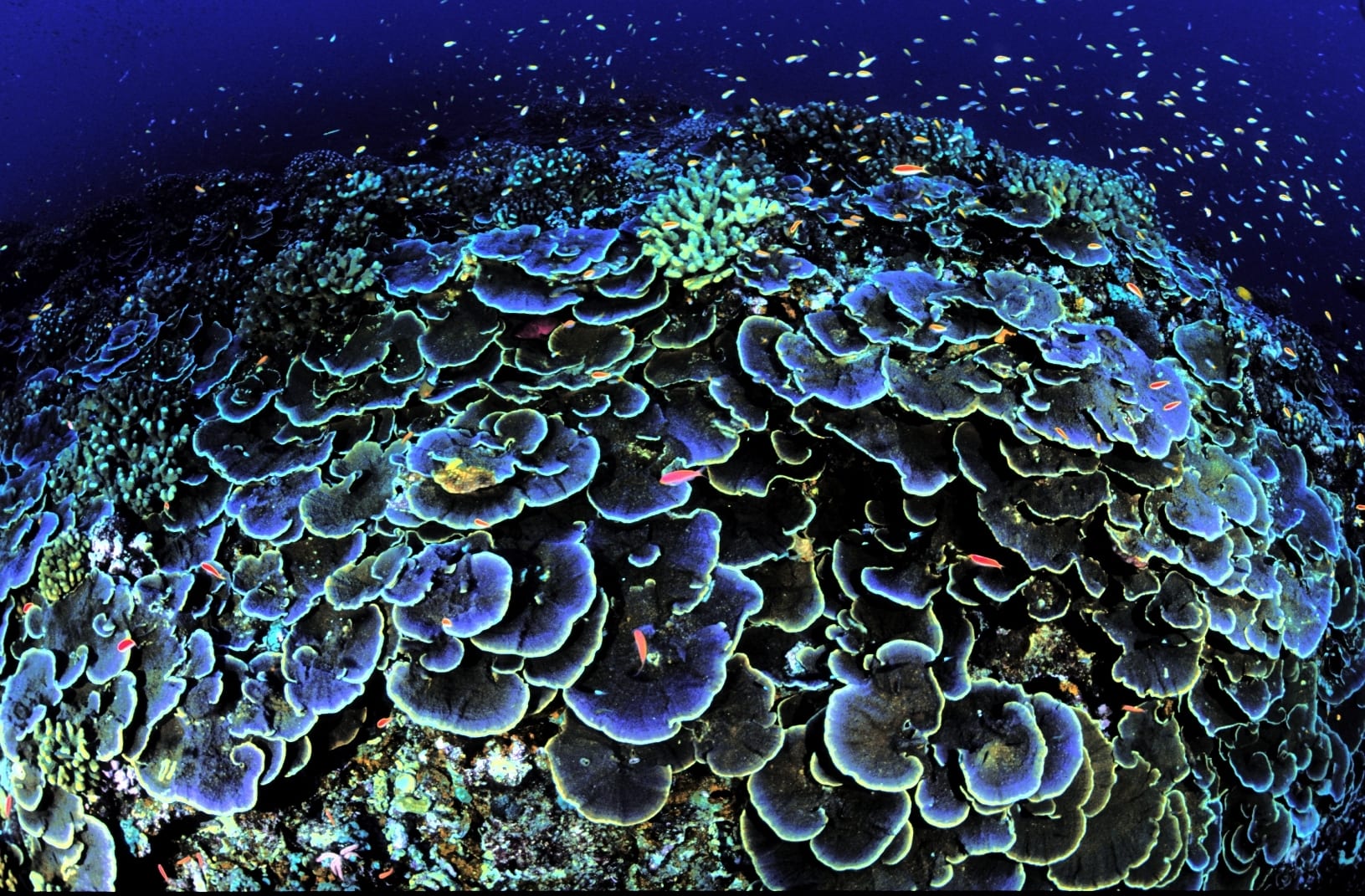
 © U.S. Fish and Wildlife Service / Public domain
Montipora Aequituberculata
Montipora aequituberculata, known as the "chijimi-usu comm coral" in Japan, is a reef-building coral in the family Acroporidae. It grows as thin, plate-like skeletons that spread horizontally, with wavy, overlapping edges that build into an elegant, upturned dish-shaped colony. Its species name comes from the tuberculate bumps covering the surface, which are remarkably uniform in size, giving the whole colony a cohesive, tidy appearance. As an SPS (small-polyp stony) coral, it prefers fairly strong lighting, and mature colonies can reach several tens of centimeters across. Because it needs consistently stable water parameters, it is generally recommended for more experienced reef keepers.
View Montipora Aequituberculata encyclopedia →0% commission on your first sales!Register by September 30, 2026 and your first 2 sales are commission-free!
Breeder Wanted!
List on BreederDirect and sell directly to customers nationwide!
Br-Choku's 6 Transparency Standards
Our Breeder sellers disclose detailed care specs for all Coral listings. We prioritize Aquacultured/CB specimens, verify WYSIWYG photos, and provide difficulty ratings—avoiding wild-caught.
- Aquacultured
- WYSIWYG Photo
- Difficulty Disclosed
- Frag/Colony
- Care Info Included
- Trade name shown
Browse all 210 breeds
Difficulty
Verified breeders wanted for Coral
Breeders are signing up now ahead of launch. Subscribe to be notified when new listings go live.
Getting alerts is free with a member account. When new listings match your saved search, we'll notify you by email and in-app.
Browse other categories
Verified breeders (preview)
Montipora Aequituberculata key facts
- Care level
- Advanced
- Size
- Colonies to several tens of cm
- Temperature
- 24〜27℃
- Diet
- Mainly nutrition from symbiotic zooxanthellae, supplemented with powdered coral foods and phytoplankton.
- Lighting
- Prefers strong light. The horizontal plates shade corals beneath, so plan for that. Start at reduced intensity and raise it gradually.
- Flow & Placement
- Detritus settling on the upper plate causes tissue recession. Give randomised moderate to strong flow and site it with room to spread.
- Water Temperature & Quality
- Water 24-27C, specific gravity 1.023-1.025 (33-35 ppt), KH 8-12, calcium 400-450 ppm, magnesium 1280-1350 ppm. Sudden swings in alkalinity are the most common cause of tissue recession.
- Feeding
- Most of its nutrition comes from photosynthesis by its zooxanthellae. Powdered coral foods and phytoplankton can be offered as a supplement, but stable light and water chemistry matter more than feeding.
- Notes
- The trade name Monti cap properly refers to M. capricornis and is often applied to this species as well. The IUCN lists it as Endangered, and as a scleractinian it falls under the blanket CITES Appendix II listing.
About Montipora Aequituberculata
A guide to Montipora aequituberculata, an Acroporidae SPS coral forming dish-shaped colonies from thin, horizontally spreading plates with wavy, overlapping edges — key traits and care points.
7 things to know before welcoming a Montipora Aequituberculata
1Prefers strong lighting
As an SPS coral, it thrives under fairly strong lighting such as metal halide or high-output LED fixtures capable of delivering stable, high PAR. Insufficient light can dull its natural coloration and slow growth.
2Needs steady flow
Moderate-to-strong flow should reach the whole colony to keep debris from settling on its flat surface. In stagnant spots, algae and grime tend to accumulate on the coral's surface more easily.
3Stable water quality is key
Calcium, KH, and magnesium levels need ongoing management, and sudden swings in water chemistry should be avoided. Unstable parameters can cause portions of the colony to bleach.
4Spreads wide and flat
Because it grows as thin plates spreading widely and horizontally, it's worth reserving a dedicated area of the aquascape for it. If placing other corals below it, consider positioning that won't block their light.
5Why it suits experienced keepers
It is sensitive to sudden shifts in water quality and requires experienced management, which is why it's generally recommended for advanced keepers. Before adding it, it helps to confirm that your tank's water parameters have stayed stable over a long period.
6Space it from other corals
Contact with neighboring corals can trigger stinging-cell aggression, so place it with enough distance from other corals to account for how wide it will eventually spread.
7Acclimation after arrival
Right after arrival, a slow acclimation method such as drip acclimation is recommended to ease it into your tank's water chemistry and lighting. Gradually increasing light exposure while watching polyp extension helps it settle in safely.
Frequently asked questions about Montipora Aequituberculata
- Q.How difficult is it to keep?
- A.It's generally considered suited to experienced keepers, requiring the ability to maintain stable water parameters. If you're new to coral keeping, starting with a hardier species is a good idea.
- Q.How large does it grow?
- A.Colonies can reach several tens of centimeters across. It's characterized by growing as thin plates that spread outward horizontally.
- Q.How long does it live?
- A.A specific lifespan can't be pinned down, since it varies greatly with tank conditions. With consistently stable water quality and lighting, the colony can be grown and maintained over a long period.
- Q.Is it subject to CITES regulation?
- A.Montipora Aequituberculata is listed in CITES Appendix II. International trade requires a permit from the exporting country, but as far as CITES is concerned, no registration is needed to buy or sell individuals already legally in Japan.
- Q.What kind of tank setup suits it?
- A.It suits a tank with fairly strong lighting, steady water flow, and consistently stable water quality. Introducing it into a tank with an established track record of keeping SPS corals is the safer choice.
Useful tools for Montipora Aequituberculata care
Learn more about Montipora Aequituberculata in the encyclopedia
View Montipora Aequituberculata encyclopedia entry →
Care difficulty, lifespan, size and diet — all basics covered.
More in this category
Can't find the one you're looking for?
Post your wishes for free and breeders with matching animals will contact you with introductions.