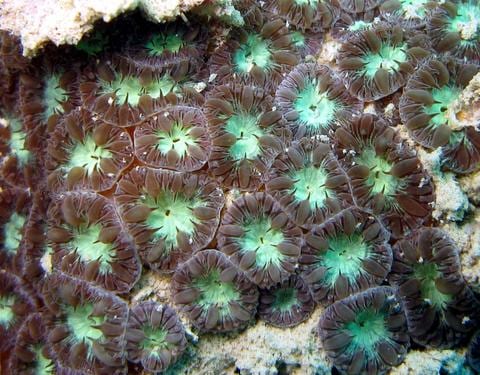
 © Benzoni, F. / CC BY 3.0
Blastomussa Merleti
Blastomussa Merleti, known in Japan as Kabira-tabasango, is a stony coral whose corallites branch out from a shared base and gradually separate as the colony grows. Each corallite measures under 7mm across, but the combination of deep red or orange bases with green oral discs gives individual heads striking color contrast. Colonies can reach a diameter of a dozen or so centimeters over time. Its polyps extend only at night, offering a different look after lights-out. Generally considered suitable for intermediate keepers, it's a popular way to add rich color to an established reef tank.
View Blastomussa Merleti encyclopedia →0% commission on your first sales!Register by September 30, 2026 and your first 2 sales are commission-free!
Breeder Wanted!
List on BreederDirect and sell directly to customers nationwide!
Br-Choku's 6 Transparency Standards
Our Breeder sellers disclose detailed care specs for all Coral listings. We prioritize Aquacultured/CB specimens, verify WYSIWYG photos, and provide difficulty ratings—avoiding wild-caught.
- Aquacultured
- WYSIWYG Photo
- Difficulty Disclosed
- Frag/Colony
- Care Info Included
- Trade name shown
Browse all 241 breeds
Difficulty
Verified breeders wanted for Coral
Breeders are signing up now ahead of launch. Subscribe to be notified when new listings go live.
Getting alerts is free with a member account. When new listings match your saved search, we'll notify you by email and in-app.
Browse other categories
Verified breeders (preview)
Blastomussa Merleti key facts
- Care level
- Intermediate
- Size
- Corallites under 7 mm across; colonies to around 10-20 cm
- Temperature
- 24〜26℃
- Diet
- Nutrition from symbiotic zooxanthellae, plus food particles caught with the tentacles and dissolved organic carbon taken up from the water.
- Lighting
- LiveAquaria gives moderate lighting for Blastomussa. Strong light makes the tissue contract and the colour fade, so place it low down where the light is gentle.
- Flow & Placement
- LiveAquaria calls for low flow and bottom placement. A direct stream damages the inflated tissue, so keep the flow indirect and gentle.
- Water Temperature & Quality
- Water 24-26C, specific gravity 1.023-1.025, salinity 33-35 ppt, KH 8-12. It consumes calcium and magnesium, so test and replenish them regularly.
- Feeding
- It catches food particles with its tentacles and also takes up dissolved organic carbon. The polyps open only at night, so feed meaty coral food after lights-out.
- Notes
- WoRMS places the genus in Plerogyridae, although other sources assign it to Mussidae. Corallite size separates it from B. wellsi. As a scleractinian it is on CITES Appendix II.
About Blastomussa Merleti
A stony coral with separating corallites in deep red or orange tones and green oral discs. Suited to intermediate keepers; polyps open only at night.
7 things to know before welcoming a Blastomussa Merleti
1Corallites Separate Over Time
Corallites growing from a shared base gradually separate as the colony matures. The appearance can change noticeably from the time of purchase, so it's worth understanding that the initial look won't necessarily stay the same.
2Polyps Extend Only at Night
During the day the corallites may look understated, but after lights-out the polyps extend fully and the look changes dramatically. Don't judge the coral by its daytime appearance alone—observing it at night is part of the enjoyment.
3Small Corallite Size
Each individual corallite is relatively small, under 7mm in diameter. While the colony as a whole can grow to a dozen or so centimeters, the appeal lies more in the overall color pattern created by the cluster of corallites than in any single one.
4Color Variation Between Individuals
Individuals with deep red or orange bases and green oral discs are especially popular, but coloration varies between specimens. Checking the color pattern beforehand can help it fit well into your tank's layout.
5Some Experience Recommended
This coral is generally considered suitable for intermediate keepers. Having some prior experience with water quality management and lighting for corals will make it easier to keep it stable.
6Spacing From Neighboring Corals
Since the colony expands as it grows, leaving enough space from neighboring corals at the time of placement—accounting for its future size—will reduce the need for layout adjustments later.
7Watch for Changes After Introduction
The period right after introduction to a new tank is when the coral is most sensitive to environmental changes. Keep an eye on daily polyp extension and coloration to catch any signs that differ from its normal state.
Frequently asked questions about Blastomussa Merleti
- Q.Is Blastomussa Merleti subject to CITES?
- A.Blastomussa Merleti is listed in CITES Appendix II. International trade requires a permit from the exporting country, but as far as CITES is concerned, no registration is needed to buy or sell individuals already legally in Japan.
- Q.Why does the color vary between individual corallites?
- A.Color combinations vary between specimens, such as deep red or orange bases paired with green oral discs. It's a good idea to check the actual coloration before bringing one home.
- Q.The polyps stay closed during the day—is that normal?
- A.Polyps on this coral naturally extend only at night, so staying closed during the day is normal behavior. Try observing it after the lights go out as well.
- Q.How large can the colony eventually grow?
- A.Each individual corallite is under 7mm in diameter, but as corallites multiply, the colony can grow to roughly a dozen or so centimeters across. It's wise to plan your layout with this future size in mind.
- Q.Can beginners keep this coral?
- A.This coral is generally considered suitable for intermediate keepers. It's recommended to gain some basic knowledge and experience with coral keeping before adding it to your tank.
Useful tools for Blastomussa Merleti care
Learn more about Blastomussa Merleti in the encyclopedia
View Blastomussa Merleti encyclopedia entry →
Care difficulty, lifespan, size and diet — all basics covered.
More in this category
Can't find the one you're looking for?
Post your wishes for free and breeders with matching animals will contact you with introductions.