Source: Wikimedia Commons
Blastomussa Merleti
IntermediateBlastomussa merleti
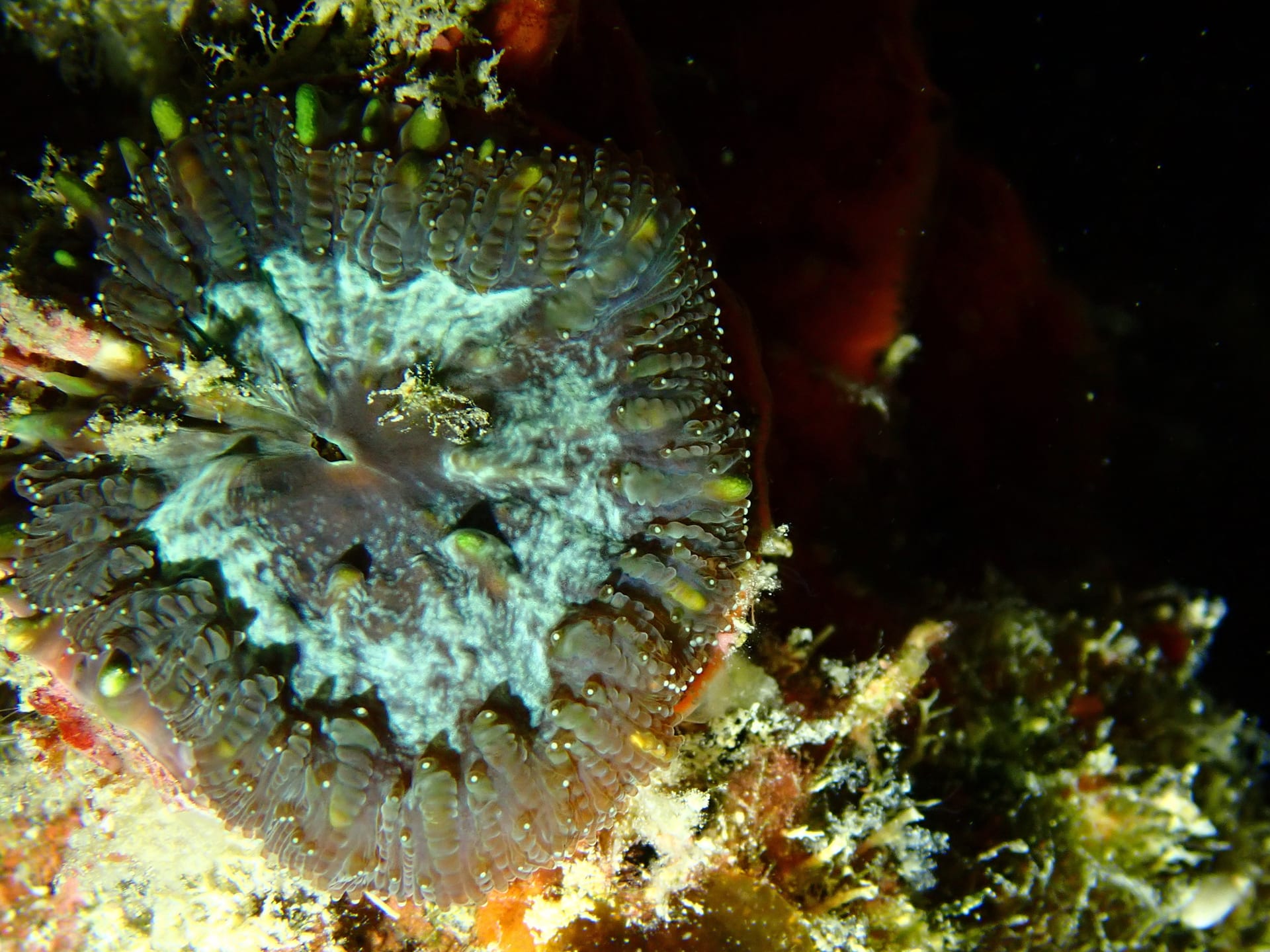
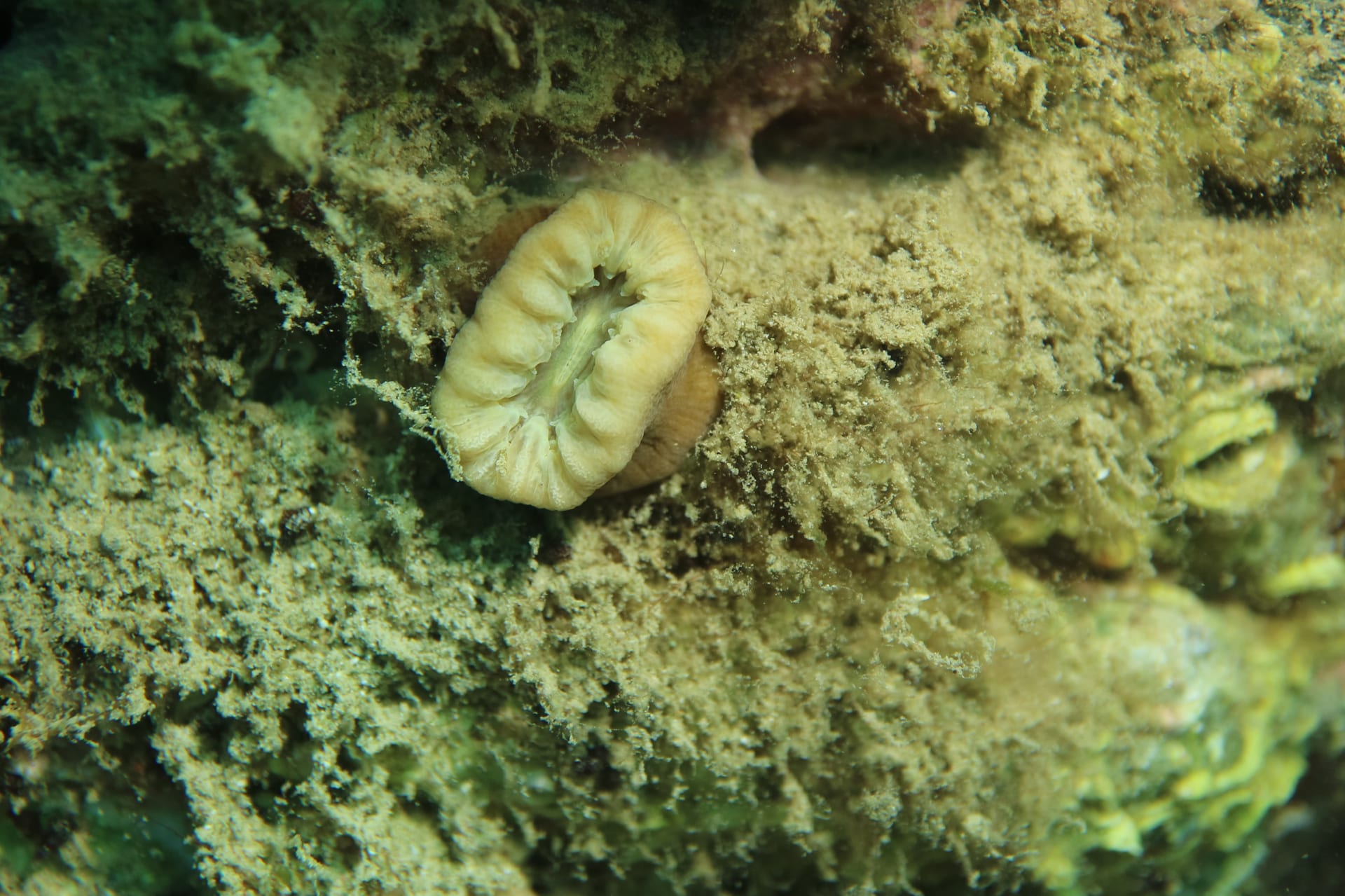
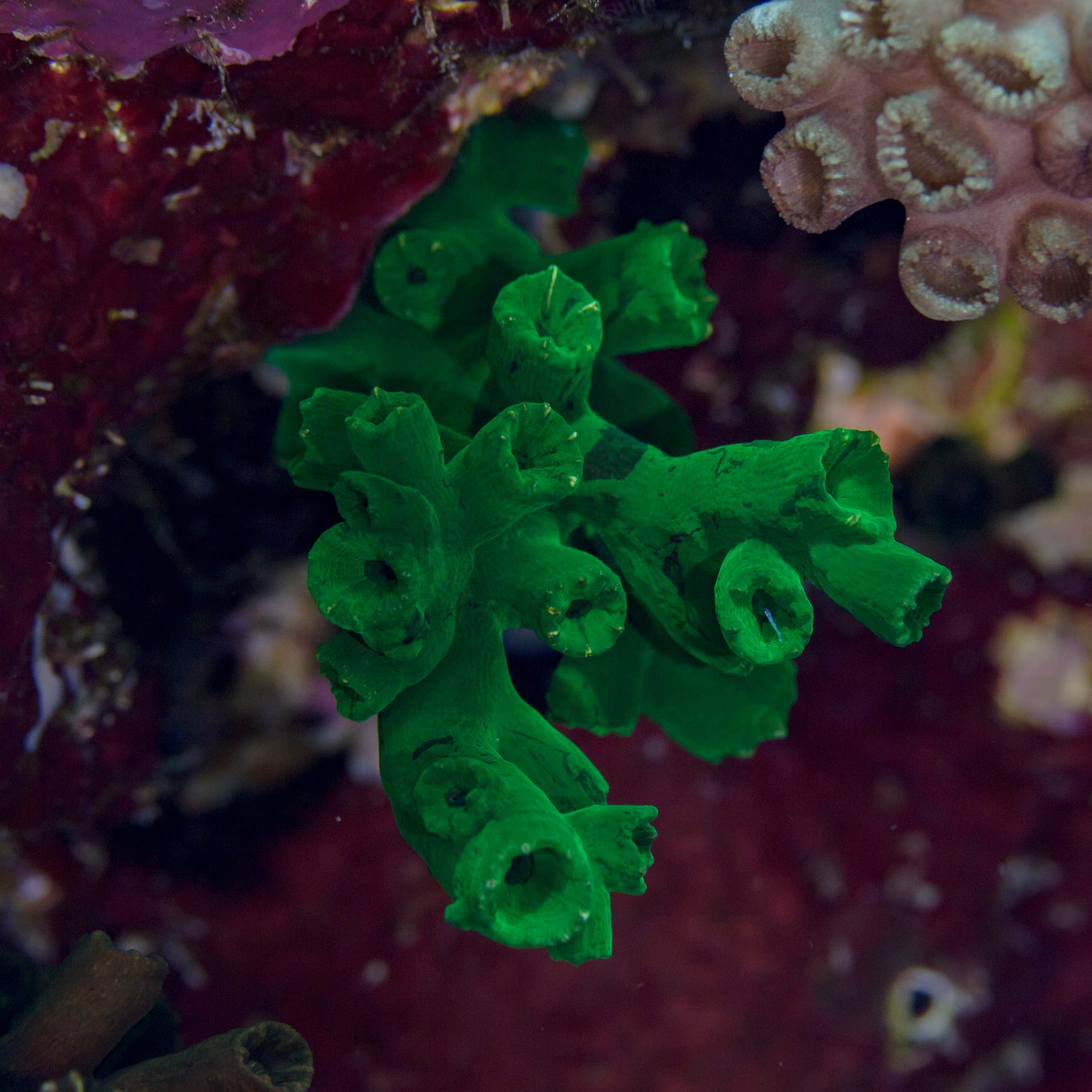
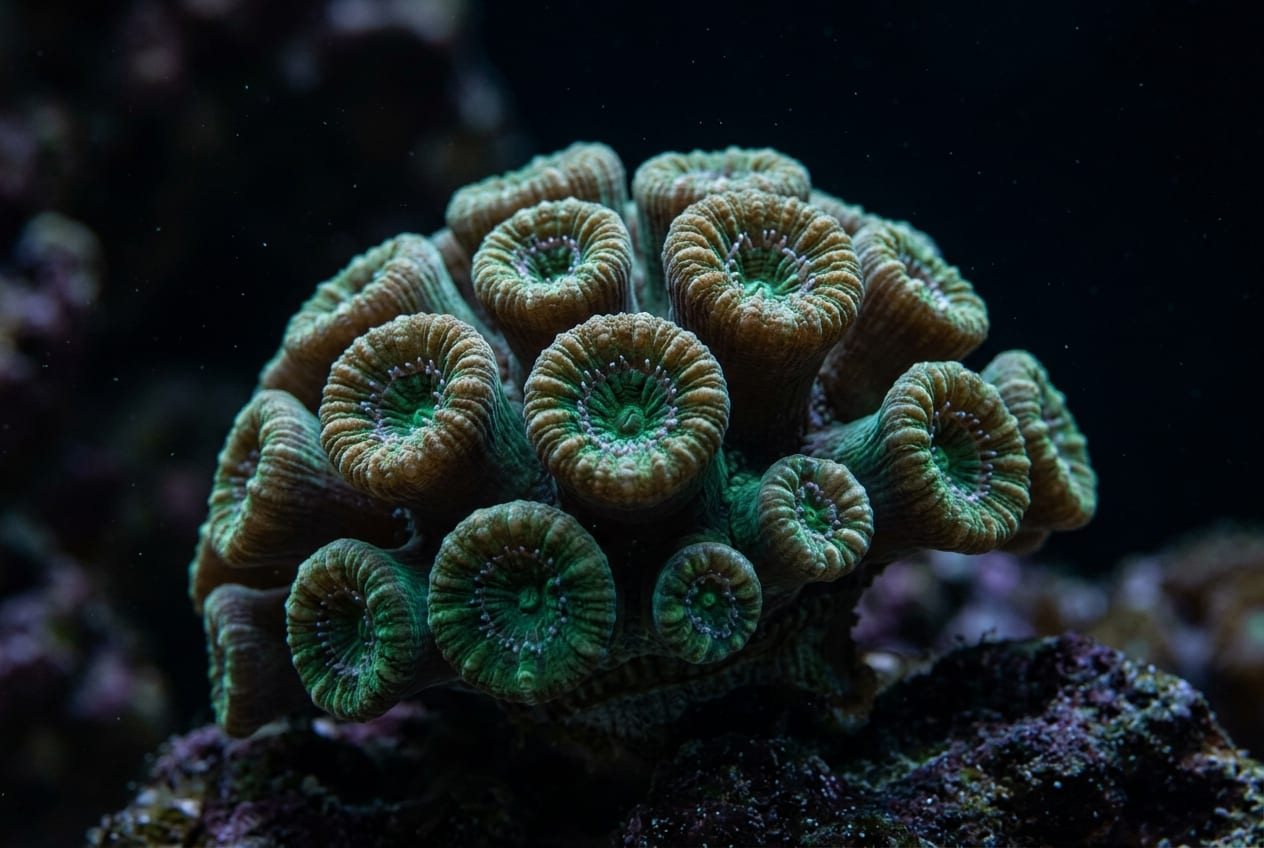
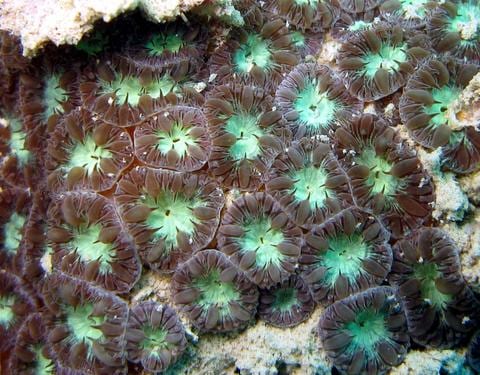
A stony coral whose corallites extend from a common base and separate as the colony ages. The corallites are under 7 mm across, and colonies with green oral discs on dark red or orange tissue are favoured in the trade. The polyps open only at night.
Difficulty
Intermediate
Temperature
24〜26℃
Size
Corallites under 7 mm across; colonies to around 10-20 cm
Diet
Nutrition from symbiotic zooxanthellae, plus food particles caught with the tentacles and dissolved organic carbon taken up from the water.
About
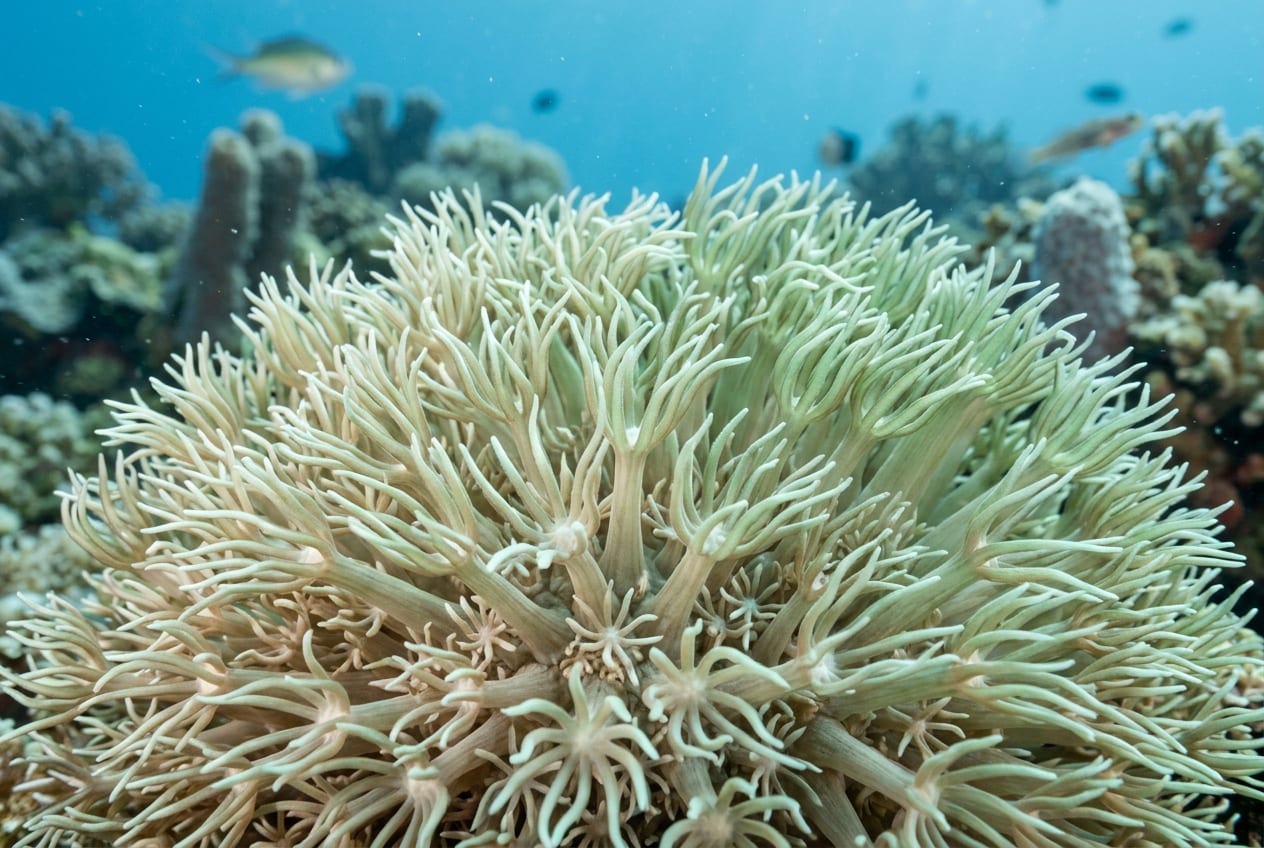
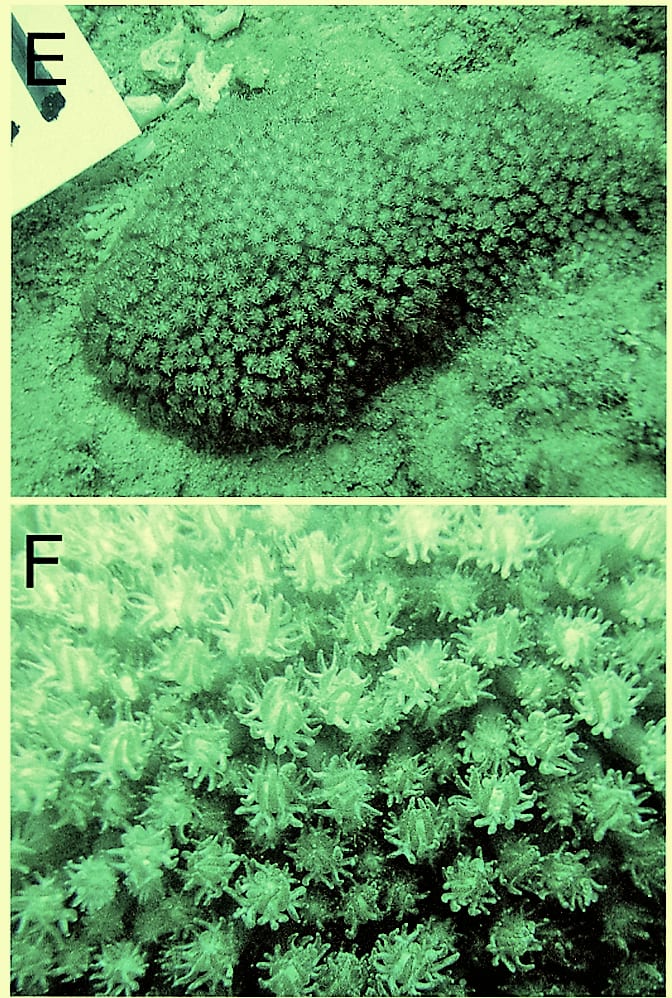
Blastomussa merleti, the pineapple or branched cup coral, is a large-polyp stony coral of the west and central Indo-Pacific. In young colonies the corallites extend from a common dome-shaped base, but as the colony grows the individual corallites separate, so it comes to resemble a group of cloned solitary individuals. The corallites are under 7 mm across, and the septa have toothed margins arranged in two cycles. The polyps expand only at night. Colonies may be dark red, pink, orange, brown or dark grey, often with contrasting green oral discs. The range runs from the Red Sea and the East African coast through the Indian Ocean to northern and western Australia, Japan, the East China Sea and the oceanic islands of the western Pacific, in a variety of reef habitats including steep slopes and crevices down to about 50 m. It is regarded as moderately easy to care for, and the IUCN rates it Least Concern. As a scleractinian it is on CITES Appendix II.
Source: Wikipedia (CC BY-SA 4.0)
Size of the Blastomussa Merleti
The Blastomussa Merleti grows to Corallites under 7 mm across; colonies to around 10-20 cm.
Temperature & humidity for the Blastomussa Merleti
The ideal temperature for the Blastomussa Merleti is 24〜26℃.
Basic Info
Origin
Red Sea and the East African coast through the Indian Ocean to northern and western Australia, Japan, the East China Sea and the oceanic islands of the western Pacific
Size
Corallites under 7 mm across; colonies to around 10-20 cm
Care Specifications
- Carbonate (KH)
- 8–12 dKH
- Water Temp.
- 24–26℃
- Specific Gravity
- 1.023–1.025
- Salinity
- 33–35 ppt
- Calcium (Ca)
- 380–450 ppm
- Magnesium (Mg)
- 1200–1400 ppm
LPSLight: Medium (PAR 50-150)Flow: LowPlacement: Bottom
Sources: LiveAquaria / AlgaeBarn: Calcium Supplementation / WoRMS (World Register of Marine Species)
References & Sources
Edited & verified by: BreederDirect editorial team
The taxonomic, regulatory, and husbandry data on this page are compiled and verified against the authoritative primary sources below.
Taxonomy & Authority
Accepted name: Blastomussa merleti (Wells, 1961)
Synonyms: Bantamia merleti Wells, 1961, Blastomussa merletti (Wells, 1961)
Authority databases: WoRMS
Nomenclature follows global taxonomic authority databases.
Regulations & Conservation Status
CITES Appendix IIIUCN LC · Least Concern
Sources: CITES Appendix II (Scleractinia spp. listed as an order) / IUCN Red List
Regulations may change. Always verify the latest information with the relevant authorities.
Blastomussa Merleti Listings
Loading latest listingsFind listings for this species