Source: Wikimedia Commons
Bernardpora
IntermediateBernardpora stutchburyi
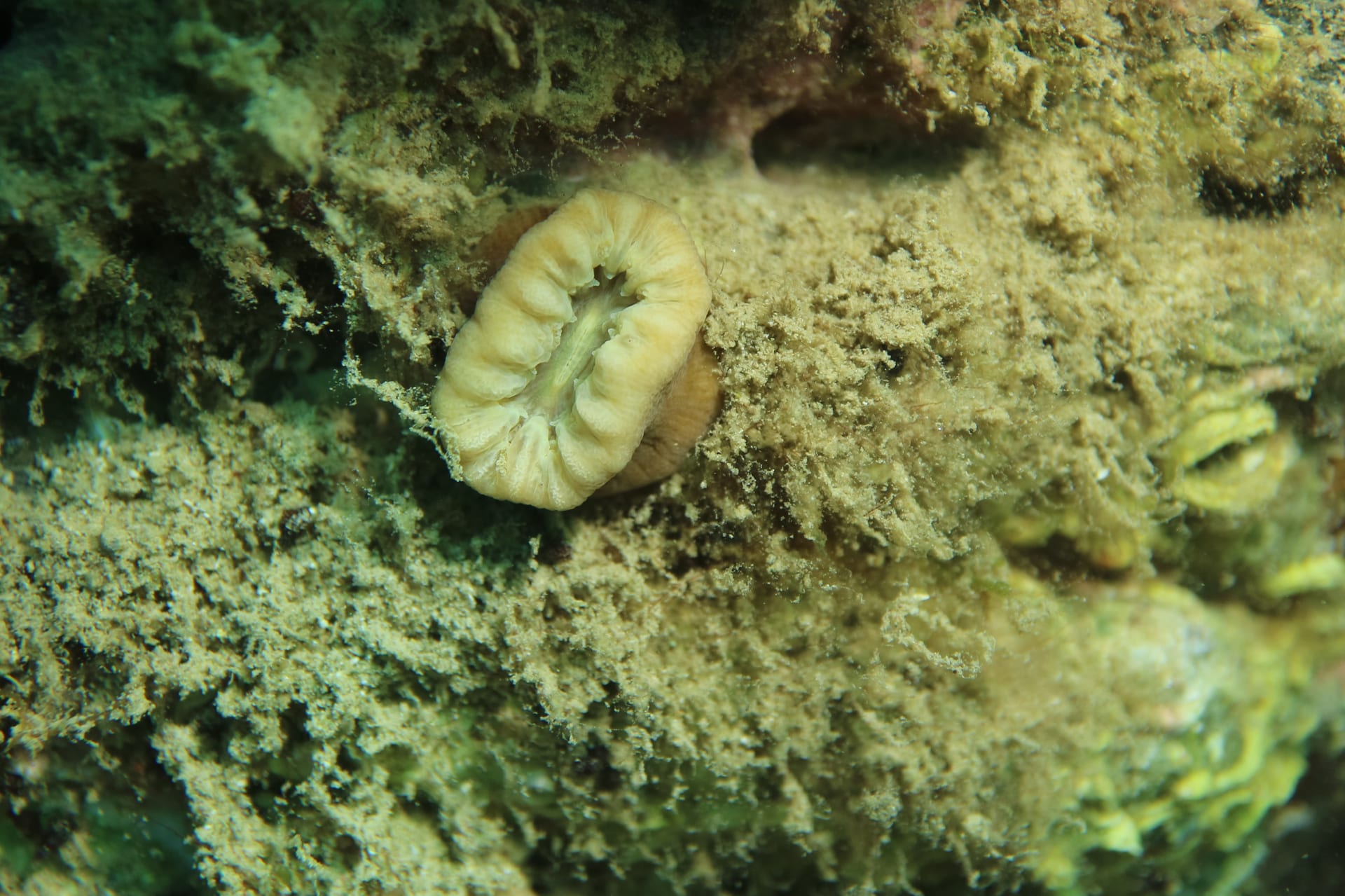
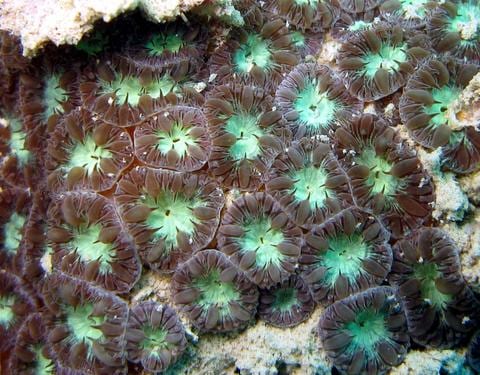
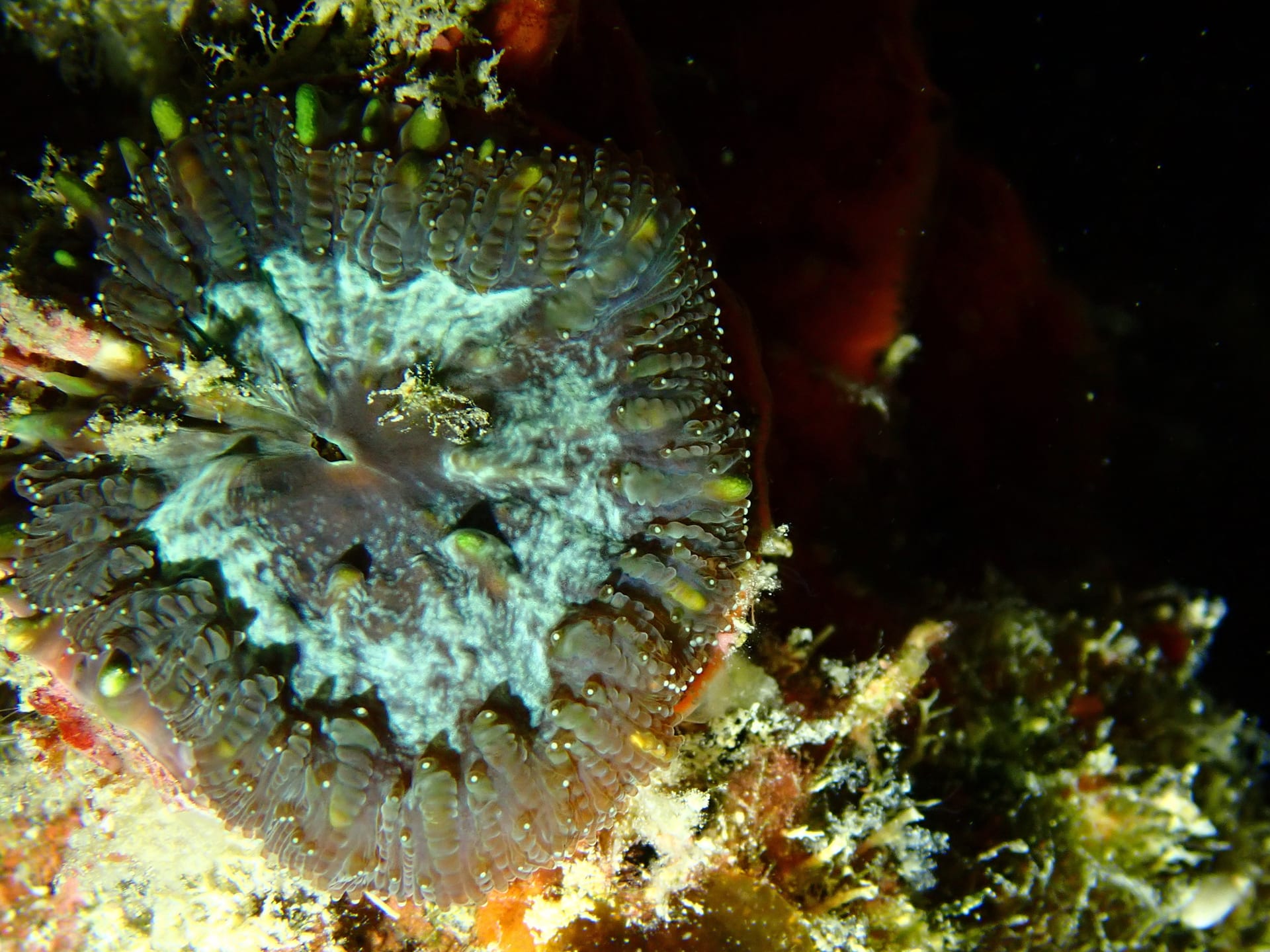
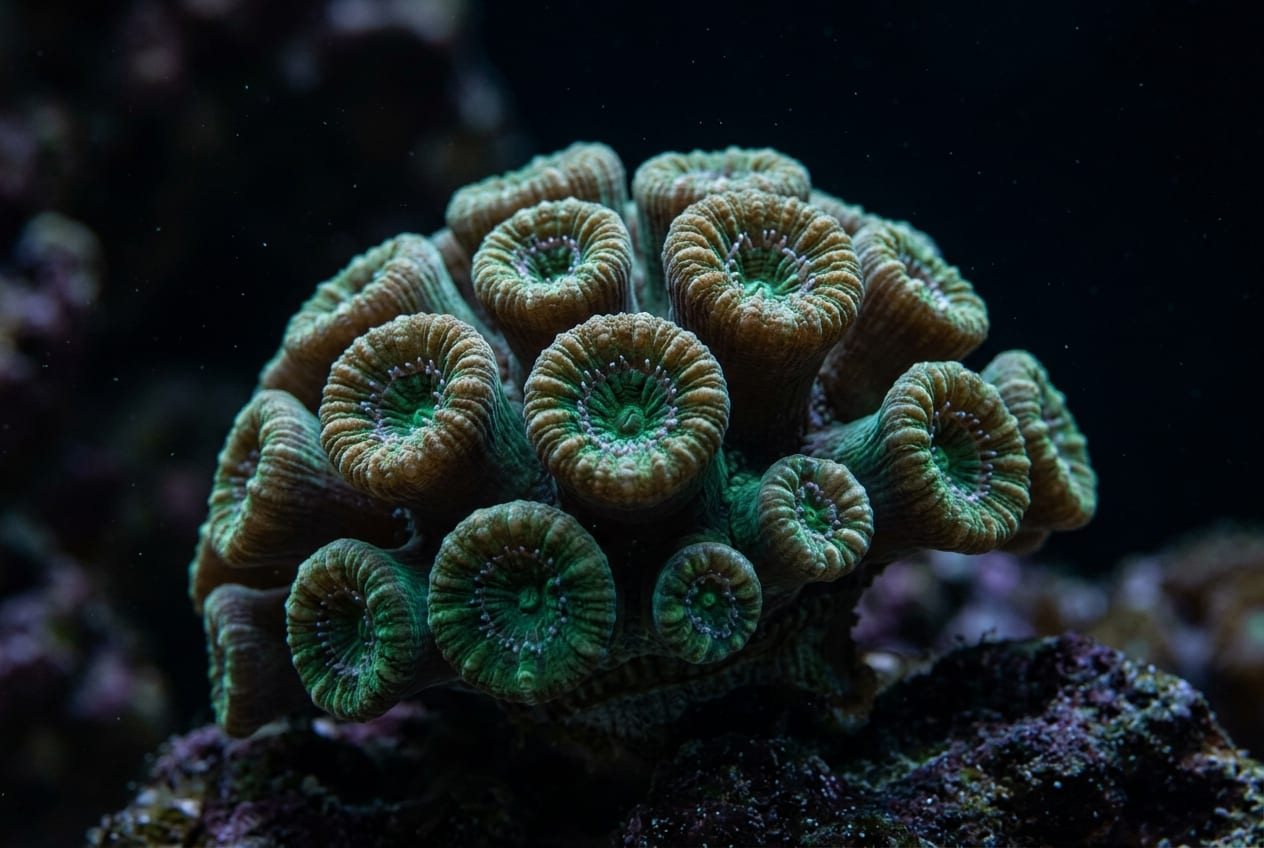
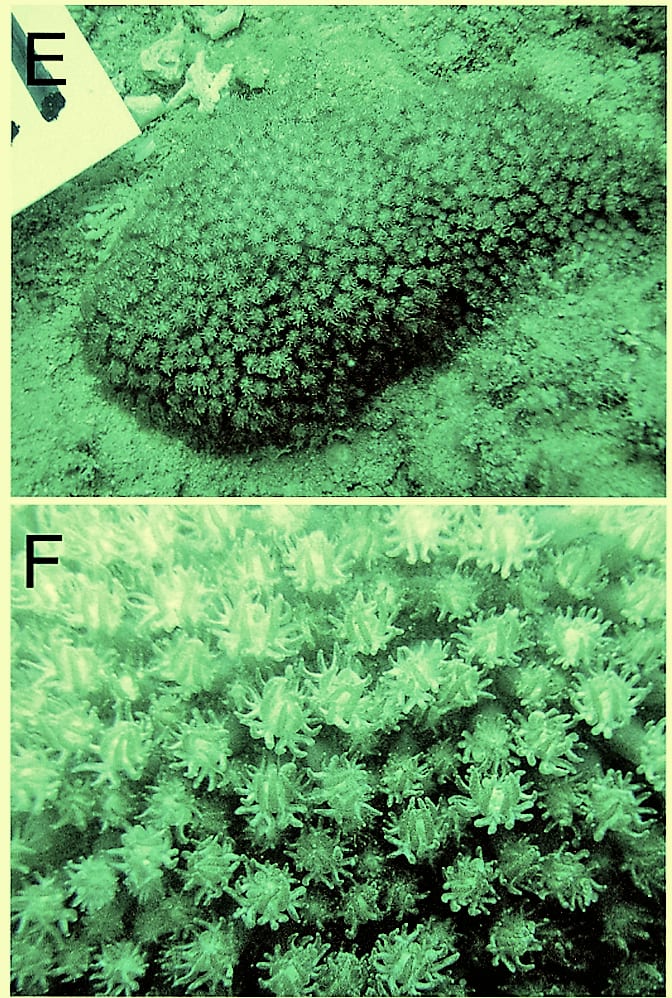
A stony coral placed in a genus separated from Goniopora by a molecular study in 2014. It forms small encrusting to massive colonies with small corallites and densely packed short polyps, and is recorded from Japan to Australia.
Difficulty
Intermediate
Temperature
24〜26℃
Size
Colonies to around 10-20 cm across
Diet
Nutrition from symbiotic zooxanthellae, supplemented with fine zooplankton foods.
About
Bernardpora stutchburyi was described by Wells in 1955 as Goniopora stutchburyi and moved to the new genus Bernardpora by Kitano and colleagues in 2014, on the basis of a combined molecular and skeletal study. The specimen records aggregated by GBIF are dominated by Australia, followed by Hong Kong, Singapore, China, India, Japan, Mayotte, New Caledonia, Fiji, Indonesia and Christmas Island. Colonies are small and encrusting to massive, with corallites smaller and polyps shorter than in Goniopora; these short polyps and small corallites are part of the basis for separating the genus. Husbandry follows that of Goniopora and Alveopora in the same family: moderate light, gentle flow and consistent feeding with fine particulate food. It does not reach the trade in quantity. As a scleractinian it is on CITES Appendix II.
Source: Wikipedia (CC BY-SA 4.0)
Size of the Bernardpora
The Bernardpora grows to Colonies to around 10-20 cm across.
Temperature & humidity for the Bernardpora
The ideal temperature for the Bernardpora is 24〜26℃.
Basic Info
Origin
Australia, Hong Kong, Singapore, China, India, Japan, Mayotte, New Caledonia, Fiji, Indonesia and Christmas Island, among others
Size
Colonies to around 10-20 cm across
Temperature
24〜26℃
Diet
Care Specifications
- Carbonate (KH)
- 8–12 dKH
- Water Temp.
- 24–26℃
- Specific Gravity
- 1.023–1.025
- Salinity
- 33–35 ppt
- Calcium (Ca)
- 380–450 ppm
- Magnesium (Mg)
- 1200–1400 ppm
LPSLight: Medium (PAR 50-150)Flow: LowPlacement: Bottom
Sources: LiveAquaria / AlgaeBarn: Calcium Supplementation / WoRMS (World Register of Marine Species) /
References & Sources
Edited & verified by: BreederDirect editorial team
The taxonomic, regulatory, and husbandry data on this page are compiled and verified against the authoritative primary sources below.
Taxonomy & Authority
Accepted name: Bernardpora stutchburyi (Wells, 1955)
Synonyms: Goniopora stutchburyi Wells, 1955, Goniopora nigra Pillai, 1967, Goniopora wotouensis Zou & Song, 1975
Authority databases: WoRMS
Nomenclature follows global taxonomic authority databases.
Regulations & Conservation Status
CITES Appendix II
Sources: CITES Appendix II (Scleractinia spp. listed as an order)
Regulations may change. Always verify the latest information with the relevant authorities.
Bernardpora Listings
Loading latest listingsFind listings for this species