Source: Wikimedia Commons
Black Sun Coral
AdvancedTubastraea micranthus
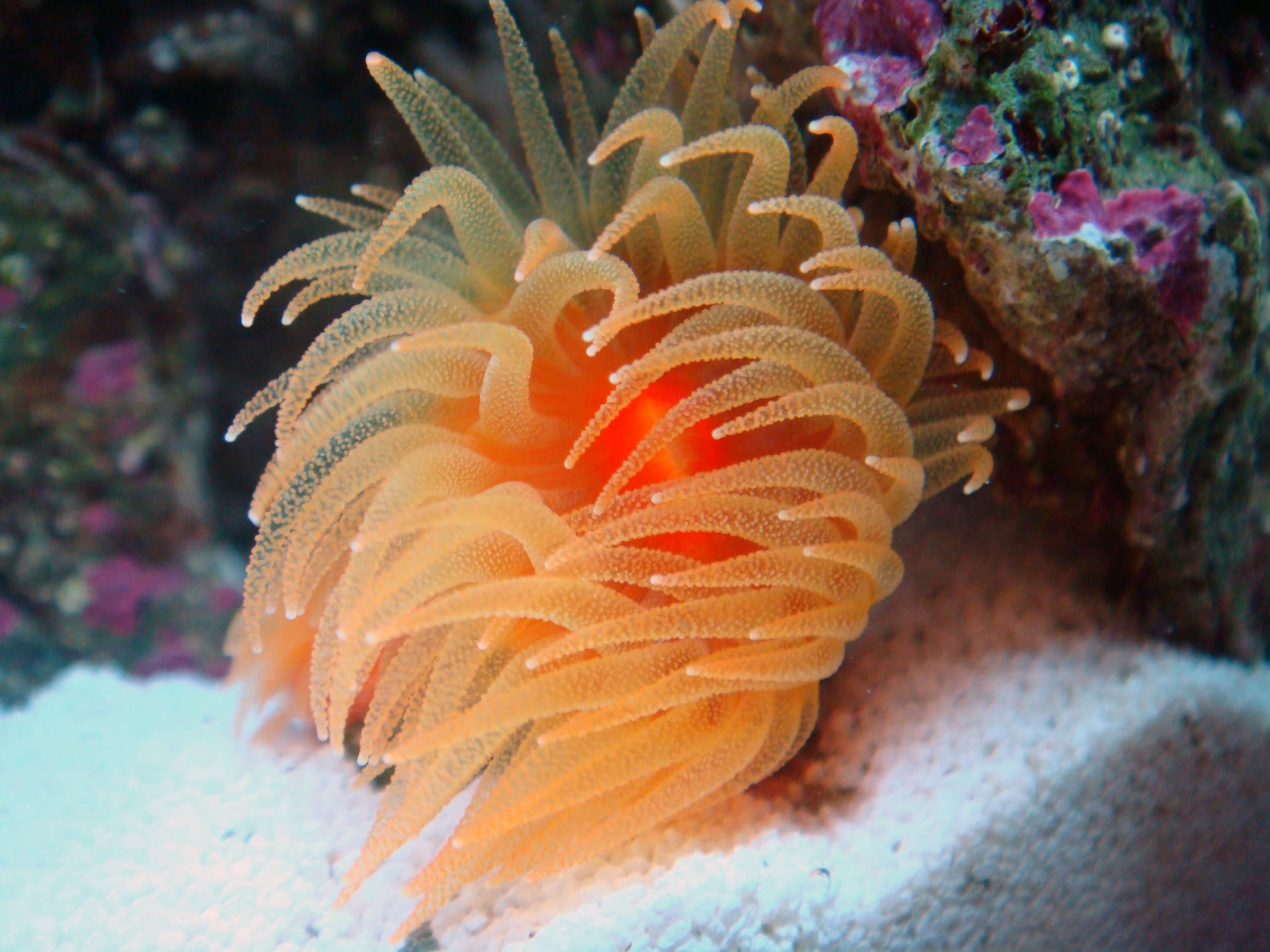
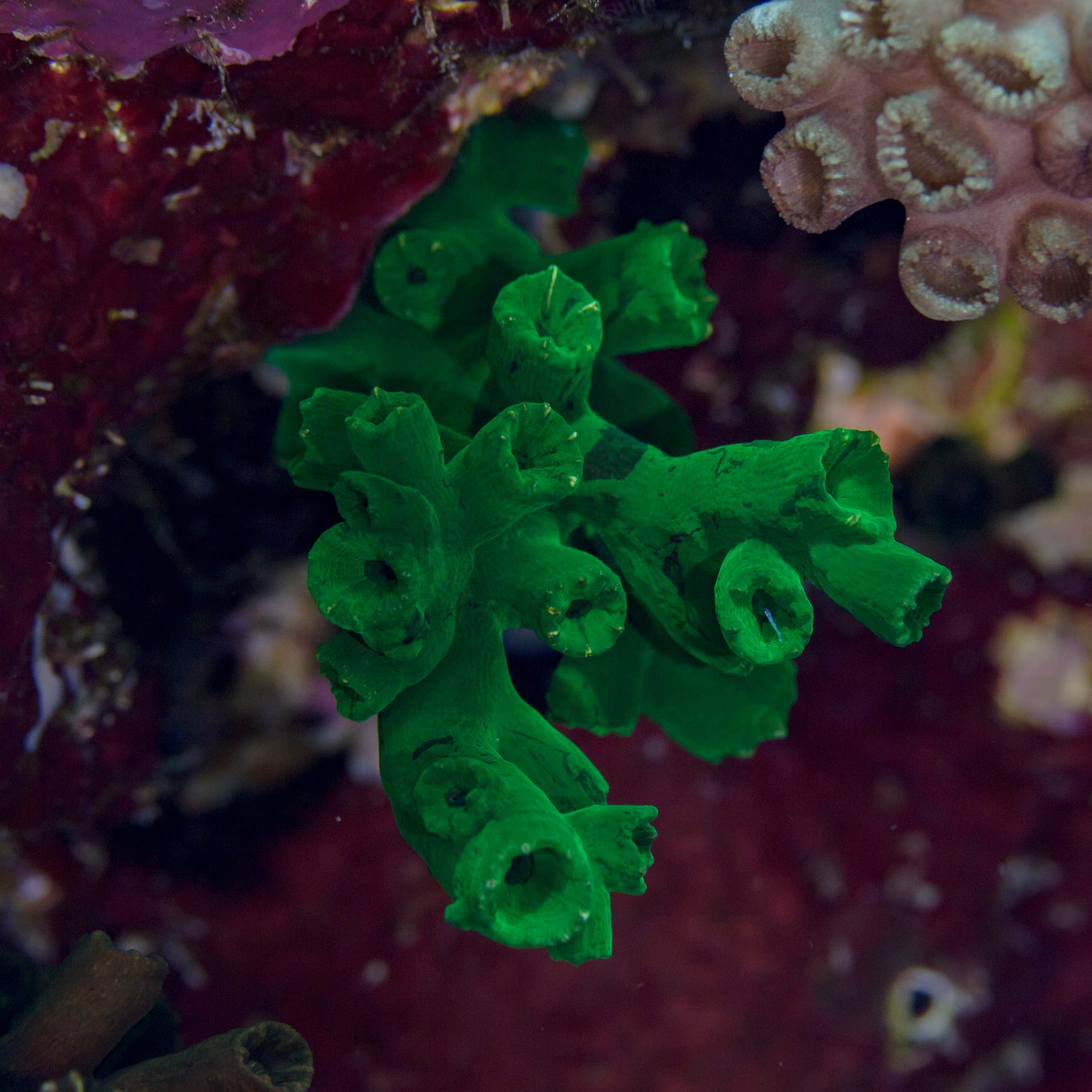
A branching, non-photosynthetic stony coral that looks dark green to black. It has no zooxanthellae and captures plankton with polyps that extend about 3 cm at night. At 4 cm a year it grows fast for an azooxanthellate coral.
Difficulty
Advanced
Temperature
24〜26℃
Size
Colonies to 1 m tall in the Philippines, to 44 cm in the Red Sea
Diet
Azooxanthellate and filter-feeding, taking zooplankton and also larger planktonic prey.
About
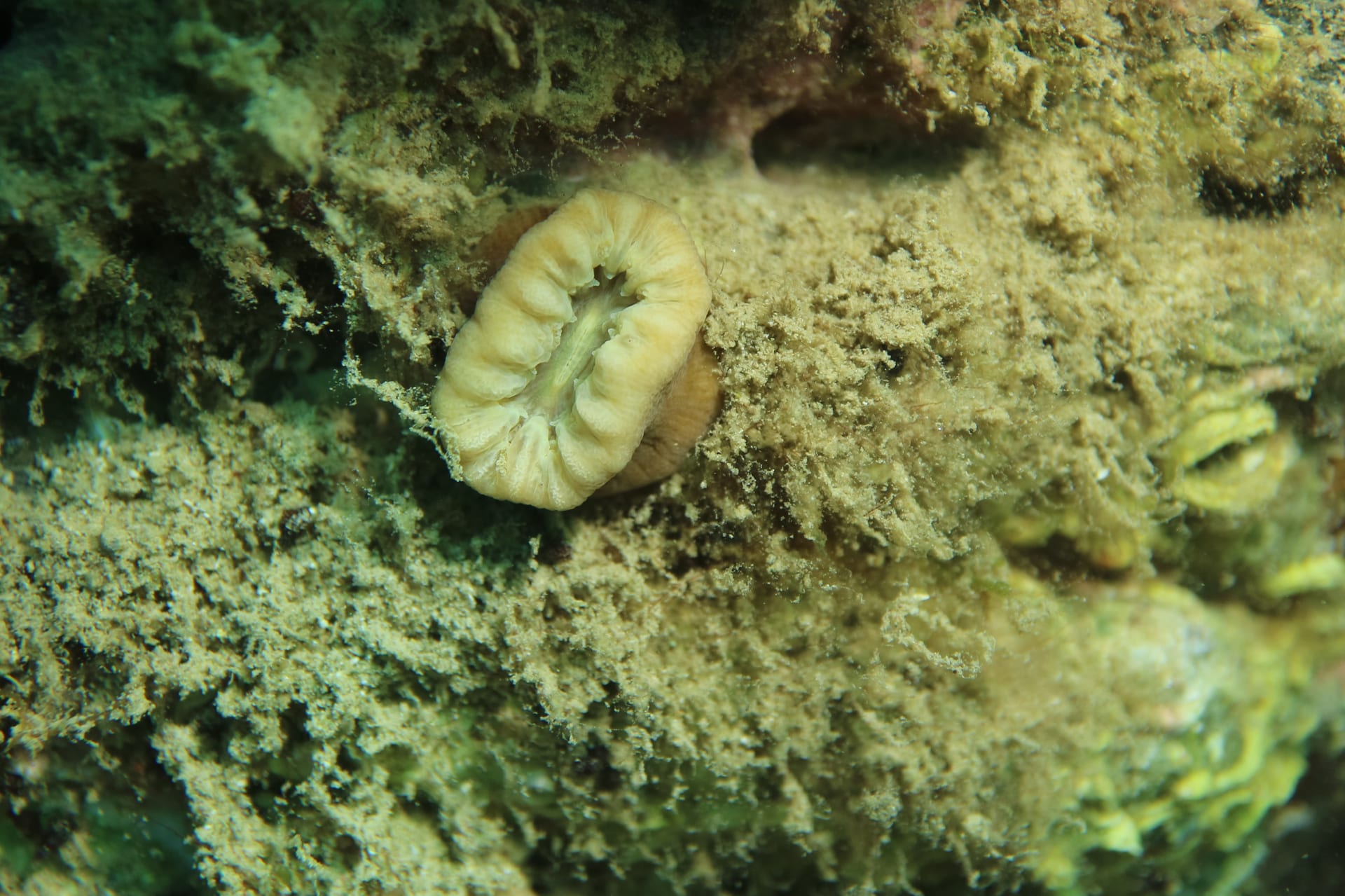
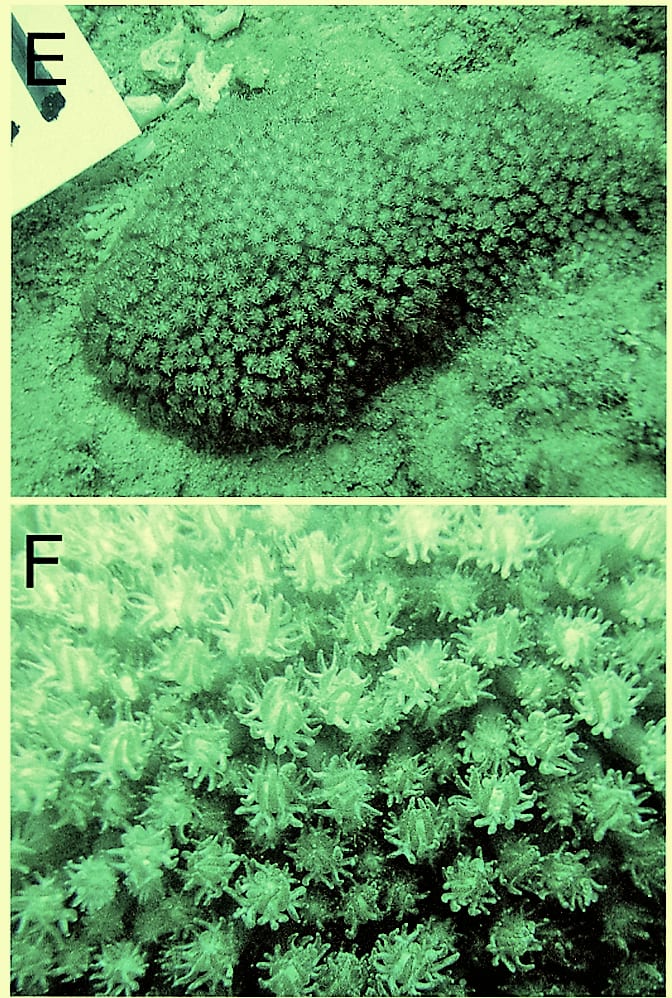
Tubastraea micranthus is a non-photosynthetic dendrophylliid stony coral ranging from the Red Sea to Madagascar and east into the Pacific as far as Fiji. It is dark green and branches into bush- or tree-like colonies. Being azooxanthellate, it depends entirely on food captured from the water, using polyps that extend about 3 cm at night to take zooplankton; larger planktonic prey and even jellyfish have been observed eaten, though not confirmed as a regular part of the diet. Unusually for a non-photosynthetic coral it is reef-building, and is sturdy enough to remain standing in areas cleared by dynamite fishing. Its growth rate of 4 cm a year is fast for an azooxanthellate species. Philippine colonies reach 1 m tall with a base stem 15 cm across, whereas the tallest recorded in the Red Sea is only 44 cm. In recent years it has established itself near the mouth of the Mississippi in the Gulf of Mexico, where it is an invasive species outcompeting native sponges and algae. As a scleractinian it is listed on CITES Appendix II.
Source: Wikipedia (CC BY-SA 4.0)
Size of the Black Sun Coral
The Black Sun Coral grows to Colonies to 1 m tall in the Philippines, to 44 cm in the Red Sea.
Temperature & humidity for the Black Sun Coral
The ideal temperature for the Black Sun Coral is 24〜26℃.
Basic Info
Origin
From the Red Sea to Madagascar and east into the Pacific as far as Fiji. In its native range it occurs to 50 m; in invaded habitat it has been recorded from 4 to 138 m.
Size
Colonies to 1 m tall in the Philippines, to 44 cm in the Red Sea
Care Specifications
- Carbonate (KH)
- 8–12 dKH
- Water Temp.
- 24–26℃
- Specific Gravity
- 1.023–1.025
- Salinity
- 33–35 ppt
- Calcium (Ca)
- 380–440 ppm
- Magnesium (Mg)
- 1300–1400 ppm
LPSLight: Low (PAR 30-50)Flow: MediumPlacement: Middle
Sources: AlgaeBarn: Keeping and Feeding the Sun Corals / AlgaeBarn: Feeding Your NPS Aquarium / WoRMS (World Register of Marine Species)
References & Sources
Edited & verified by: BreederDirect editorial team
The taxonomic, regulatory, and husbandry data on this page are compiled and verified against the authoritative primary sources below.
Taxonomy & Authority
Accepted name: Tubastraea micranthus (Ehrenberg, 1834)
Authority databases: WoRMS
Nomenclature follows global taxonomic authority databases.
Regulations & Conservation Status
CITES Appendix II
Sources: CITES Appendix II (Scleractinia spp. listed as an order)
Regulations may change. Always verify the latest information with the relevant authorities.
Black Sun Coral Listings
Loading latest listingsFind listings for this species