Source: Wikimedia Commons
Rhizotrochus
AdvancedRhizotrochus typus
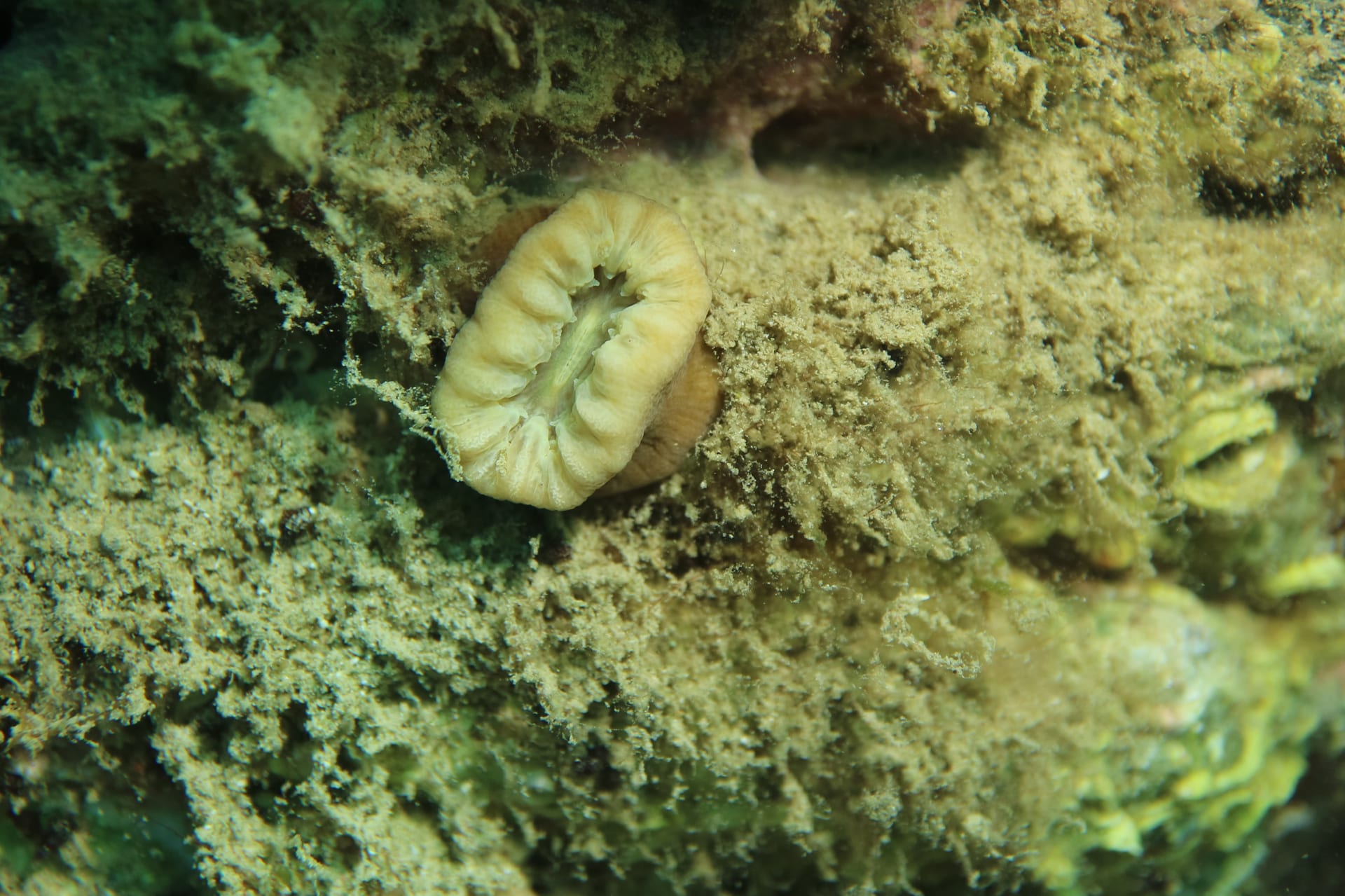
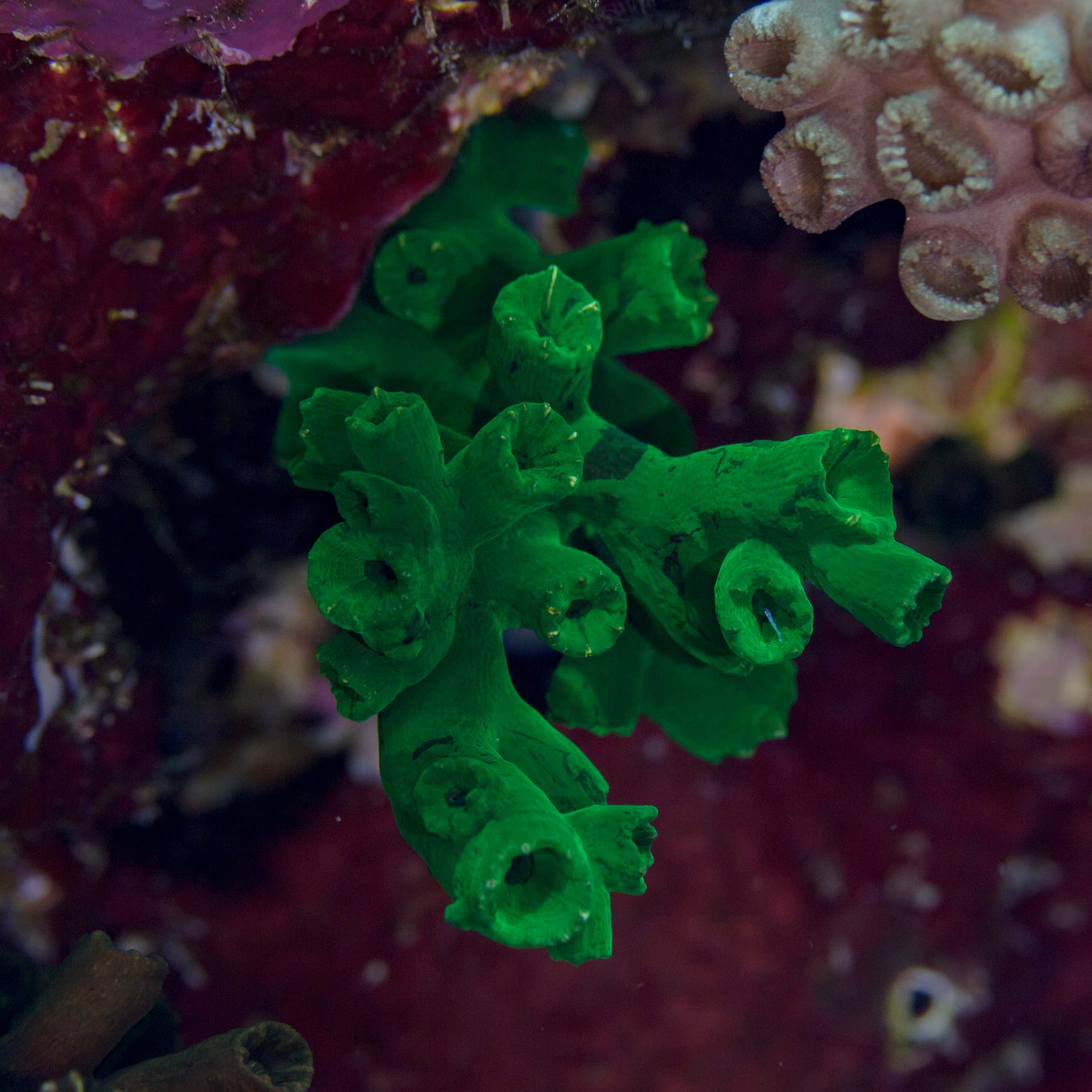
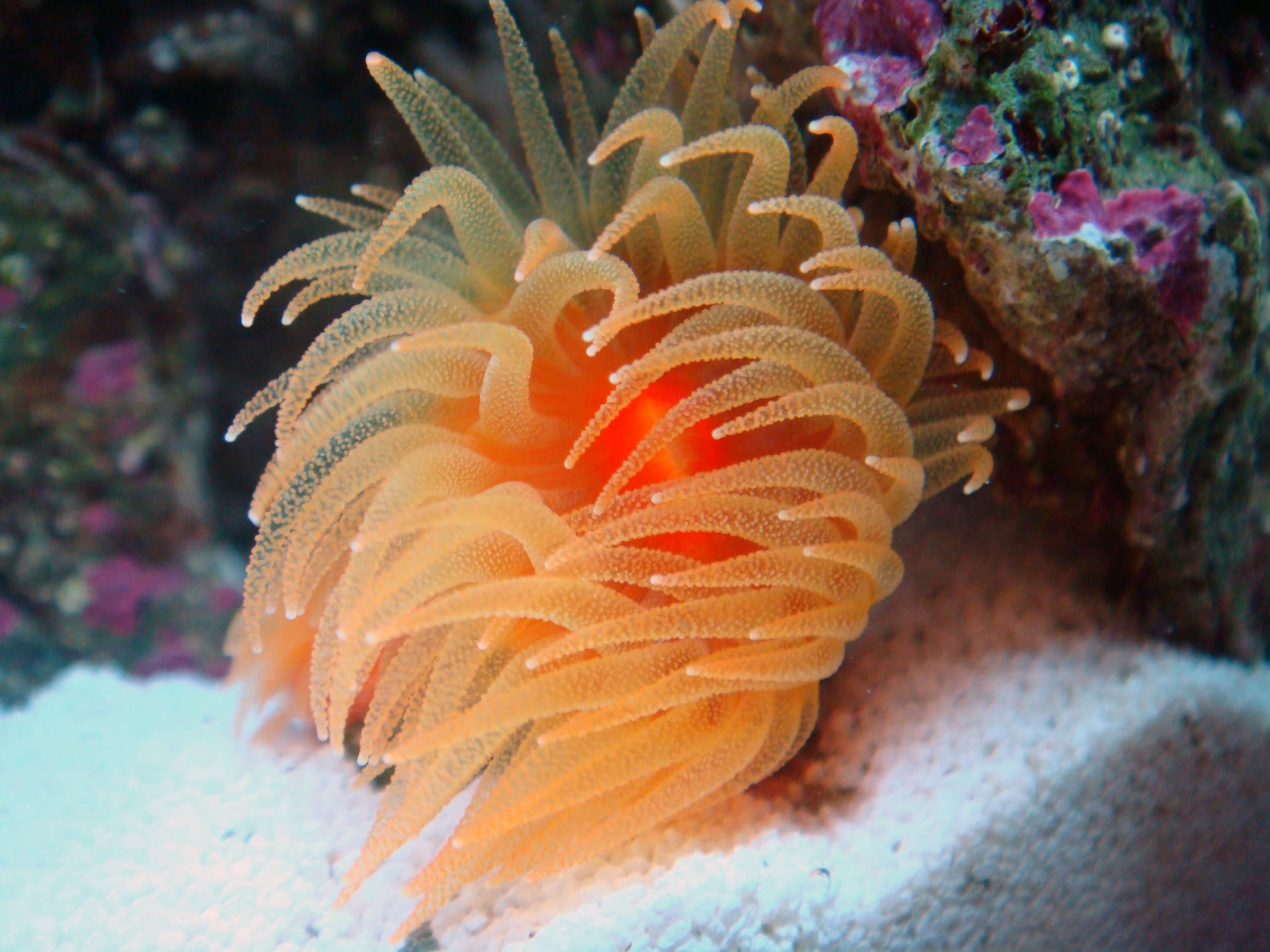
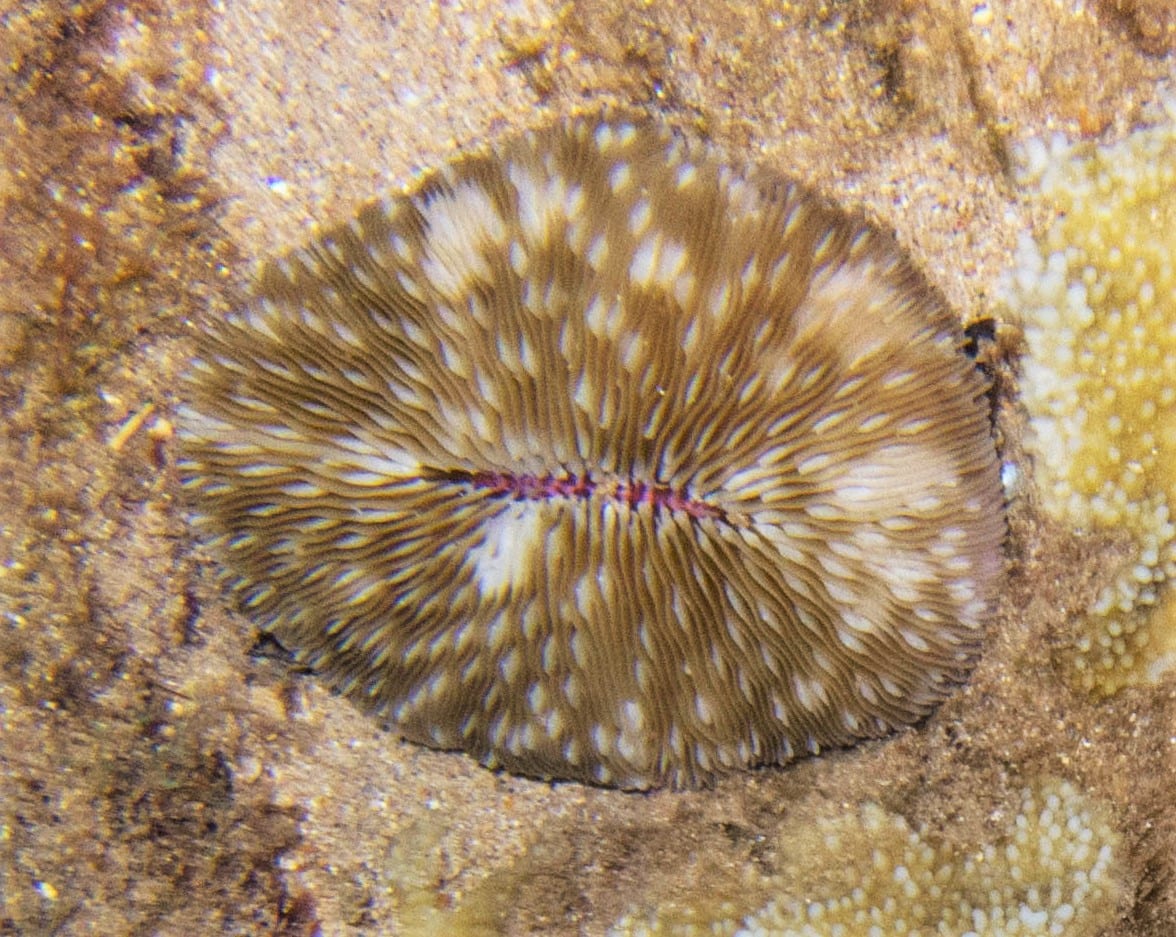
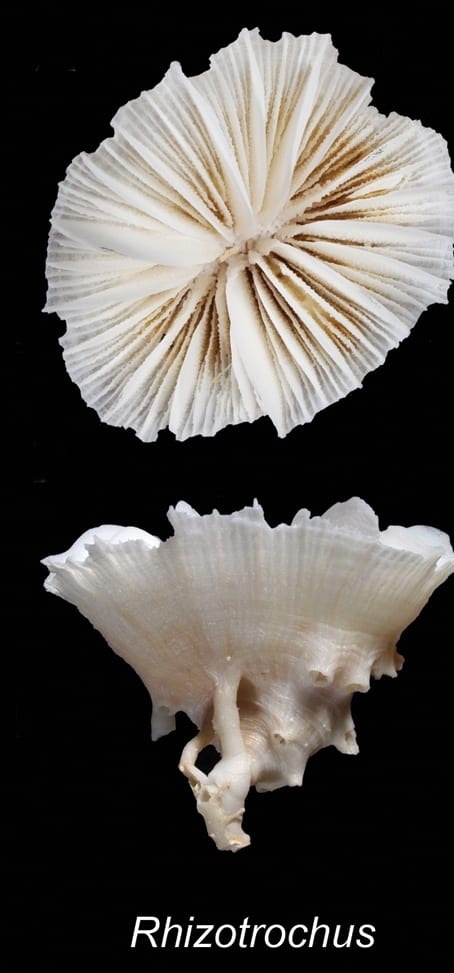
A solitary azooxanthellate stony coral. Root-like processes grow from the side of the corallite to anchor it to the substrate, which is the origin of the genus name, and it spreads long translucent tentacles to catch food.
Difficulty
Advanced
Temperature
24〜26℃
Diet
Azooxanthellate, so it depends entirely on feeding with zooplankton and chopped seafood.
About
Rhizotrochus typus is a solitary stony coral in the family Flabellidae, described by Milne Edwards and Haime in 1848. It appears in Cairns and Kitahara's key to the Recent azooxanthellate Scleractinia and hosts no zooxanthellae. It does not form colonies: a single polyp occupies one corallite, and root-like rhizoid processes grow from the side of the corallite to anchor it to the substrate, which is the origin of the genus name Rhizotrochus. Its nutrition comes entirely from capture rather than photosynthesis, and it spreads long translucent tentacles to take food from the water. In the aquarium it needs no lighting and is placed in crevices or under overhangs. If feeding lapses the polyp stops opening and the animal declines, so it must be sited where food reliably reaches it. As a scleractinian it is listed on CITES Appendix II.
Source: WoRMS
Temperature & humidity for the Rhizotrochus
The ideal temperature for the Rhizotrochus is 24〜26℃.
Basic Info
Origin
Indo-West Pacific, including waters off Singapore (WoRMS distribution records)
Temperature
24〜26℃
Diet
Azooxanthellate, so it depends entirely on feeding with zooplankton and chopped seafood.
Care Guide
Lighting
It has no zooxanthellae, so light is not needed. The polyp is reluctant to open under bright lighting, so place it in shade or under an overhang.
Care Specifications
- Carbonate (KH)
- 8–12 dKH
- Water Temp.
- 24–26℃
- Specific Gravity
- 1.023–1.025
- Salinity
- 33–35 ppt
- Calcium (Ca)
- 380–440 ppm
- Magnesium (Mg)
- 1300–1400 ppm
LPSLight: Low (PAR 30-50)Flow: MediumPlacement: Bottom
Sources: Cairns & Kitahara (2012), illustrated key to the genera of Recent azooxanthellate Scleractinia, ZooKeys 227 / AlgaeBarn: Feeding Your NPS Aquarium / WoRMS (World Register of Marine Species)
References & Sources
Edited & verified by: BreederDirect editorial team
The taxonomic, regulatory, and husbandry data on this page are compiled and verified against the authoritative primary sources below.
Taxonomy & Authority
Accepted name: Rhizotrochus typus Milne Edwards & Haime, 1848
Authority databases: WoRMS
Nomenclature follows global taxonomic authority databases.
Regulations & Conservation Status
CITES Appendix II
Sources: CITES Appendix II (Scleractinia spp. listed as an order)
Regulations may change. Always verify the latest information with the relevant authorities.
Rhizotrochus Listings
Loading latest listingsFind listings for this species