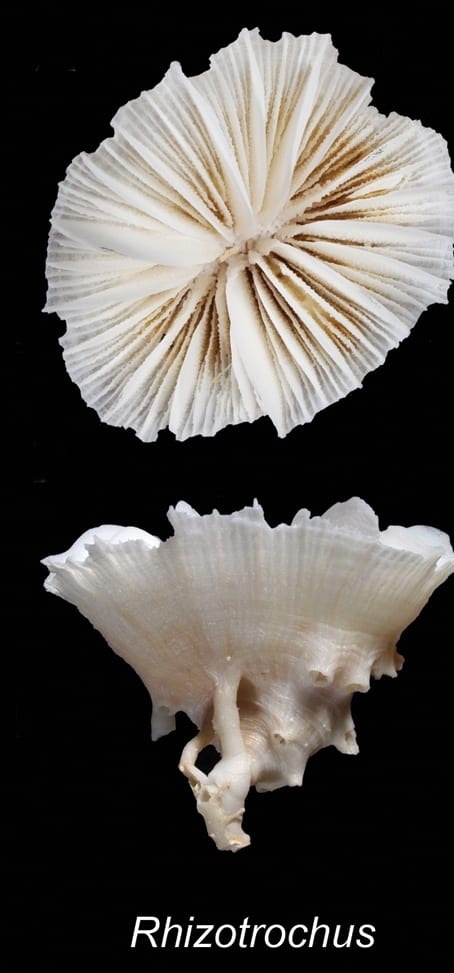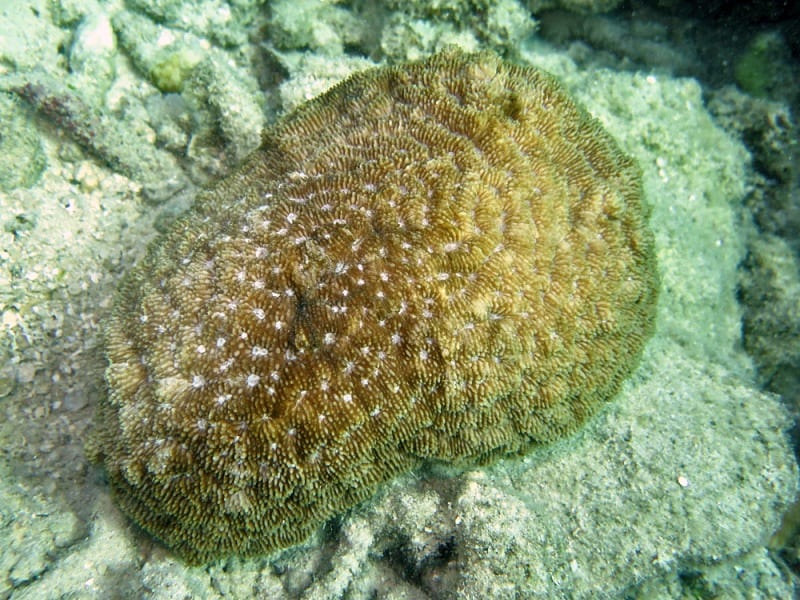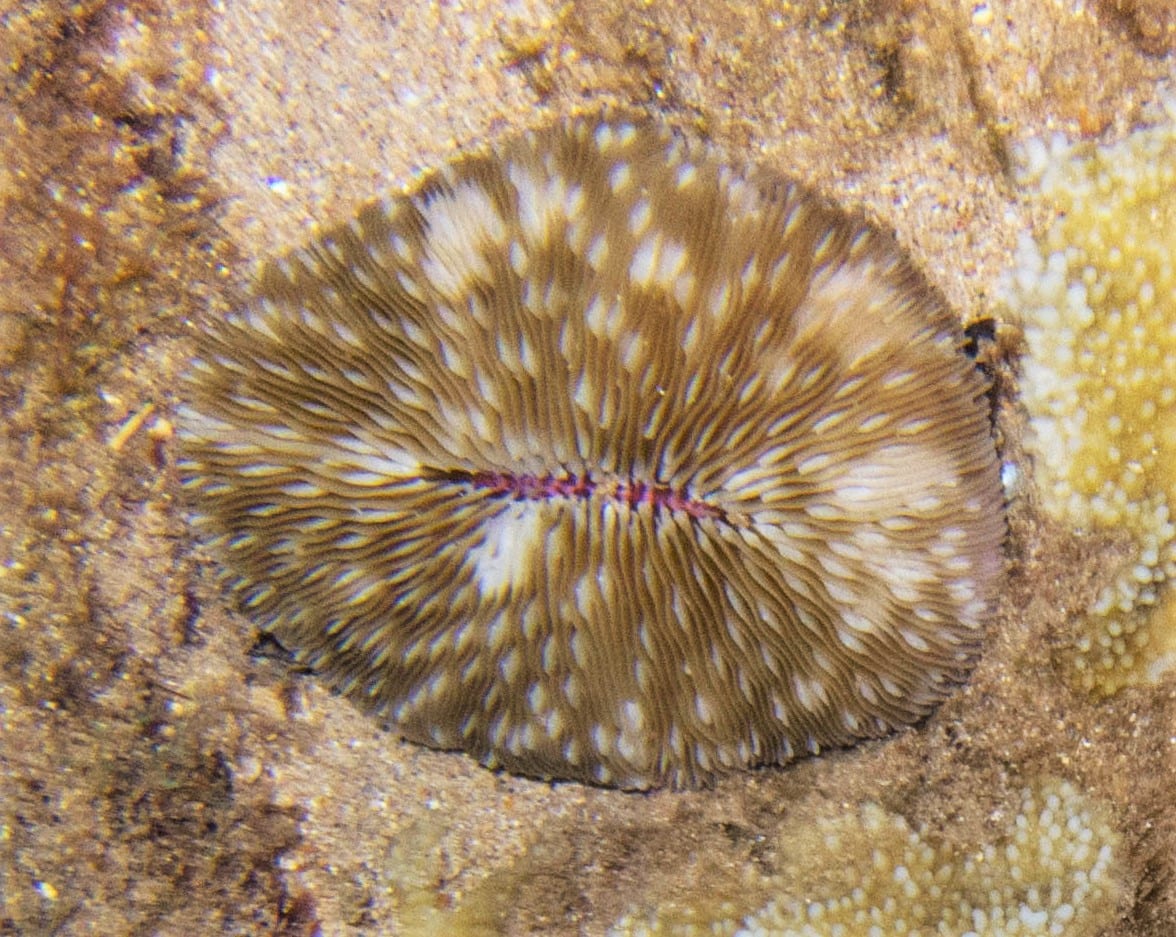
Source: Wikimedia Commons
Lobactis (Fungia Scutaria)
BeginnerLobactis scutaria
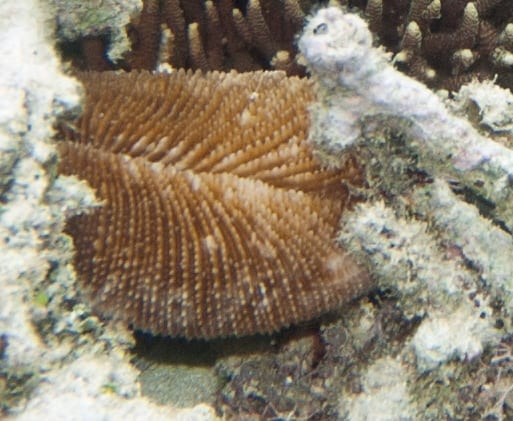
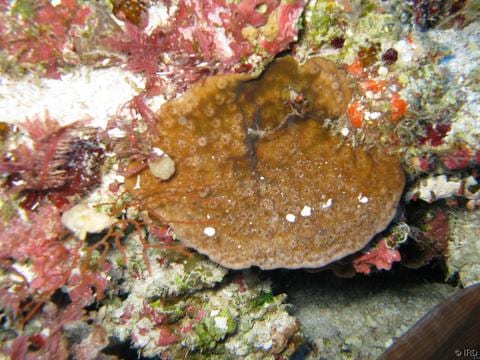
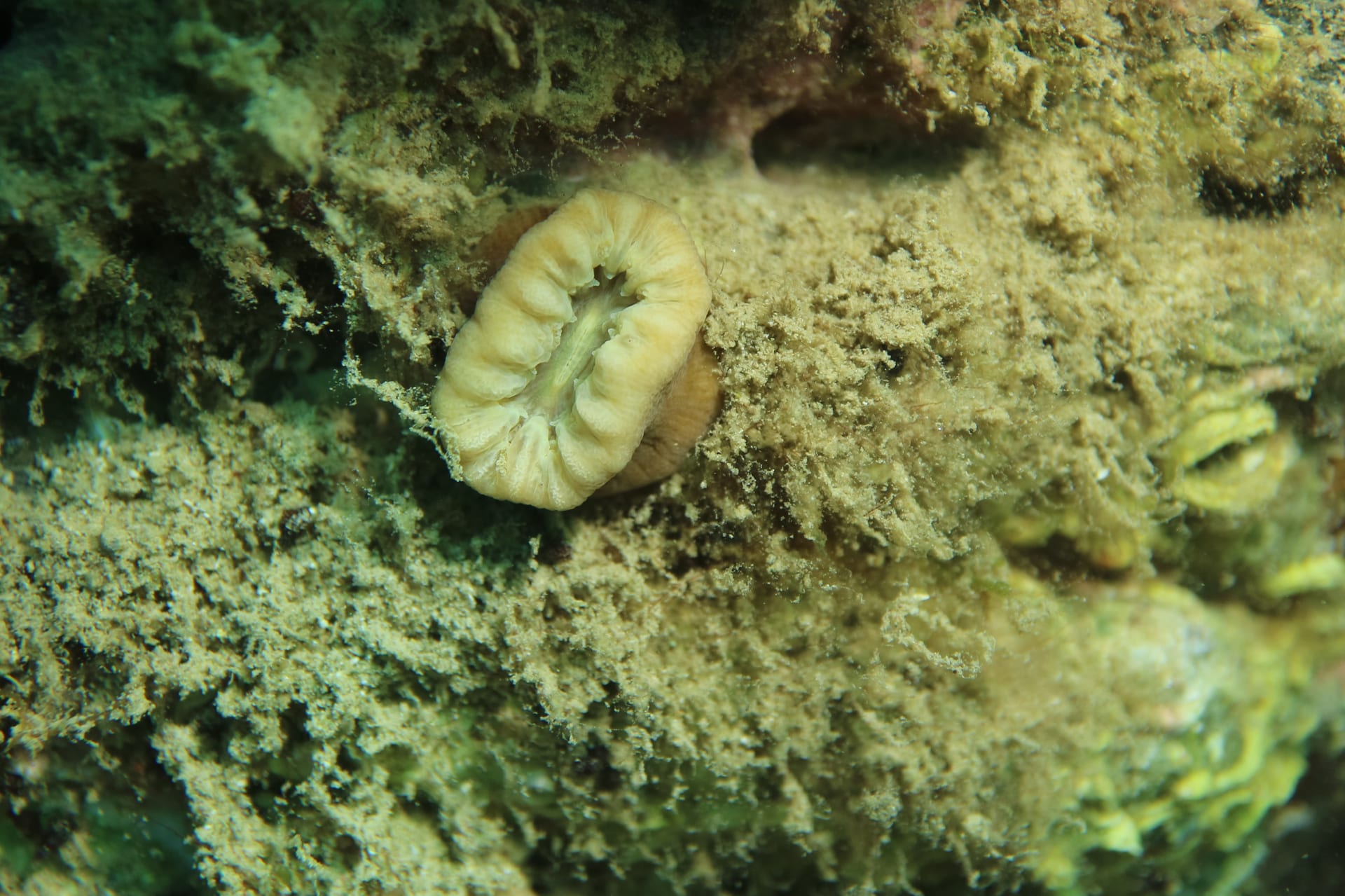
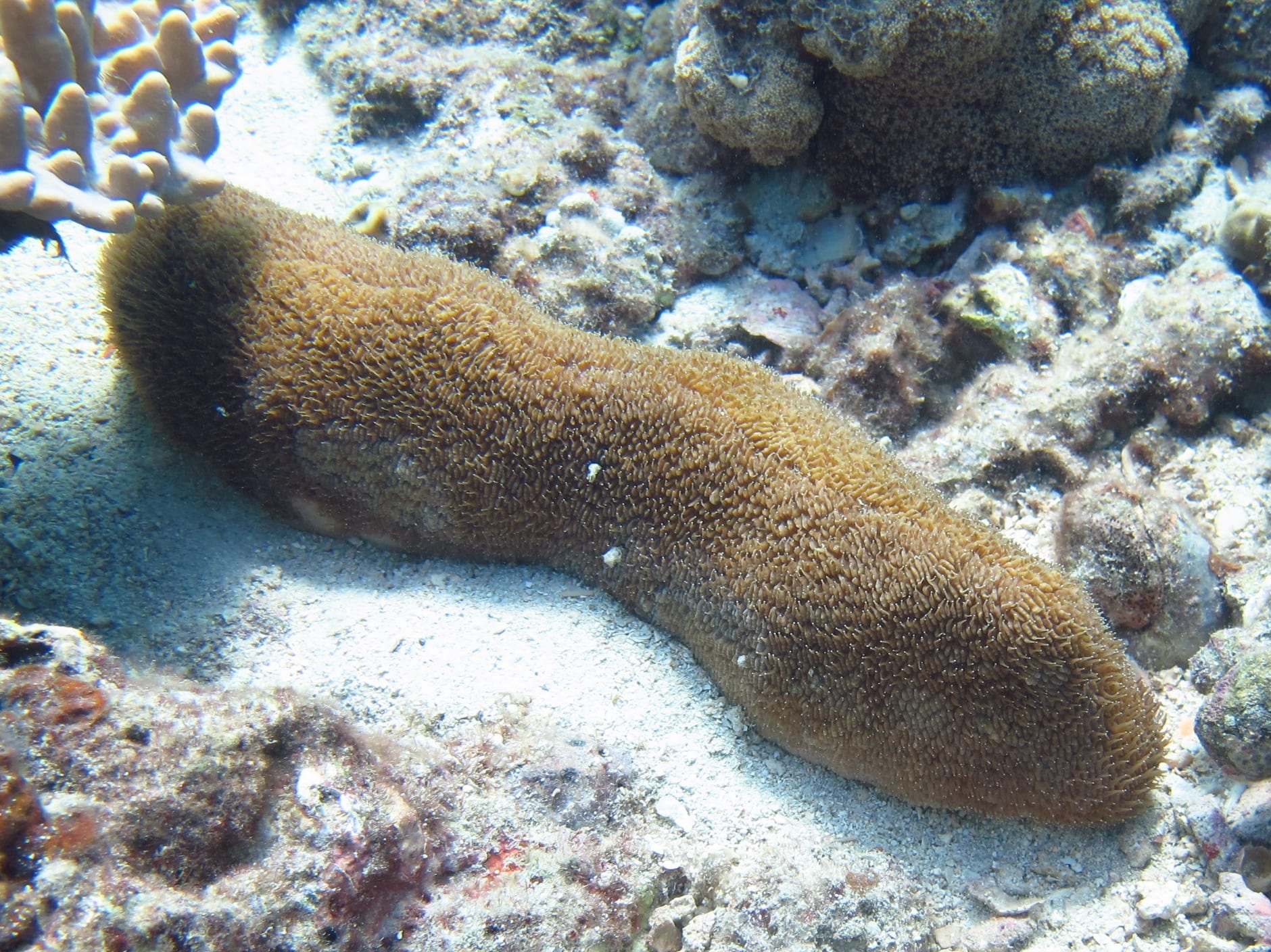
The only species in its genus, a solitary fungiid. The disc is round to elongated and the tentacular lobes standing on the septa contrast with the body colour. It reaches 17 cm and lives free on sand or coral rubble.
Difficulty
Beginner
Temperature
24〜26℃
Size
Up to about 17 cm
Diet
Carnivorous, catching plankton, small shrimps and fish with its tentacles. It feeds by day as well as by night.
About
Lobactis scutaria, long known as Fungia scutaria, is a solitary fungiid and the only species in its genus. It lives free rather than attached, is discoid to elongated in outline, and the polyp reaches 17 cm. Narrow septa line the corallite, each carrying a tall tentacular lobe near its origin; the septal teeth are unlobed, and outside the corallite the ribs continue as costae bearing rows of tiny spines. The underside keeps a scar from where the juvenile detached from the seabed. Colour is brown, yellowish or blue, usually with contrasting tentacular lobes. It is common on sand and coral rubble on upper reef slopes with strong wave action, often alongside Fungia species. It is hermaphroditic, releasing eggs and sperm through the mouth to form planula larvae. As a scleractinian it is on CITES Appendix II, and the IUCN rates it Least Concern.
Source: Wikipedia (CC BY-SA 4.0)
Size of the Lobactis (Fungia Scutaria)
The Lobactis (Fungia Scutaria) grows to Up to about 17 cm.
Temperature & humidity for the Lobactis (Fungia Scutaria)
The ideal temperature for the Lobactis (Fungia Scutaria) is 24〜26℃.
Basic Info
Origin
Indo-Pacific, mostly on sand or coral rubble on upper reef slopes where there is considerable wave action.
Size
Up to about 17 cm
Temperature
24〜26℃
Diet
Care Specifications
- Carbonate (KH)
- 8–12 dKH
- Water Temp.
- 24–26℃
- Specific Gravity
- 1.023–1.025
- Salinity
- 33–35 ppt
- Calcium (Ca)
- 380–440 ppm
- Magnesium (Mg)
- 1300–1400 ppm
LPSLight: Medium (PAR 50-150)Flow: LowPlacement: Bottom
Sources: LiveAquaria (Plate Coral, Long Tentacle/クサビライシ科の飼育値) / AlgaeBarn: A Quick Guide to LPS and SPS / WoRMS (World Register of Marine Species)
References & Sources
Edited & verified by: BreederDirect editorial team
The taxonomic, regulatory, and husbandry data on this page are compiled and verified against the authoritative primary sources below.
Taxonomy & Authority
Accepted name: Lobactis scutaria (Lamarck, 1801)
Synonyms: Fungia scutaria Lamarck, 1801
Authority databases: WoRMS
Nomenclature follows global taxonomic authority databases.
Regulations & Conservation Status
CITES Appendix IIIUCN LC · Least Concern
Sources: CITES Appendix II (Scleractinia spp. listed as an order) / IUCN Red List (via SeaLifeBase)
Regulations may change. Always verify the latest information with the relevant authorities.
Lobactis (Fungia Scutaria) Listings
Loading latest listingsFind listings for this species