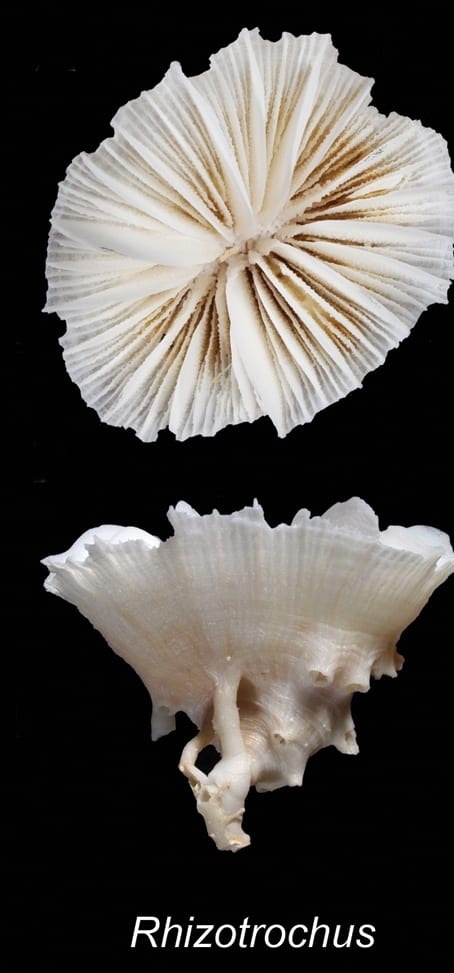
 © Cairns S, Kitahara M (2012) / CC BY 3.0
Rhizotrochus
Rhizotrochus is a solitary stony coral that lacks zooxanthellae, meaning each individual forms its own independent corallite rather than growing as part of a colony. Its most distinctive trait is the root-like projections extending from the base of the corallite, which anchor it to rock or sand and give the genus its name. Because it doesn't rely on photosynthesis, it spreads long, translucent tentacles to capture drifting food particles for nutrition. Strong lighting isn't required, but that means regular feeding is essential, and watching the tentacles extend at feeding time is part of its appeal. Its care calls for solid feeding know-how, which is why it's considered a species for experienced keepers.
View Rhizotrochus encyclopedia →0% commission on your first sales!Register by September 30, 2026 and your first 2 sales are commission-free!
Breeder Wanted!
List on BreederDirect and sell directly to customers nationwide!
Br-Choku's 6 Transparency Standards
Our Breeder sellers disclose detailed care specs for all Coral listings. We prioritize Aquacultured/CB specimens, verify WYSIWYG photos, and provide difficulty ratings—avoiding wild-caught.
- Aquacultured
- WYSIWYG Photo
- Difficulty Disclosed
- Frag/Colony
- Care Info Included
- Trade name shown
Browse all 210 breeds
Difficulty
Verified breeders wanted for Coral
Breeders are signing up now ahead of launch. Subscribe to be notified when new listings go live.
Getting alerts is free with a member account. When new listings match your saved search, we'll notify you by email and in-app.
Browse other categories
Verified breeders (preview)
Rhizotrochus key facts
- Care level
- Advanced
- Temperature
- 24〜26℃
- Diet
- Azooxanthellate, so it depends entirely on feeding with zooplankton and chopped seafood.
- Lighting
- It has no zooxanthellae, so light is not needed. The polyp is reluctant to open under bright lighting, so place it in shade or under an overhang.
- Flow & Placement
- Give it moderate flow so food reaches the tentacles; too much and they cannot extend. It anchors with rhizoid processes, so set it on a flat, immobile surface.
- Water Temperature & Quality
- Water 24-26C, specific gravity 1.023-1.025 (salinity 33-35 ppt), KH 8-12, calcium 380-440 ppm, magnesium 1300-1400 ppm. Heavy feeding makes nutrient control essential.
- Feeding
- Success depends on feeding. AlgaeBarn recommends that non-photosynthetic corals be able to feed continuously, maintaining a standing population of large copepods in the system. Spot-feed after lights-out once the tentacles have opened.
- Notes
- Starvation is the commonest cause of death, and the polyp stops opening if feeding lapses. Uneaten food fouls the water, so water changes and mechanical filtration are needed. As a scleractinian it is on CITES Appendix II and international trade requires permits.
About Rhizotrochus
Rhizotrochus is a solitary, non-photosynthetic stony coral that anchors itself with root-like projections and feeds via long tentacles. It needs no strong lighting but demands careful feeding, making it best suited to experienced reef keepers.
7 things to know before welcoming a Rhizotrochus
1Feeding Is Essential
Since it lacks zooxanthellae, it can't rely on photosynthesis for nutrition. Its survival and growth depend on regular feeding, so food such as zooplankton needs to be delivered within reach of its tentacles.
2A Solitary Coral
Rhizotrochus has just one corallite and doesn't form colonies. Each individual exists as its own distinct organism rather than part of a larger structure.
3Root-Like Anchoring Structures
It extends root-like projections from the base of its corallite to anchor itself to rock or sand. This distinctive structure is actually the source of the genus name.
4Long, Translucent Tentacles
At feeding time, it extends long, translucent tentacles to capture food drifting in the water. Whether the tentacles are extended or retracted depends on the timing of your observation.
5No Strong Lighting Needed
Because it lacks zooxanthellae, it doesn't require the intense lighting setups other corals need. Instead, nutrition management centers on feeding rather than light.
6Prefers Gentle Water Flow
Since it relies on extending its tentacles to catch food, it tends to do better in gentler flow rather than areas hit by strong, constant current. Placement should be adjusted based on the flow pattern within the tank.
7Why It Suits Experienced Keepers
Managing feeding frequency and timing calls for different knowledge than caring for photosynthetic corals. For this reason, it's considered a species best suited to keepers with prior coral-keeping experience.
Frequently asked questions about Rhizotrochus
- Q.Does Rhizotrochus need lighting to keep?
- A.No, strong lighting isn't required since it lacks zooxanthellae. Instead, it needs regular feeding to make up for the nutrition it can't get from light.
- Q.How often does it need to be fed?
- A.This varies by individual and setup, but like other tentacle-feeding corals, regular feeding is essential. Food should be delivered within reach of its tentacles.
- Q.Is this a good coral for beginners?
- A.Rhizotrochus is considered a species for experienced keepers. Since it requires different care knowledge than photosynthetic corals, such as feeding management, it's best introduced after gaining some coral-keeping experience.
- Q.Can it be kept in a tank with other corals?
- A.Since it needs consideration for water flow and placement, check the flow pattern and layout of your tank when deciding where to position it.
- Q.Is Rhizotrochus subject to CITES?
- A.Rhizotrochus is listed in CITES Appendix II. International trade requires a permit from the exporting country, but as far as CITES is concerned, no registration is needed to buy or sell individuals already legally in Japan.
Useful tools for Rhizotrochus care
Learn more about Rhizotrochus in the encyclopedia
View Rhizotrochus encyclopedia entry →
Care difficulty, lifespan, size and diet — all basics covered.
More in this category
Can't find the one you're looking for?
Post your wishes for free and breeders with matching animals will contact you with introductions.