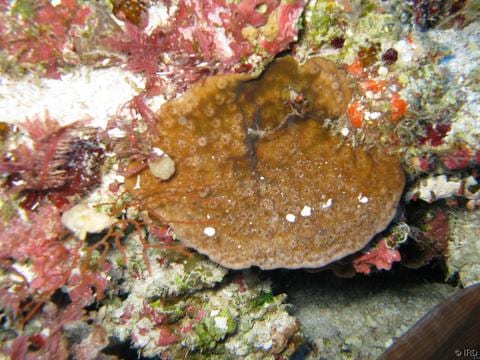
 © Benzoni, F. / CC BY 3.0
Cycloseris
Cycloseris is a disc-shaped, solitary coral in the Fungiidae family. Unlike corals that cement themselves to rock, it rests freely on the sandy substrate, with a single mouth at the center of its disc from which tentacles reach out to catch food. It grows to about 10cm in diameter at most, making it easy to find a spot for in almost any tank. Cycloseris is notably tolerant of turbid water, so it doesn't demand pristine water quality — a trait that makes it a forgiving choice for anyone just starting out with coral keeping.
View Cycloseris encyclopedia →0% commission on your first sales!Register by September 30, 2026 and your first 2 sales are commission-free!
Breeder Wanted!
List on BreederDirect and sell directly to customers nationwide!
Br-Choku's 6 Transparency Standards
Our Breeder sellers disclose detailed care specs for all Coral listings. We prioritize Aquacultured/CB specimens, verify WYSIWYG photos, and provide difficulty ratings—avoiding wild-caught.
- Aquacultured
- WYSIWYG Photo
- Difficulty Disclosed
- Frag/Colony
- Care Info Included
- Trade name shown
Browse all 210 breeds
Difficulty
Verified breeders wanted for Coral
Breeders are signing up now ahead of launch. Subscribe to be notified when new listings go live.
Getting alerts is free with a member account. When new listings match your saved search, we'll notify you by email and in-app.
Browse other categories
Verified breeders (preview)
Cycloseris key facts
- Care level
- Beginner-friendly
- Size
- Up to about 10 cm in diameter
- Temperature
- 24〜26℃
- Diet
- Nutrition from its zooxanthellae, supplemented by zooplankton caught with tentacles extended at night.
- Lighting
- Moderate light is enough. LiveAquaria lists fungiid plate corals as needing moderate lighting; it does not need to sit directly under the brightest part of the tank.
- Flow & Placement
- Rest it on a fine sand bed. AlgaeBarn recommends low to moderate flow for fungiids. It can move itself, so avoid placing it directly under other corals or near pump intakes.
- Water Temperature & Quality
- Water 24-26C, specific gravity 1.023-1.025 (salinity 33-35 ppt), pH 8.1-8.4, KH 8-12, calcium 380-440 ppm, magnesium 1300-1400 ppm.
- Feeding
- It extends its tentacles at night, so drop brine shrimp or micro-plankton near the mouth after lights-out. It can be kept on zooxanthellae alone, but feeding speeds growth.
- Notes
- Its tissue is thin and it rots easily if buried in sand or left upside down, so turn it mouth-up if it tips over. As a scleractinian it is on CITES Appendix II and international trade requires permits.
About Cycloseris
Cycloseris is a disc-shaped solitary coral that rests on sand rather than attaching to rock, growing up to about 10cm across. Its tolerance for turbid water makes it a forgiving choice for beginner coral keepers.
7 things to know before welcoming a Cycloseris
1It doesn't attach to rock
Cycloseris doesn't cement itself to a substrate like many corals — it simply rests on the sand. Handle it gently when rearranging your tank, since it can easily shift out of place.
2Keep it on sand, not rock
House it on a soft sand bed rather than perched on rockwork. Avoid spots with strong, direct flow and choose a gentler current for better stability.
3Feeds through a central mouth
It has a single mouth at the center of its disc, from which it extends tentacles to catch food. Aim feedings near that spot to reduce leftover food in the tank.
4Tolerant of turbid water
Cycloseris handles cloudy water conditions well and isn't overly sensitive to shifts in water quality. That said, routine water care is still just as important as with any coral.
5Grows to about 10cm across
At full size it reaches roughly 10cm in diameter at most, so it won't take up much space in your tank. That makes long-term layout planning easier.
6Acclimate it slowly at first
Newly arrived specimens are sensitive to sudden changes, so take your time with drip acclimation. Keep it out of strong light and flow until it settles in.
7Lives as a solitary polyp
Unlike colonial corals, Cycloseris lives as a single individual. Give it enough space from neighboring corals so they don't come into contact.
Frequently asked questions about Cycloseris
- Q.Is Cycloseris suitable for beginners?
- A.Yes, it's classified as beginner-friendly. Its tolerance for turbid water and relative insensitivity to water quality shifts make it an easy species to keep.
- Q.Does it need to be attached to rock?
- A.No, Cycloseris doesn't attach to a substrate — it's kept resting on sand. There's no need to glue or fix it to rock.
- Q.How large does it grow?
- A.At full size it reaches roughly 10cm in diameter. As a solitary coral, it won't spread out into a large colony.
- Q.What kind of tank layout suits it?
- A.A layout with a soft sand area, rather than rockwork, suits it best. Choose a spot with gentle flow rather than direct, strong current for better stability.
- Q.Is it subject to any regulations?
- A.Cycloseris is listed in CITES Appendix II. International trade requires a permit from the exporting country, but as far as CITES is concerned, no registration is needed to buy or sell individuals already legally in Japan.
Useful tools for Cycloseris care
Learn more about Cycloseris in the encyclopedia
View Cycloseris encyclopedia entry →
Care difficulty, lifespan, size and diet — all basics covered.
More in this category
Can't find the one you're looking for?
Post your wishes for free and breeders with matching animals will contact you with introductions.