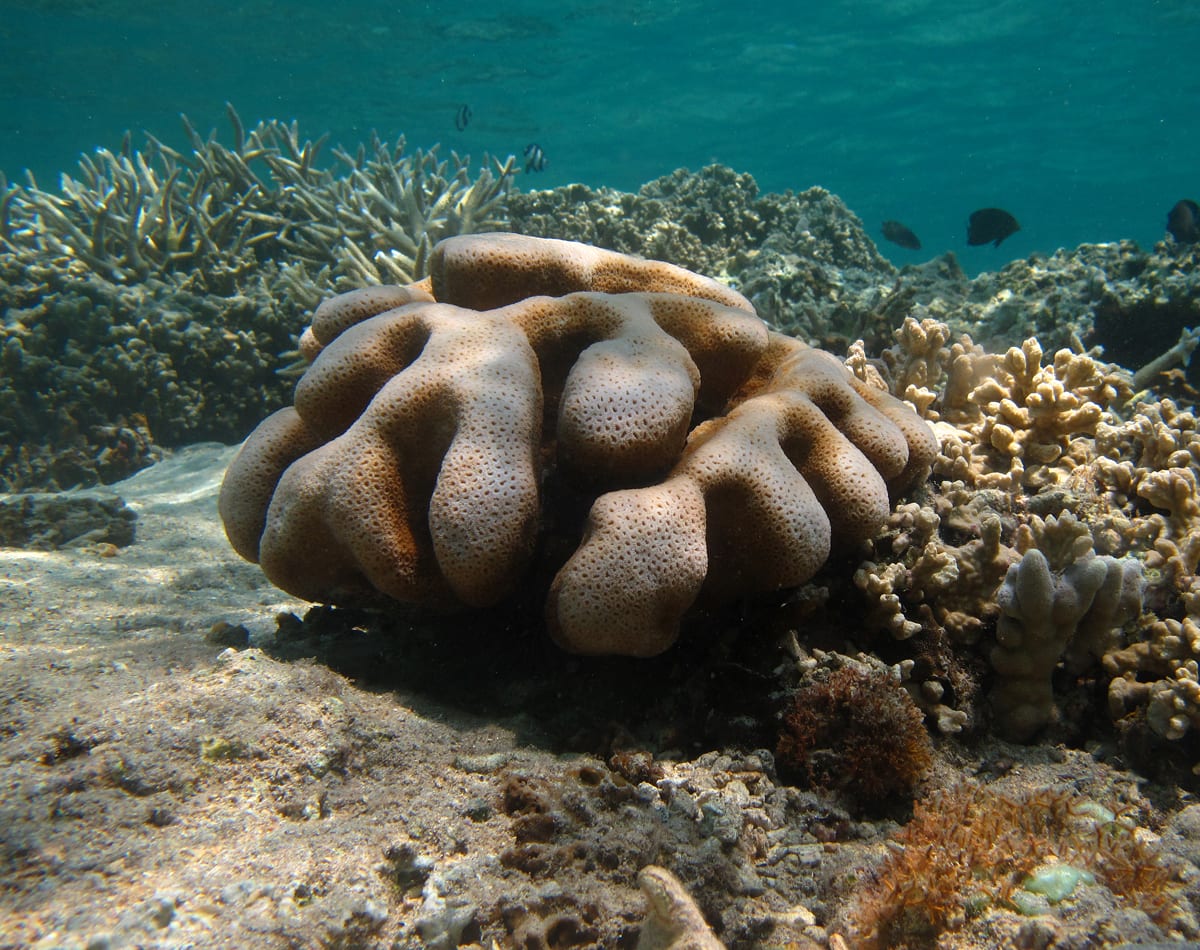
 © Philippe Bourjon / CC BY-SA 4.0
Cyphastrea Serailia
Cyphastrea serailia, commonly known as the Lesser Knob Coral, is a reef-building coral in the family Merulinidae. Small corallites rise gently across its skeleton, giving it a subtly textured, sculptural look rather than bold color. Colonies grow encrusting to hemispherical and are found widely across the Indo-Pacific. Considered a beginner-friendly species, it's approachable for those just starting out in coral keeping, and its understated texture also makes it a useful foundation or border piece in a reef layout.
View Cyphastrea Serailia encyclopedia →0% commission on your first sales!Register by September 30, 2026 and your first 2 sales are commission-free!
Breeder Wanted!
List on BreederDirect and sell directly to customers nationwide!
BreederDirect's 6 Transparency Commitments
Our Breeder sellers disclose detailed care specs for all Coral listings. We prioritize Aquacultured/CB specimens, verify WYSIWYG photos, and provide difficulty ratings—avoiding wild-caught.
- Aquacultured
- WYSIWYG Photo
- Difficulty Disclosed
- Frag/Colony
- Care Info Included
- Trade name shown
Browse all 241 breeds
Difficulty
Verified breeders wanted for Coral
Breeders are signing up now ahead of launch. Subscribe to be notified when new listings go live.
Getting alerts is free with a member account. When new listings match your saved search, we'll notify you by email and in-app.
Browse other categories
Verified breeders (preview)
Cyphastrea Serailia key facts
- Care level
- Beginner-friendly
- Size
- Colonies from about 10 cm to several tens of cm
- Temperature
- 24〜27℃
- Diet
- Mainly nutrition from symbiotic zooxanthellae, supplemented with fine particulate coral foods offered at night.
- Lighting
- LiveAquaria gives moderate lighting for this group of brain corals. Reduce the light at first and raise it to the target position over several weeks.
- Flow & Placement
- Medium flow. It encrusts outwards and will overgrow its neighbours, so mount it on its own rock or give it room to spread.
- Water Temperature & Quality
- Water 24-26C, specific gravity 1.023-1.025, salinity 33-35 ppt, KH 8-12. It consumes calcium and magnesium, so test and replenish them regularly.
- Feeding
- Most of its nutrition comes from its zooxanthellae. The corallites are small, so feed only small amounts of fine particulate coral food after lights-out.
- Notes
- Several congeners have similarly sized and shaped corallites, so accurate identification needs a look at the skeleton. As a scleractinian it is on CITES Appendix II and international trade requires permits.
About Cyphastrea Serailia
Cyphastrea serailia, the Lesser Knob Coral, is a reef-building coral whose small corallites dot its encrusting to hemispherical colonies. Found across the Indo-Pacific, it's considered beginner-friendly.
7 things to know before welcoming a Cyphastrea Serailia
1Enjoy Its Sculptural Texture
Rather than bold coloring, Cyphastrea serailia's appeal lies in the small corallites dotting its skeleton, creating a subtly textured surface. The way light plays across these bumps brings out shifting shadows across the colony.
2Hardy and Approachable
This species is considered beginner-friendly, making it approachable for those new to coral keeping. Its solid skeleton also tends to hold up reasonably well to routine handling.
3Grows Encrusting to Hemispherical
Colonies start out encrusting the rock surface before gradually developing into hemispherical mounds. Mature colonies can reach a diameter ranging from roughly ten to several tens of centimeters.
4Give It Space From Neighbors
Because colonies grow fairly large over time, it's important to leave adequate space between this coral and its neighbors. If growing colonies make contact, they can harm one another.
5Secure a Stable Placement
As the colony grows larger, having a stable base becomes increasingly important. Secure it firmly at placement so water flow doesn't shift it over time.
6Avoid Sudden Water Changes
As with corals in general, sudden changes in water parameters can be stressful. When introducing a new specimen, take time for a slow, gradual acclimation.
7What to Watch After Arrival
In the days after introduction, keep an eye on polyp extension and tissue color. Watch for any signs of bleaching or tissue recession, and keep environmental changes to a minimum during this settling-in period.
Frequently asked questions about Cyphastrea Serailia
- Q.Is Cyphastrea serailia suitable for beginners?
- A.Yes, it's generally considered a beginner-friendly species. Its hardy nature makes it approachable even for those just starting out in coral keeping.
- Q.How large does this coral grow?
- A.Colonies typically reach a diameter of roughly ten to several tens of centimeters. They start out encrusting and gradually develop into hemispherical mounds.
- Q.What does it look like?
- A.Its skeleton is dotted with small corallites that rise gently from the surface. Rather than vivid coloring, it's prized for the textured, sculptural look these bumps create.
- Q.Where is this coral naturally found?
- A.It's a reef-building coral distributed widely across the Indo-Pacific. In the wild it forms encrusting to hemispherical colonies.
- Q.Is Cyphastrea serailia listed under CITES?
- A.Cyphastrea Serailia is listed in CITES Appendix II. International trade requires a permit from the exporting country, but as far as CITES is concerned, no registration is needed to buy or sell individuals already legally in Japan.
Useful tools for Cyphastrea Serailia care
Learn more about Cyphastrea Serailia in the encyclopedia
View Cyphastrea Serailia encyclopedia entry →
Care difficulty, lifespan, size and diet — all basics covered.
More in this category
Can't find the one you're looking for?
Post your wishes for free and breeders with matching animals will contact you with introductions.