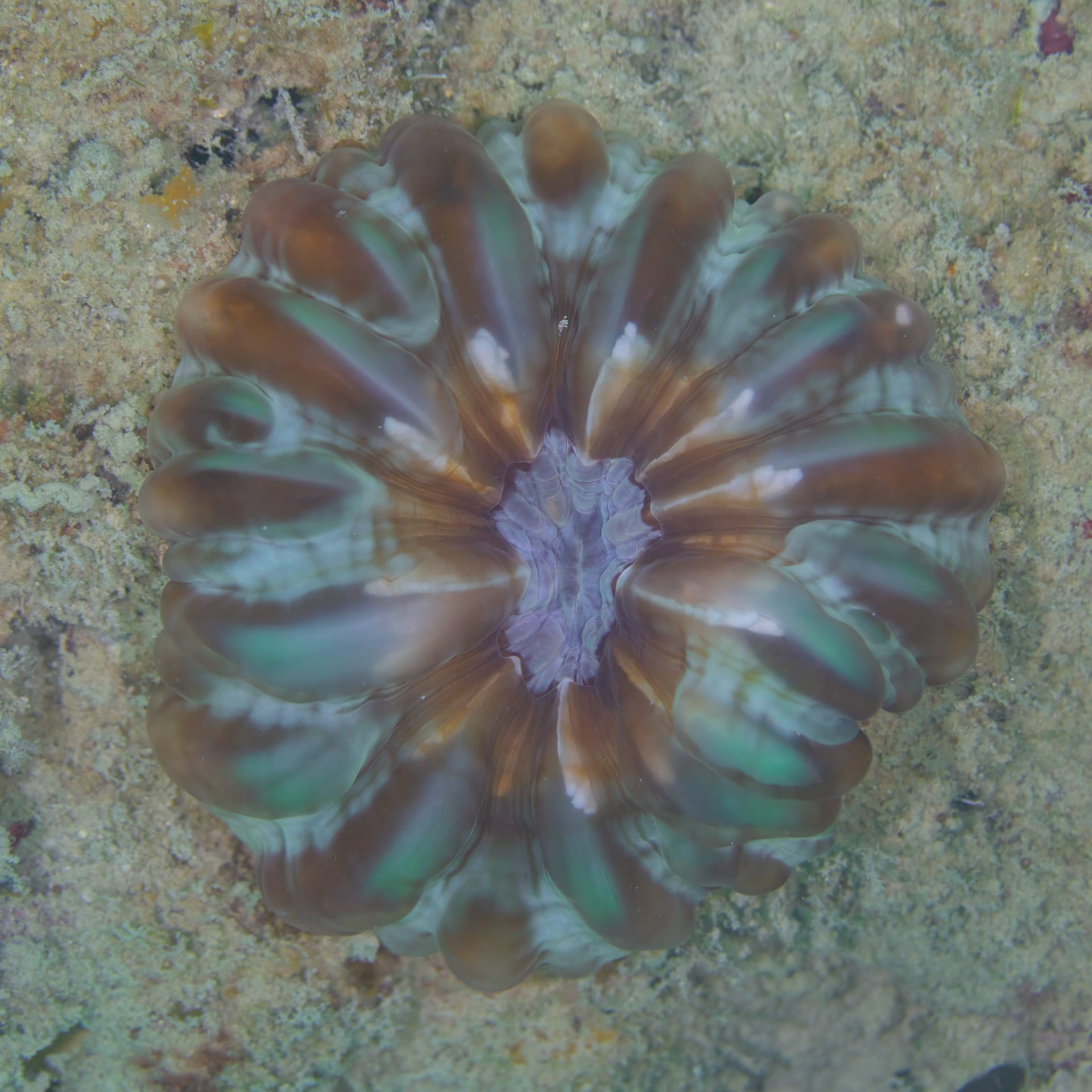
 © Diego Delso / CC BY-SA 4.0
Cynarina (Button Coral)
Cynarina (also known as Button Coral) is a large, solitary stony coral found across the Indo-Pacific region, prized among reef keepers as an approachable LPS coral. During the day, its translucent tissue swells dramatically, covering the underlying skeleton and revealing the radiating septal ridges beneath, creating a striking sunburst pattern. Some individuals display a distinctive "cat's eye" marking, giving each coral its own unique character. Because it grows as a single polyp rather than forming colonies, it makes an eye-catching centerpiece in any aquascape. That said, maintaining the right lighting and water flow takes some care, making it a rewarding choice for those ready to learn the basics of LPS coral keeping.
View Cynarina (Button Coral) encyclopedia →0% commission on your first sales!Register by September 30, 2026 and your first 2 sales are commission-free!
Breeder Wanted!
List on BreederDirect and sell directly to customers nationwide!
Br-Choku's 6 Transparency Standards
Our Breeder sellers disclose detailed care specs for all Coral listings. We prioritize Aquacultured/CB specimens, verify WYSIWYG photos, and provide difficulty ratings—avoiding wild-caught.
- Aquacultured
- WYSIWYG Photo
- Difficulty Disclosed
- Frag/Colony
- Care Info Included
- Trade name shown
Browse all 210 breeds
Difficulty
Verified breeders wanted for Coral
Breeders are signing up now ahead of launch. Subscribe to be notified when new listings go live.
Getting alerts is free with a member account. When new listings match your saved search, we'll notify you by email and in-app.
Browse other categories
Verified breeders (preview)
Cynarina (Button Coral) key facts
- Care level
- Intermediate
- Temperature
- 24〜27℃
- Diet
- Photosynthesis via zooxanthellae plus meaty foods
- Lighting
- Moderate or lower LED lighting; start low and acclimate, since too much light causes fading.
- Flow & Placement
- Gentle flow. Strong current can tear the inflated tissue. It is normally set directly on sand.
- Water Temperature & Quality
- Keep 24-27 C with KH 7-12 and calcium 400-450 ppm, held stable.
- Feeding
- It extends feeding tentacles at night; target-feed minced fish or shrimp to the central mouth for colour and growth.
- Notes
- Stirred sand settling on the tissue damages it, so adjust flow and placement. As a scleractinian it is CITES Appendix II.
About Cynarina (Button Coral)
A solitary large-polyp stony coral from the Indo-Pacific, Cynarina (Button Coral) swells with translucent tissue by day, revealing radiating patterns and sometimes a cat's-eye marking. A good pick for intermediate reefkeepers.
7 things to know before welcoming a Cynarina (Button Coral)
1Its Look Changes From Day to Night
During the day, Cynarina's translucent tissue swells dramatically, covering its entire skeleton. At night, the tissue retracts and the skeleton's outline becomes clearly visible, giving the same coral a strikingly different appearance depending on the time of day.
2A Solitary Coral, Not a Colony
Unlike many corals, Cynarina is a solitary species, with each skeleton housing just a single polyp. While it can occasionally divide, it doesn't spread into a colony, making it a distinctive centerpiece coral to grow and observe over time.
3Needs Moderate Light and Flow
Overly strong lighting or water flow can stress its tissue. Place it in a relatively calm spot away from direct strong flow, and adjust lighting gradually while observing how it responds.
4Each Coral Has Unique Patterns
The radiating pattern created by its visible septa varies from coral to coral, and some individuals show a distinctive cat's-eye marking. Part of the fun is choosing an individual based on its unique pattern.
5Feeding Helps Maintain Condition
Beyond photosynthesis, Cynarina is also capable of capturing food. Offering small pieces of food while its tissue is expanded, such as at night, can help keep it in better condition.
6Avoid Moving It Too Often
Changes in environment can affect how much its tissue expands and its coloration. Once placed, avoid moving it around the tank frequently, letting it settle into a stable spot to help it acclimate.
7Best Suited to Intermediate Keepers
This species is generally recommended for those with some experience keeping marine fish and corals. Consider your understanding of water quality, lighting, and flow management before bringing one home.
Frequently asked questions about Cynarina (Button Coral)
- Q.Is it safe if it touches other corals?
- A.As a solitary coral with stinging tentacles, Cynarina can sting neighboring corals if they make contact. It's best to give it plenty of space from other corals in the tank.
- Q.Does it staying closed during the day mean it's unhealthy?
- A.How much the tissue expands varies by individual and by environment, so some corals may not puff up much even during the day. That said, if a coral stays retracted for an extended period, it may be worth reviewing the tank's lighting and water flow.
- Q.How often does it need to be fed?
- A.Feeding isn't strictly necessary, but offering small food particles a few times a week while the tissue is expanded can help maintain its condition. There's no need to feed it every day.
- Q.Can it be kept in the same tank as other corals?
- A.It can be kept in a mixed reef tank, but since it's a solitary coral with stinging tentacles, it's important to leave adequate space between it and other corals. Keep this spacing in mind when planning your aquascape.
- Q.Is it subject to CITES?
- A.Cynarina (Button Coral) is listed in CITES Appendix II. International trade requires a permit from the exporting country, but as far as CITES is concerned, no registration is needed to buy or sell individuals already legally in Japan.
Useful tools for Cynarina (Button Coral) care
Learn more about Cynarina (Button Coral) in the encyclopedia
View Cynarina (Button Coral) encyclopedia entry →
Care difficulty, lifespan, size and diet — all basics covered.
More in this category
Can't find the one you're looking for?
Post your wishes for free and breeders with matching animals will contact you with introductions.