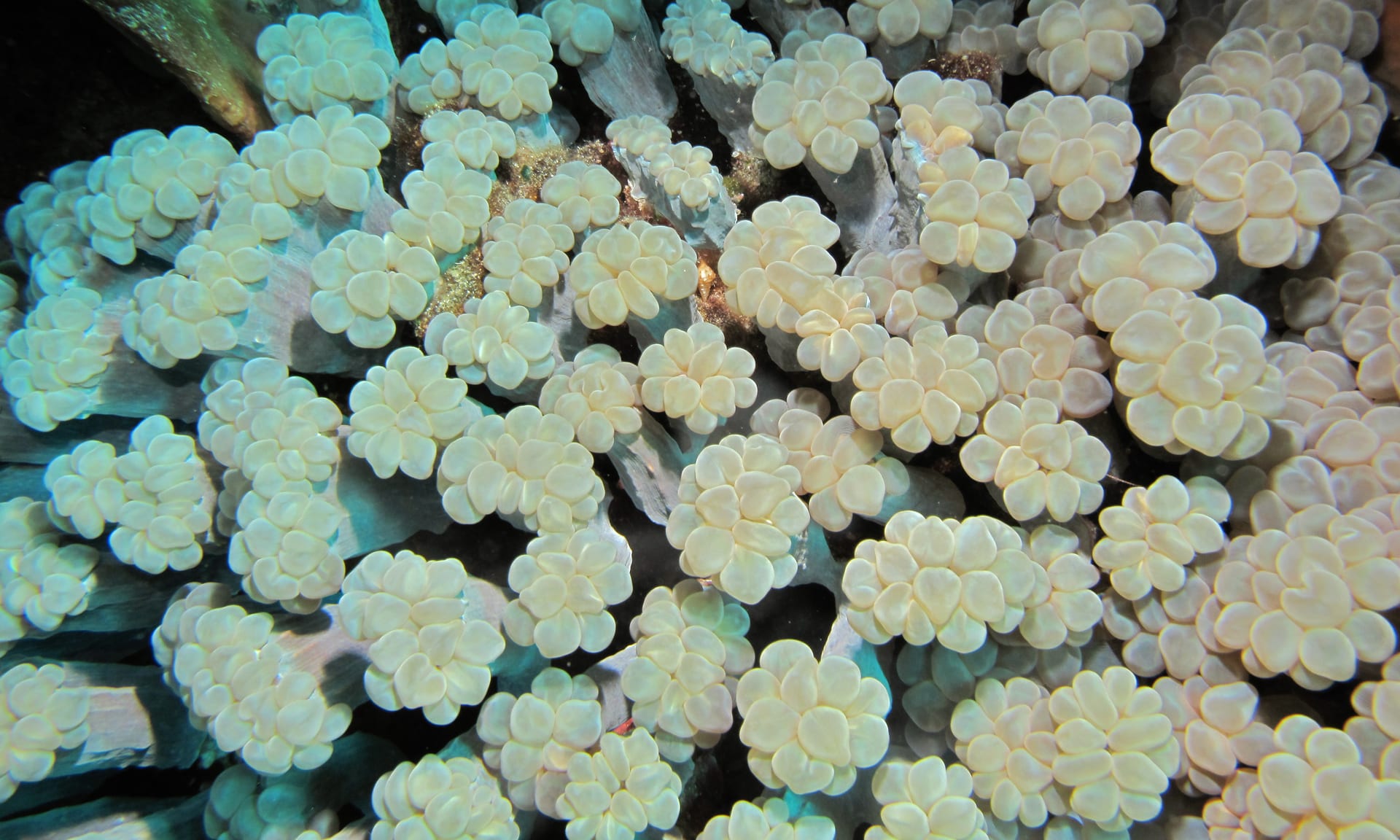
 © Bernard DUPONT from FRANCE / CC BY-SA 2.0
Branching Bubble Coral
The Branching Bubble Coral is a distinctive LPS species that covers its skeleton with round, grape-like vesicles by day, then withdraws them at night to extend slender feeding tentacles instead. What sets it apart from its relative Plerogyra sinuosa is its branching skeletal structure, which lets it form a spreading colony over time. Watching it transform between its bubbly daytime look and its tentacled nighttime look makes it a rewarding centerpiece for any reef tank. It moves slowly and is easy to observe up close, making it a natural next step for hobbyists who already have some coral-keeping experience. Because it can be sensitive to shifts in water quality and lighting, keeping conditions stable is the key to success with this species.
View Branching Bubble Coral encyclopedia →0% commission on your first sales!Register by September 30, 2026 and your first 2 sales are commission-free!
Breeder Wanted!
List on BreederDirect and sell directly to customers nationwide!
Br-Choku's 6 Transparency Standards
Our Breeder sellers disclose detailed care specs for all Coral listings. We prioritize Aquacultured/CB specimens, verify WYSIWYG photos, and provide difficulty ratings—avoiding wild-caught.
- Aquacultured
- WYSIWYG Photo
- Difficulty Disclosed
- Frag/Colony
- Care Info Included
- Trade name shown
Browse all 210 breeds
Difficulty
Verified breeders wanted for Coral
Breeders are signing up now ahead of launch. Subscribe to be notified when new listings go live.
Getting alerts is free with a member account. When new listings match your saved search, we'll notify you by email and in-app.
Browse other categories
Verified breeders (preview)
Branching Bubble Coral key facts
- Care level
- Intermediate
- Temperature
- 24〜27℃
- Diet
- Photosynthesis via zooxanthellae plus zooplankton feeding
- Lighting
- Moderate to strong lighting. It can adjust to fairly bright light, but photo-acclimate it gradually to avoid stress.
- Flow & Placement
- Low to moderate flow. Under strong or direct current it closes up and refuses to open.
- Water Temperature & Quality
- Keep 24-27 C with KH 7-12 and calcium 400-450 ppm, held stable.
- Feeding
- Drop food onto the tentacles once they are fully extended at night; briefly cutting flow keeps it from blowing away.
- Notes
- Watch newly acquired specimens for parasitic flatworms. As a scleractinian it is CITES Appendix II.
About Branching Bubble Coral
An LPS coral with branching skeleton that shows bubble-like polyps by day and tentacles by night. Best suited to hobbyists with some experience.
7 things to know before welcoming a Branching Bubble Coral
1Different Looks Day and Night
During the day, the polyps swell into bubble-like vesicles that cover the skeleton, but at night they retract and slender feeding tentacles emerge instead. This dramatic day-night transformation is one of the biggest draws of keeping this coral.
2Distinctive Branching Skeleton
Its branching skeletal growth pattern is the key feature that distinguishes it from its close relative, Plerogyra sinuosa. As it grows, the colony develops a three-dimensional spread.
3Suited to Intermediate Keepers
This species assumes a working knowledge of water quality management and lighting. First-time coral keepers may want to build experience with hardier species before taking this one on.
4Mind Flow and Lighting Placement
Overly strong water flow can damage the swollen polyps, so gentle, indirect flow is preferable. Lighting should also avoid being too intense — adjust placement while observing how the coral responds.
5Needs Space from Other Corals
The tentacles extended at night can be aggressive toward neighbors, so it's important to leave adequate space between this coral and others. Plan placement with future colony growth in mind.
6Feeding Supports Condition
Offering coral food while the tentacles are extended at night can produce a good feeding response. Daily feeding isn't required — adjust frequency based on how the coral responds.
7Watch for Sudden Water Changes
Sudden shifts in water parameters can cause the polyps to inflate less fully. Carry out water changes and dosing gradually, and prioritize keeping conditions stable.
Frequently asked questions about Branching Bubble Coral
- Q.Why does it look different during the day and at night?
- A.During the day it inflates bubble-like polyps to cover and protect its skeleton, then at night it deflates them and extends tentacles to feed instead. This is a natural part of its daily cycle.
- Q.How is it different from Plerogyra sinuosa?
- A.They look similar, but this species has a branching skeleton that forms a colony, whereas Plerogyra sinuosa does not have this branching structure.
- Q.Can beginners keep this coral?
- A.This species is generally considered suited to intermediate keepers. It's recommended to gain some basic water quality management experience before taking one on.
- Q.Is it safe to place near other corals?
- A.The tentacles it extends at night can be aggressive, so it's safer to leave distance from neighboring corals. Consider future colony growth when deciding on placement.
- Q.Is this species subject to any legal restrictions?
- A.Branching Bubble Coral is listed in CITES Appendix II. International trade requires a permit from the exporting country, but as far as CITES is concerned, no registration is needed to buy or sell individuals already legally in Japan.
Useful tools for Branching Bubble Coral care
Learn more about Branching Bubble Coral in the encyclopedia
View Branching Bubble Coral encyclopedia entry →
Care difficulty, lifespan, size and diet — all basics covered.
More in this category
Can't find the one you're looking for?
Post your wishes for free and breeders with matching animals will contact you with introductions.