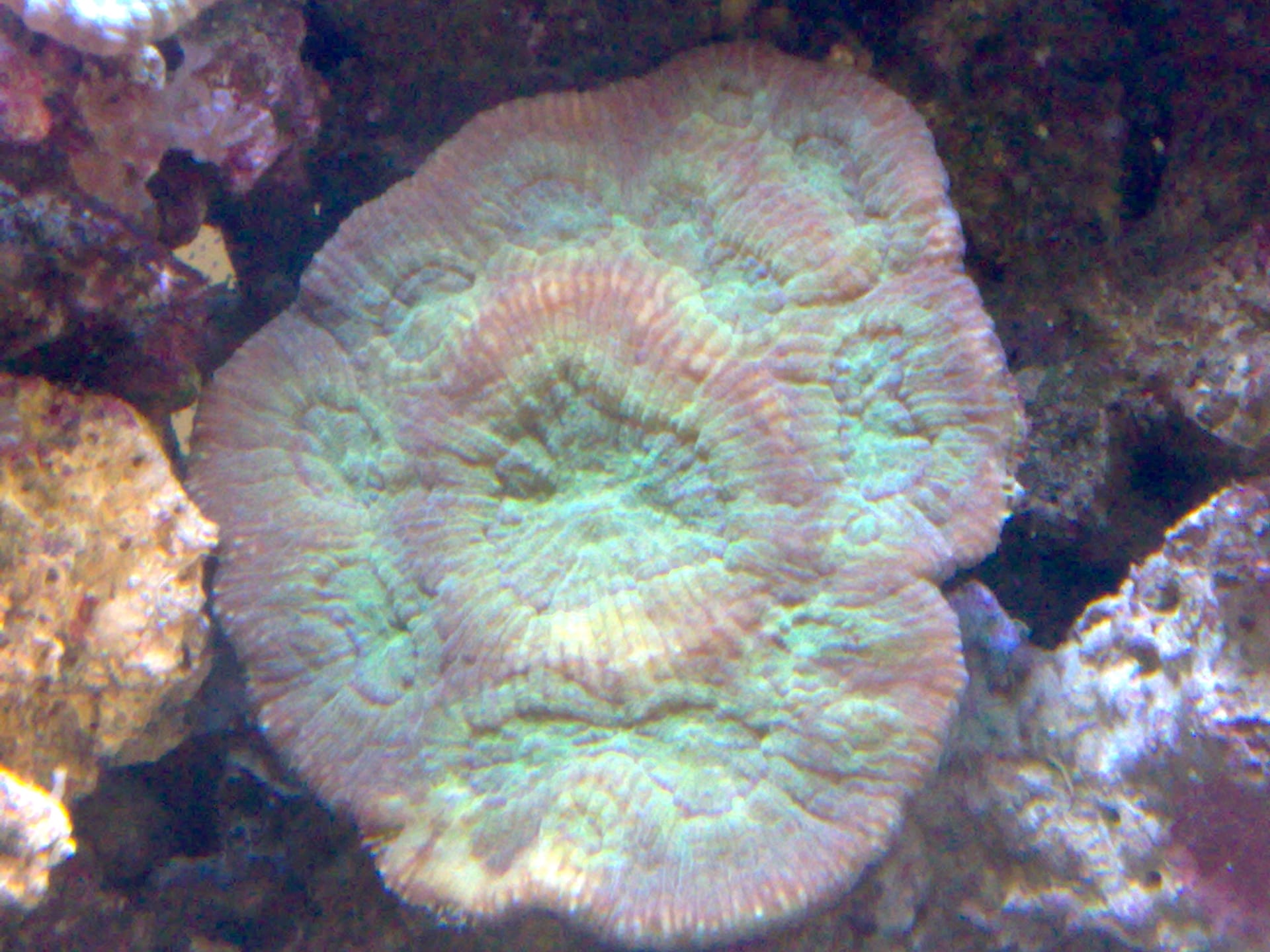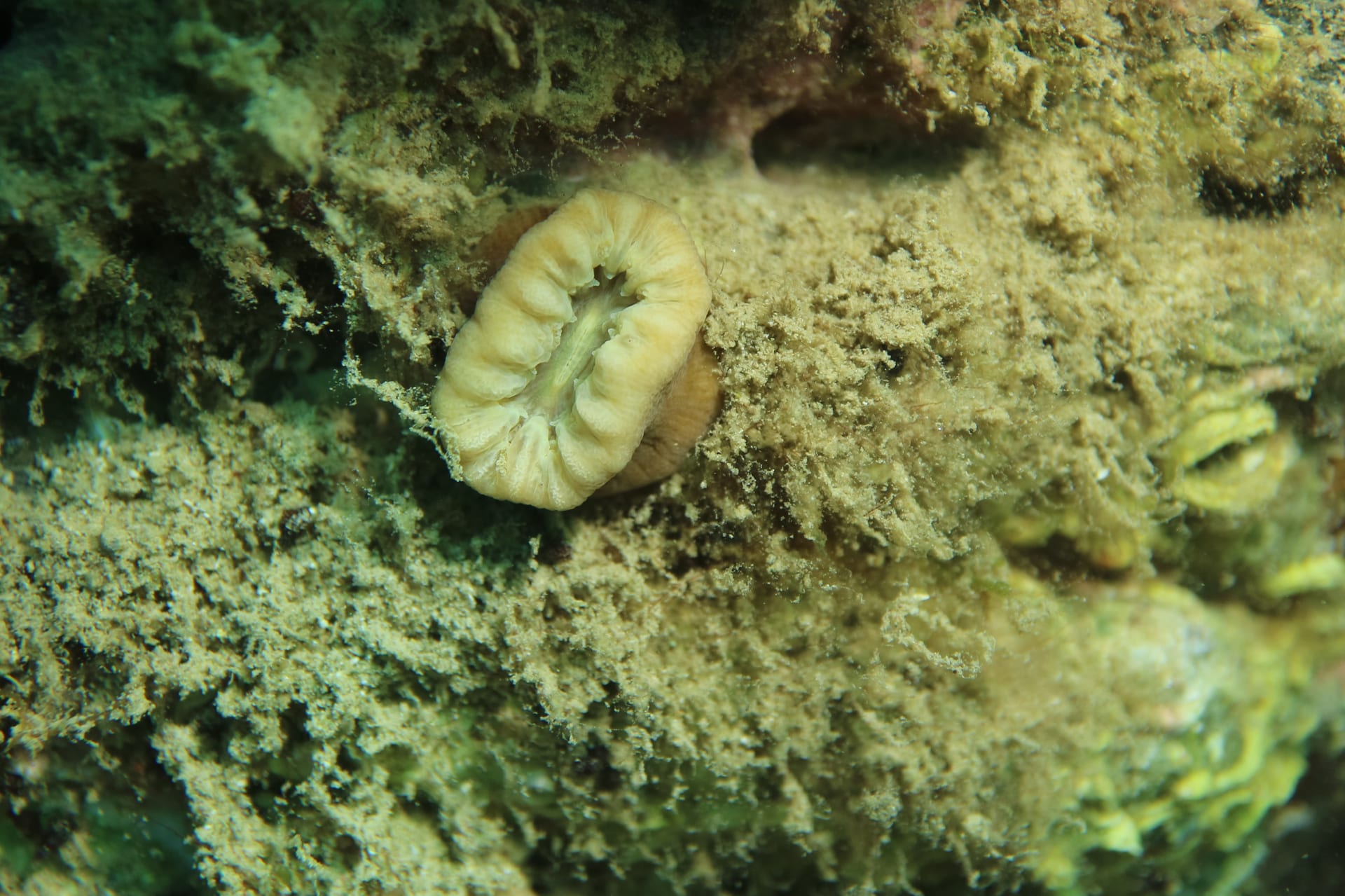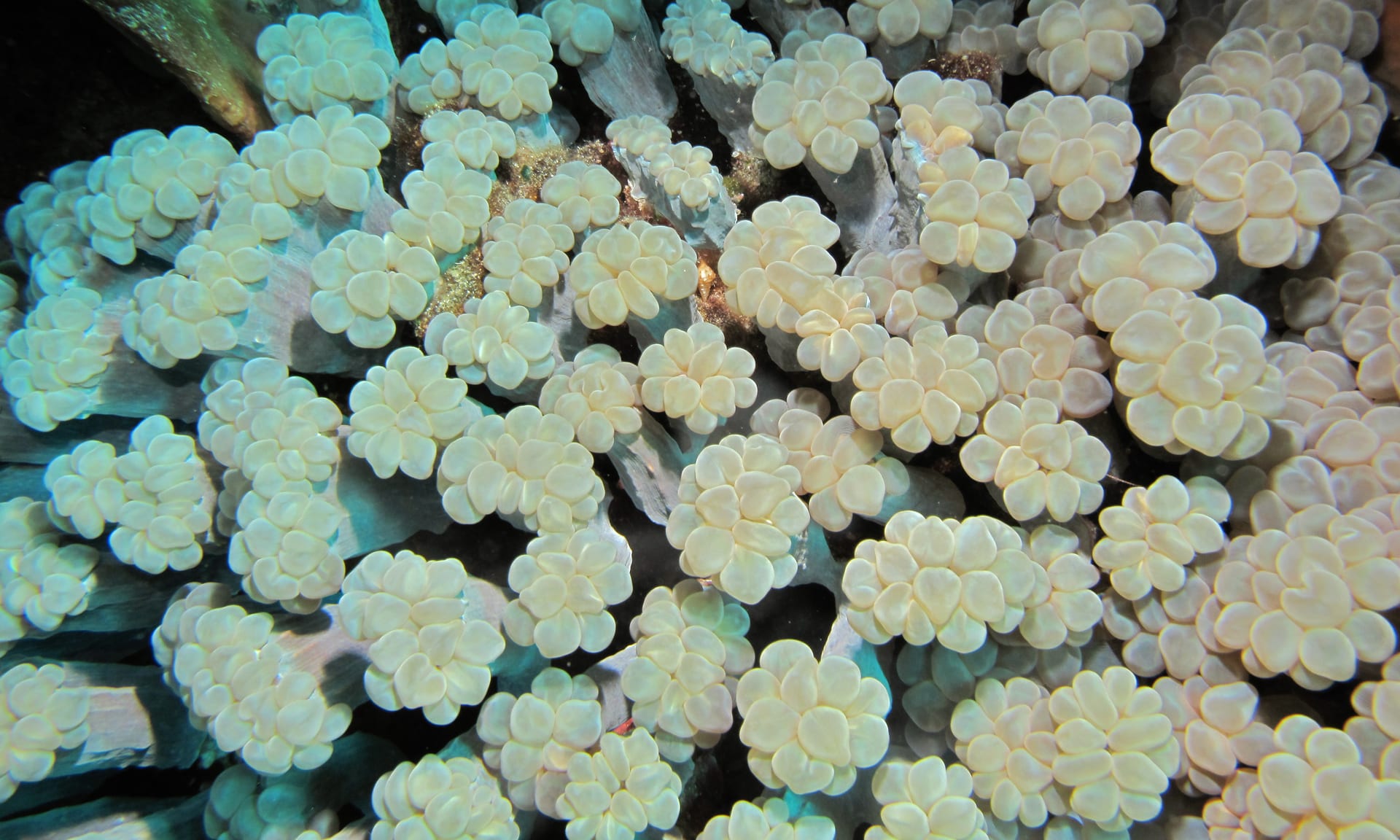
Source: Wikimedia Commons
Branching Bubble Coral
IntermediatePlerogyra simplex
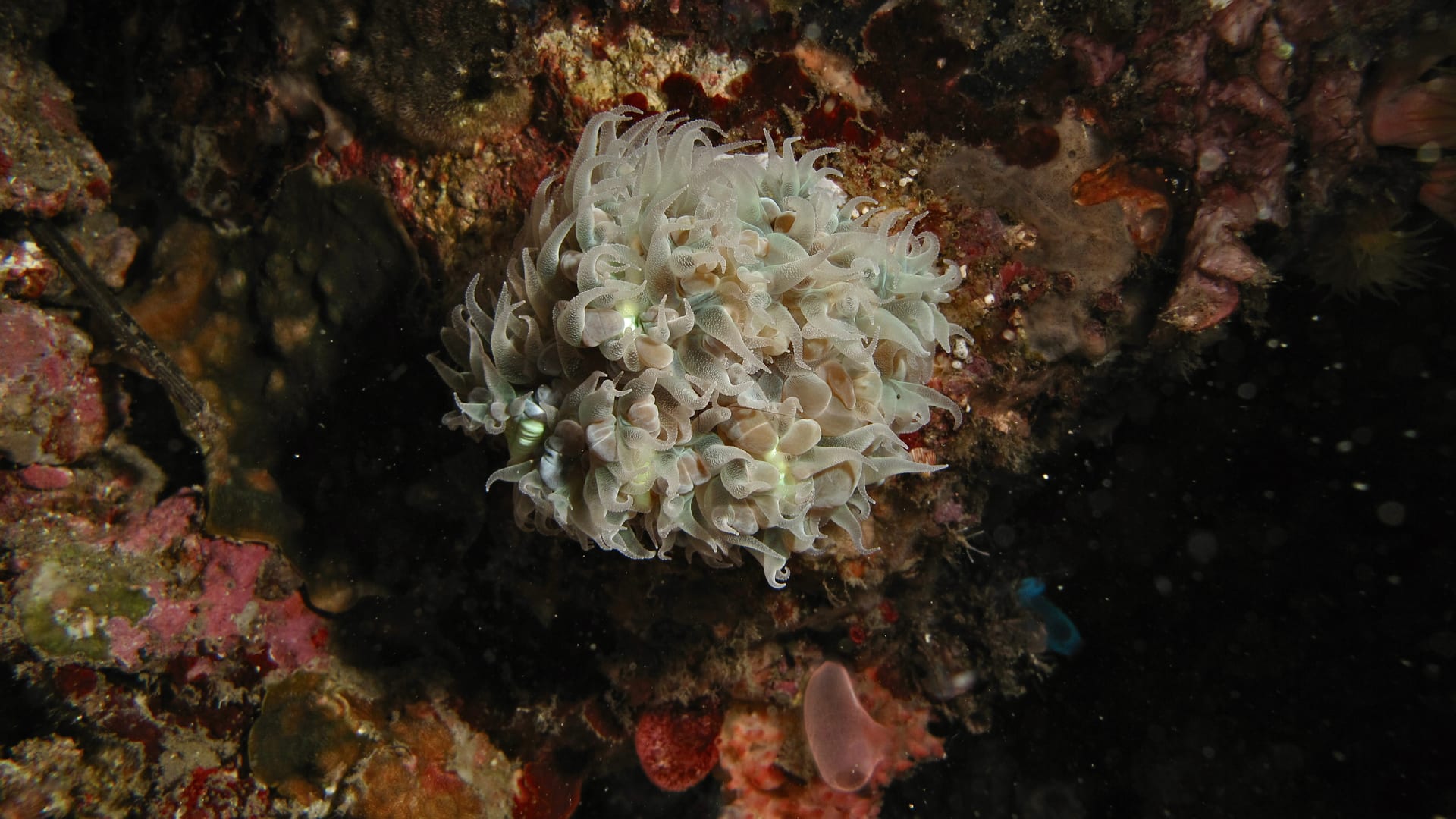
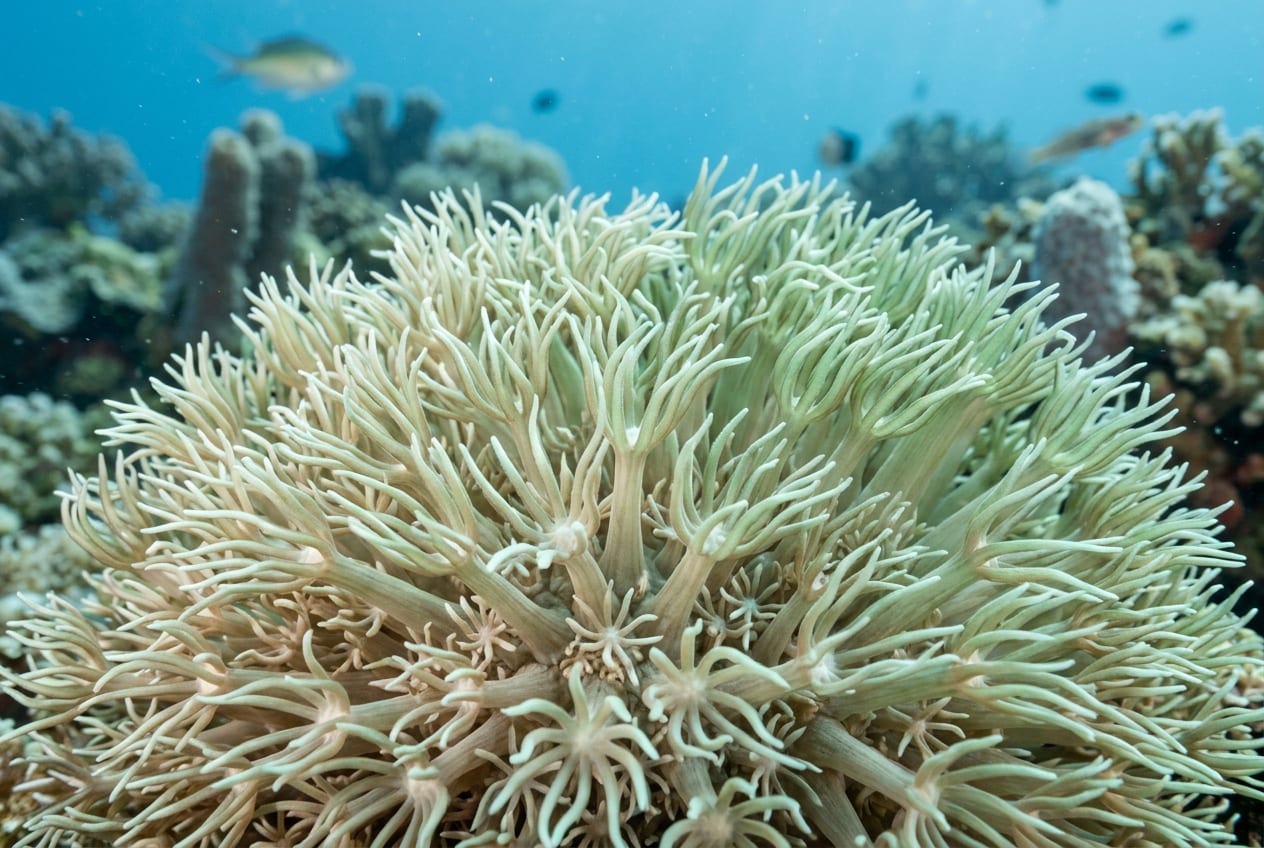
An LPS coral that inflates grape-like vesicles by day and retracts them at night to extend slender tentacles. Its branching skeleton separates it from Plerogyra sinuosa.
Difficulty
Intermediate
Temperature
24〜27℃
Diet
Photosynthesis via zooxanthellae plus zooplankton feeding
About
Plerogyra simplex, described by Rehberg in 1892, is a stony coral recorded by WoRMS from the central Indo-Pacific including Indonesia and the Philippines. By day it inflates grape-like vesicles, which are thought to play a major role in harvesting light. Depending on light conditions and strain the vesicles range from pearly white to light blue or green, patterned like a fingerprint or net, and some individuals carry a single pale stripe that gives a cat's-eye appearance. At night the vesicles retract and comparatively long, slender sweeper tentacles are deployed to take plankton and to fight neighbouring corals. Most of its nutrition comes from zooxanthellae, but dropping food onto the tentacles when they are fully extended at night improves growth and condition. It prefers a mellow environment with moderate to strong lighting and low to moderate flow.
Source: Wikipedia (CC BY-SA 4.0)
Temperature & humidity for the Branching Bubble Coral
The ideal temperature for the Branching Bubble Coral is 24〜27℃.
Basic Info
Origin
Central Indo-Pacific (Indonesia, the Philippines and elsewhere)
Temperature
24〜27℃
Diet
Photosynthesis via zooxanthellae plus zooplankton feeding
Care Guide
Lighting
Moderate to strong lighting. It can adjust to fairly bright light, but photo-acclimate it gradually to avoid stress.
Care Specifications
- Carbonate (KH)
- 7–12 dKH
- Water Temp.
- 24–27℃
- Specific Gravity
- 1.023–1.025
- Salinity
- 33–35 ppt
- Calcium (Ca)
- 400–450 ppm
- Magnesium (Mg)
- 1300–1400 ppm
LPSLight: Medium (PAR 50-150)Flow: LowPlacement: Bottom
Sources: Wikipedia: Reef aquarium (water parameters) / AlgaeBarn: Keeping the Bubble Coral / AlgaeBarn: A Quick Guide to LPS and SPS
References & Sources
Edited & verified by: BreederDirect editorial team
The taxonomic, regulatory, and husbandry data on this page are compiled and verified against the authoritative primary sources below.
Taxonomy & Authority
Accepted name: Plerogyra simplex Rehberg, 1892
Synonyms: Plerogyra taisnei
Authority databases: WoRMS
Nomenclature follows global taxonomic authority databases.
Regulations & Conservation Status
CITES Appendix II
Scleractinia (Plerogyra simplex, Plerogyridae). CITES Appendix II.
Sources: DOC NZ / CITES-listed corals (Scleractinia spp. = App. II)
Regulations may change. Always verify the latest information with the relevant authorities.
Branching Bubble Coral Listings
Loading latest listingsFind listings for this species