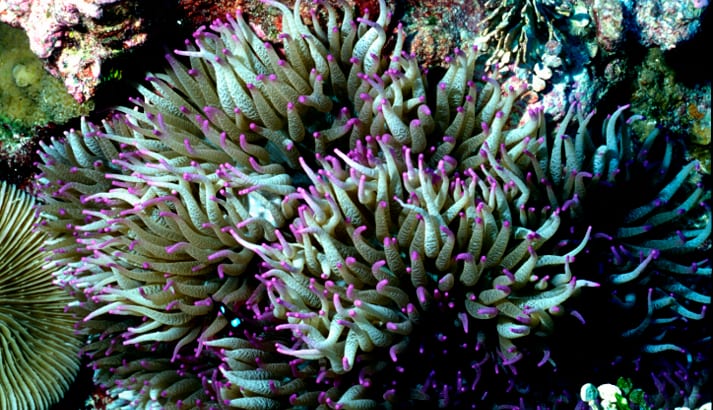
 © U.S. Fish & Wildlife Service / Public domain
Malu Anemone
The Malu Anemone (Radianthus malu) is easy to recognize by its short, sparse tentacles tipped in magenta. It buries its pale cream-to-yellow column in the sand, leaving only its disc-shaped oral surface visible above the substrate — a striking, minimalist look accented by a white radiating pattern across the disc. Once settled into a spot it likes, it tends to stay put, but it responds quickly to shifts in water quality or lighting, which is why it is generally recommended for experienced reefkeepers. It is also a popular choice for those hoping to host clownfish in a sand-bed setup.
View Malu Anemone encyclopedia →0% commission on your first sales!Register by September 30, 2026 and your first 2 sales are commission-free!
Breeder Wanted!
List on BreederDirect and sell directly to customers nationwide!
Br-Choku's 6 Transparency Standards
Our Breeder sellers disclose detailed care specs for all Coral listings. We prioritize Aquacultured/CB specimens, verify WYSIWYG photos, and provide difficulty ratings—avoiding wild-caught.
- Aquacultured
- WYSIWYG Photo
- Difficulty Disclosed
- Frag/Colony
- Care Info Included
- Trade name shown
Browse all 210 breeds
Difficulty
Verified breeders wanted for Coral
Breeders are signing up now ahead of launch. Subscribe to be notified when new listings go live.
Getting alerts is free with a member account. When new listings match your saved search, we'll notify you by email and in-app.
Browse other categories
Verified breeders (preview)
Malu Anemone key facts
- Care level
- Advanced
- Size
- Oral disc up to 200 mm, tentacles under 40 mm
- Temperature
- 22〜26℃
- Diet
- Nutrition from symbiotic zooxanthellae, supplemented about once a week with meaty foods such as fish, shrimp and clam.
- Lighting
- LiveAquaria rates its lighting requirement as high; it depends on its zooxanthellae and needs strong illumination.
- Flow & Placement
- LiveAquaria rates flow as medium to strong and placement as bottom, and states that it needs a sandy substrate in which to hide its base. Do not place it on rock.
- Water Temperature & Quality
- Water 22-26C, specific gravity 1.020-1.025. It is delicate and hard to acclimate, so it needs a mature tank with stable water chemistry.
- Feeding
- Besides photosynthesis, offer meaty foods such as fish, clam and shrimp about once a week.
- Notes
- The name Sebae Anemone is applied both to this species and to Radianthus crispa, so check the scientific name when buying. It is not listed in the CITES Appendices.
About Malu Anemone
Malu Anemone (Radianthus malu): a sand-dwelling anemone with short, magenta-tipped tentacles and an oral disc up to 200mm across marked with white radial patterns. Suited to experienced reefkeepers and popular for hosting clownfish.
7 things to know before welcoming a Malu Anemone
1A Sand Bed Is Essential
This anemone buries its column in the substrate and needs a reasonably deep sand bed to settle into. A bare-bottom, rock-dominated tank will not give it anywhere to anchor.
2Best Left to Experienced Keepers
It reacts quickly to shifts in water quality and lighting, which is why it is generally considered an advanced species. Adding it to a newly cycled tank is best avoided.
3It May Relocate Itself
If it is not happy with its spot, it can move around the tank using its tentacles and foot. It is often searching for the flow and light levels it prefers.
4Watch Its Neighbors
If it wanders into contact with corals or fish, its sting can cause harm. Leave generous spacing in your layout and check its position regularly.
5The Disc's White Pattern Stands Out
Its oral disc can reach up to 200mm across and displays a white radiating pattern that contrasts nicely with the magenta-tipped tentacles. It rewards close, patient observation.
6A Potential Clownfish Host
Some keepers add this species hoping to host clownfish, and pairings do occur. That said, hosting is not guaranteed, so it should not be the only reason for getting one.
7Give It Time to Settle
Right after introduction, it may wander as it looks for a spot it likes. Avoid changing its position, lighting, or flow too soon, and just observe quietly for a while.
Frequently asked questions about Malu Anemone
- Q.Is this anemone suitable for beginners?
- A.It is generally classified as an advanced-level species, so it is not recommended for beginners. It responds sensitively to changes in water quality and lighting, so it is best kept by more experienced aquarists.
- Q.How large does it get?
- A.The oral disc can reach up to about 200mm across. The tentacles themselves are naturally short, staying under 40mm in length.
- Q.Does the tank need a sand bed?
- A.Yes — it buries its column in the sand, so a reasonably deep sand bed is necessary. A tank built mainly around rockwork will not give it a good place to settle.
- Q.Will it always host a clownfish?
- A.Hosting can happen, but it is not guaranteed. Since results depend on compatibility and tank conditions, it is best not to get one solely for that purpose.
- Q.Are there any legal restrictions on this species?
- A.This species is not subject to CITES.
Useful tools for Malu Anemone care
Learn more about Malu Anemone in the encyclopedia
View Malu Anemone encyclopedia entry →
Care difficulty, lifespan, size and diet — all basics covered.
More in this category
Can't find the one you're looking for?
Post your wishes for free and breeders with matching animals will contact you with introductions.