Source: Wikimedia Commons
Malu Anemone
AdvancedRadianthus malu
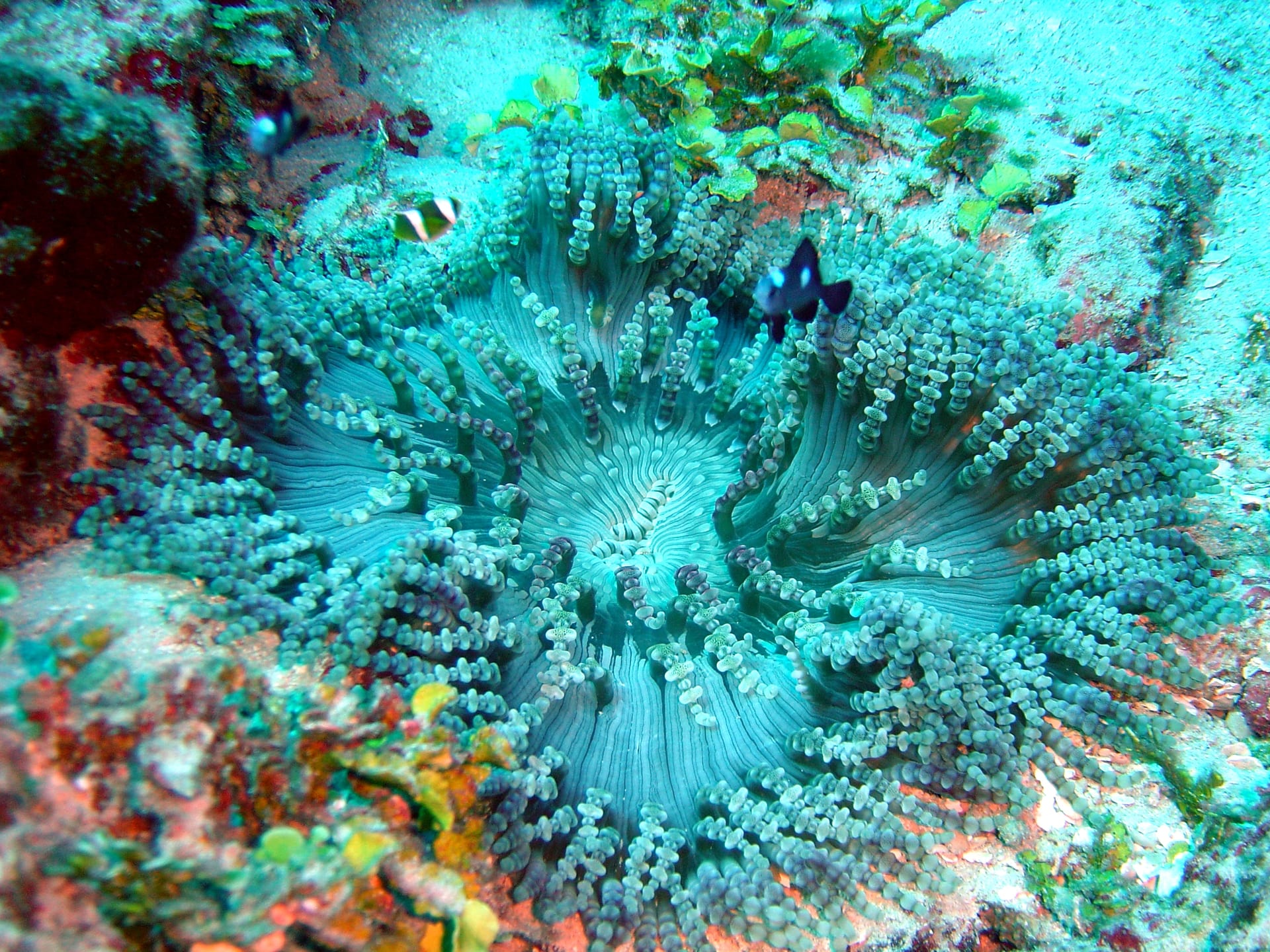
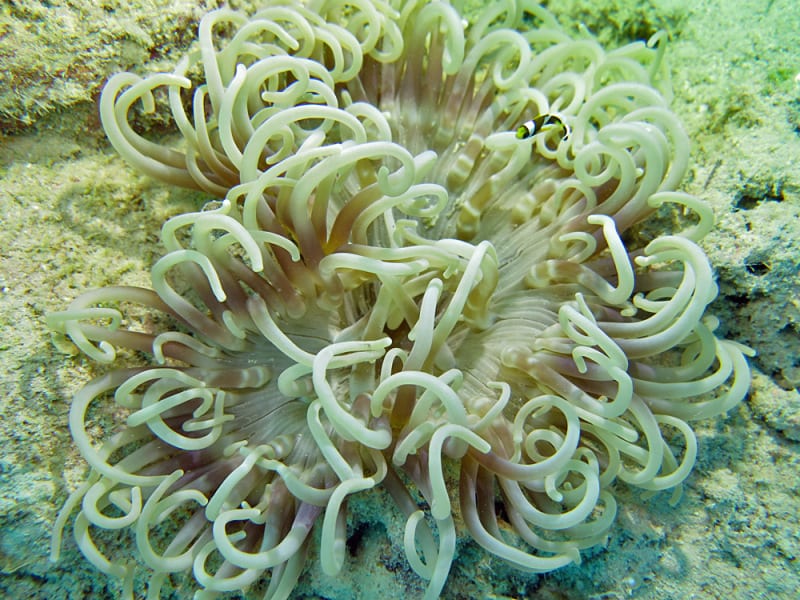
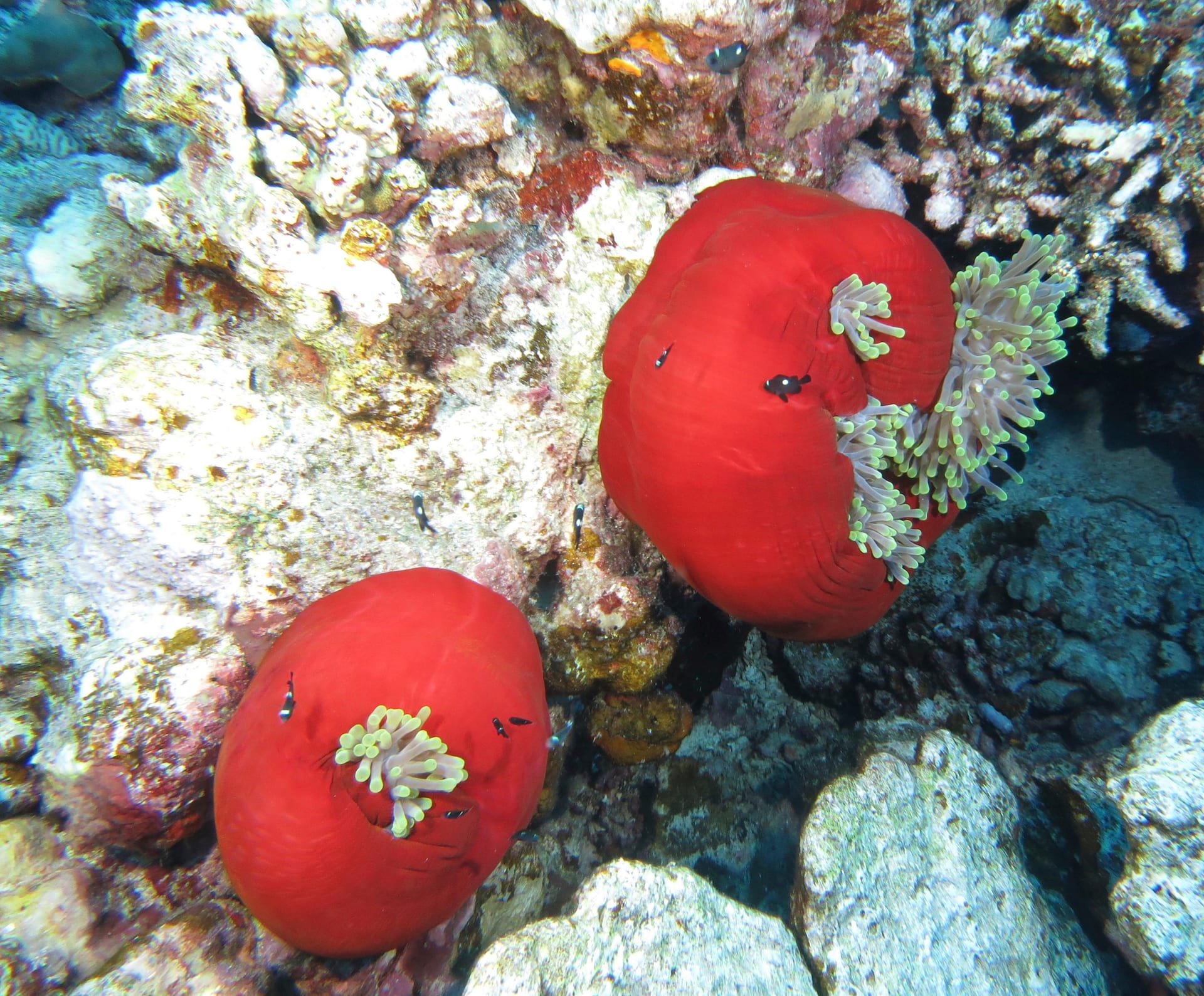
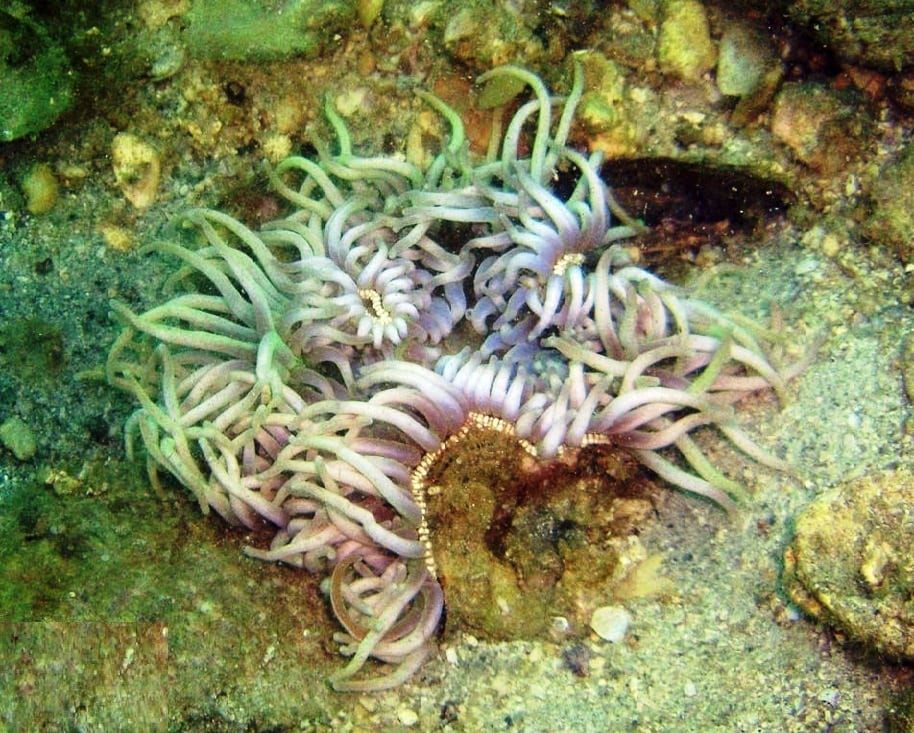
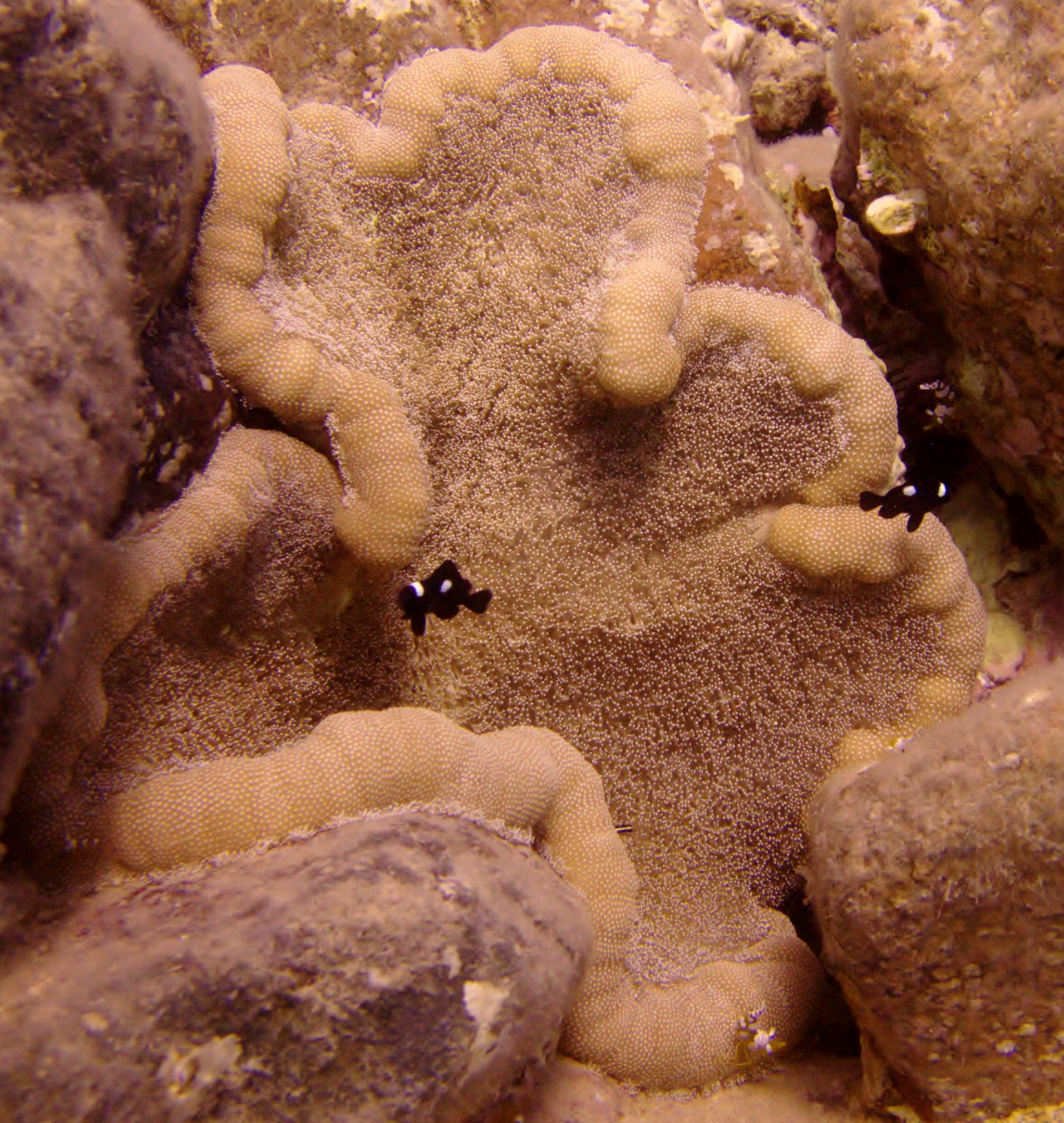
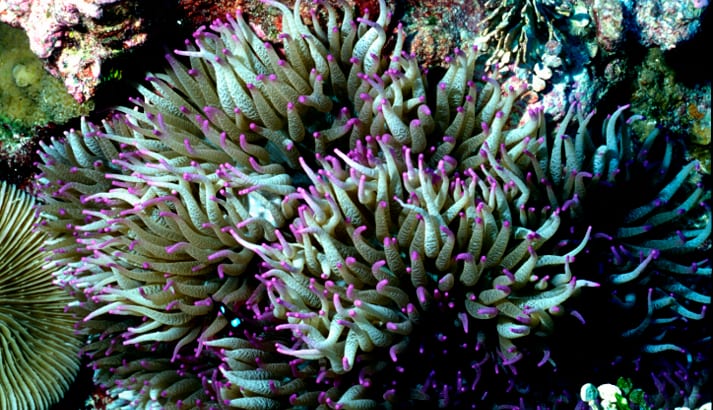
Its tentacles are stout and sparse, almost always under 40 mm long and usually tipped with magenta. The pale cream to yellow column stays buried in sediment up to the level of the oral disc, which reaches 200 mm across.
Difficulty
Advanced
Temperature
22〜26℃
Size
Oral disc up to 200 mm, tentacles under 40 mm
Diet
Nutrition from symbiotic zooxanthellae, supplemented about once a week with meaty foods such as fish, shrimp and clam.
About
Radianthus malu was described in 1893 by Haddon and Shackleton as Discosoma malu; its Japanese standard name is chikubi-isoginchaku. It occurs in scattered localities from Japan in the north to Australia in the south, east to the Hawaiian Islands and west to Sumatra. The tentacles are stout and sparse, almost always under 40 mm long, varying in length even within a single radial row, and usually tipped with magenta. The column is pale cream or yellow, sometimes with patches of deep yellow or orange, and remains buried in sediment up to the level of the oral disc. The oral disc grows to a maximum of 200 mm and is brown or purplish, often with a white radial pattern. It resembles Radianthus doreensis, Heteractis aurora and Radianthus crispa, but is distinguished by its short sparse tentacles. The only anemonefish associated with it is Clark's anemonefish, Amphiprion clarkii.
Source: Wikipedia (CC BY-SA 4.0)
Size of the Malu Anemone
The Malu Anemone grows to Oral disc up to 200 mm, tentacles under 40 mm.
Temperature & humidity for the Malu Anemone
The ideal temperature for the Malu Anemone is 22〜26℃.
Basic Info
Origin
Scattered localities from Japan in the north to Australia in the south, east to the Hawaiian Islands and west to Sumatra
Size
Oral disc up to 200 mm, tentacles under 40 mm
Temperature
22〜26℃
Care Specifications
- Water Temp.
- 22–26℃
- Specific Gravity
- 1.023–1.025
Light: High (PAR>150)Flow: MediumPlacement: Bottom
Sources: LiveAquaria (Malu Sebae Anemone) / SeaLifeBase
References & Sources
Edited & verified by: BreederDirect editorial team
The taxonomic, regulatory, and husbandry data on this page are compiled and verified against the authoritative primary sources below.
Taxonomy & Authority
Accepted name: Radianthus malu (Haddon & Shackleton, 1893)
Synonyms: Heteractis malu (Haddon & Shackleton, 1893), Discosoma malu Haddon & Shackleton, 1893, Radianthus kwietniewskii (Lager, 1911)
Authority databases: WoRMS
Nomenclature follows global taxonomic authority databases.
Regulations & Conservation Status
Not CITES-listed
Sources: CITES Appendices (species not listed)
Regulations may change. Always verify the latest information with the relevant authorities.
Malu Anemone Listings
Loading latest listingsFind listings for this species