Sea Anemone Care and Clownfish Symbiosis Guide | How to Choose Carpet, Magnificent, and Bubble Tip Anemones and Their Compatibility
A guide to successfully keeping clownfish and sea anemones in symbiosis. This article explains in detail the characteristics of three types of anemones (carpet, magnificent, and bubble tip), their care difficulty levels, compatibility with clownfish, and requirements for light and water quality.
Key Takeaways
A guide to successfully keeping clownfish and sea anemones in symbiosis. This article explains in detail the characteristics of three types of anemones (carpet, magnificent, and bubble tip), their care difficulty levels, compatibility with clownfish, and requirements for light and water quality.
About Clownfish and Sea Anemone Symbiosis
✍️
BreederDirect Editorial
The BreederDirect editorial team specializes in care information for animals, covering veterinary care and breeding to deliver beginner-friendly guides.
Find Marine Fish on BreederDirect
Buy directly from verified breeders
Browse Related Listings
Find Marine Fish listings related to this article on BreederDirect. Buy directly from verified breeders.
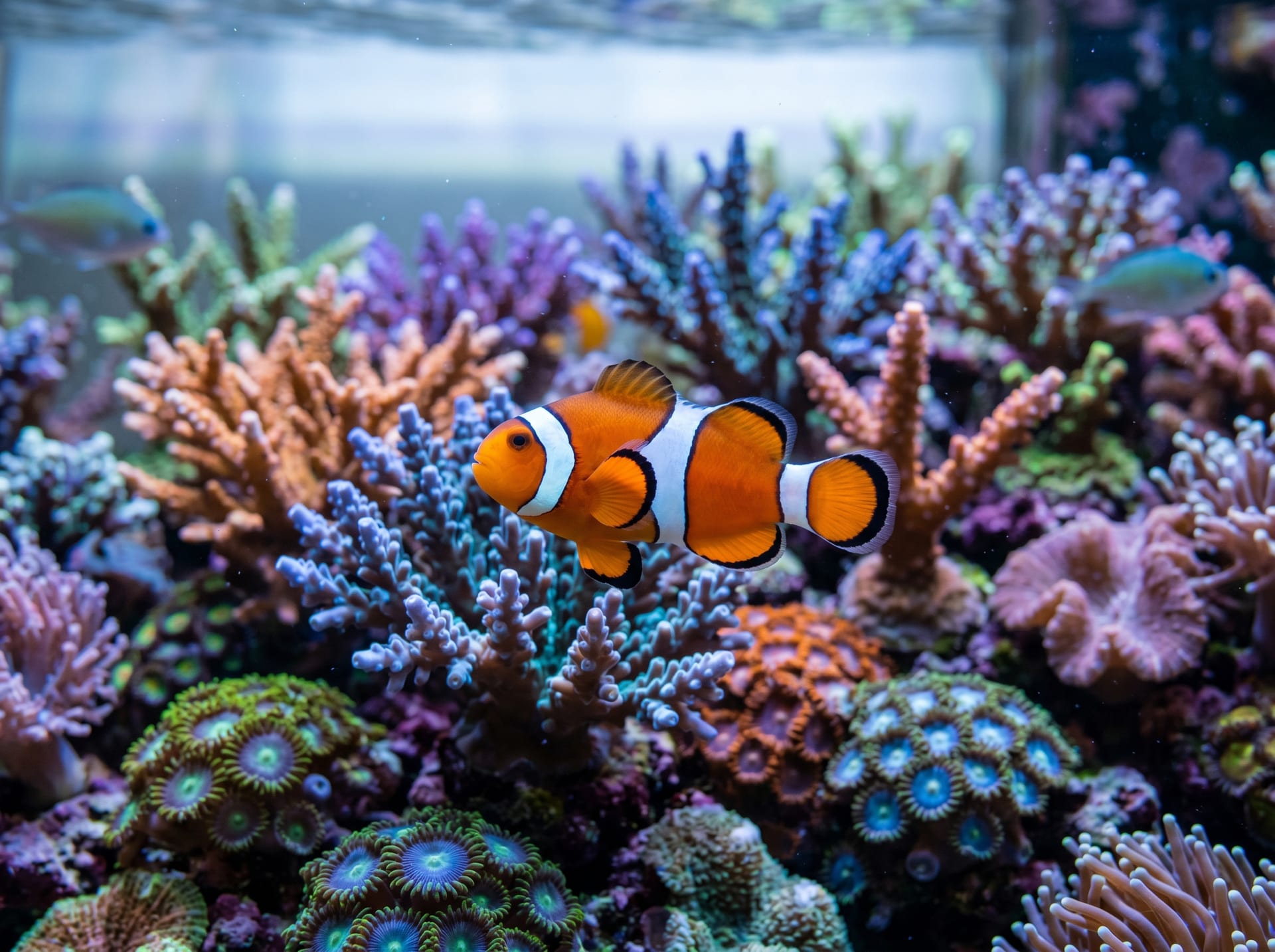
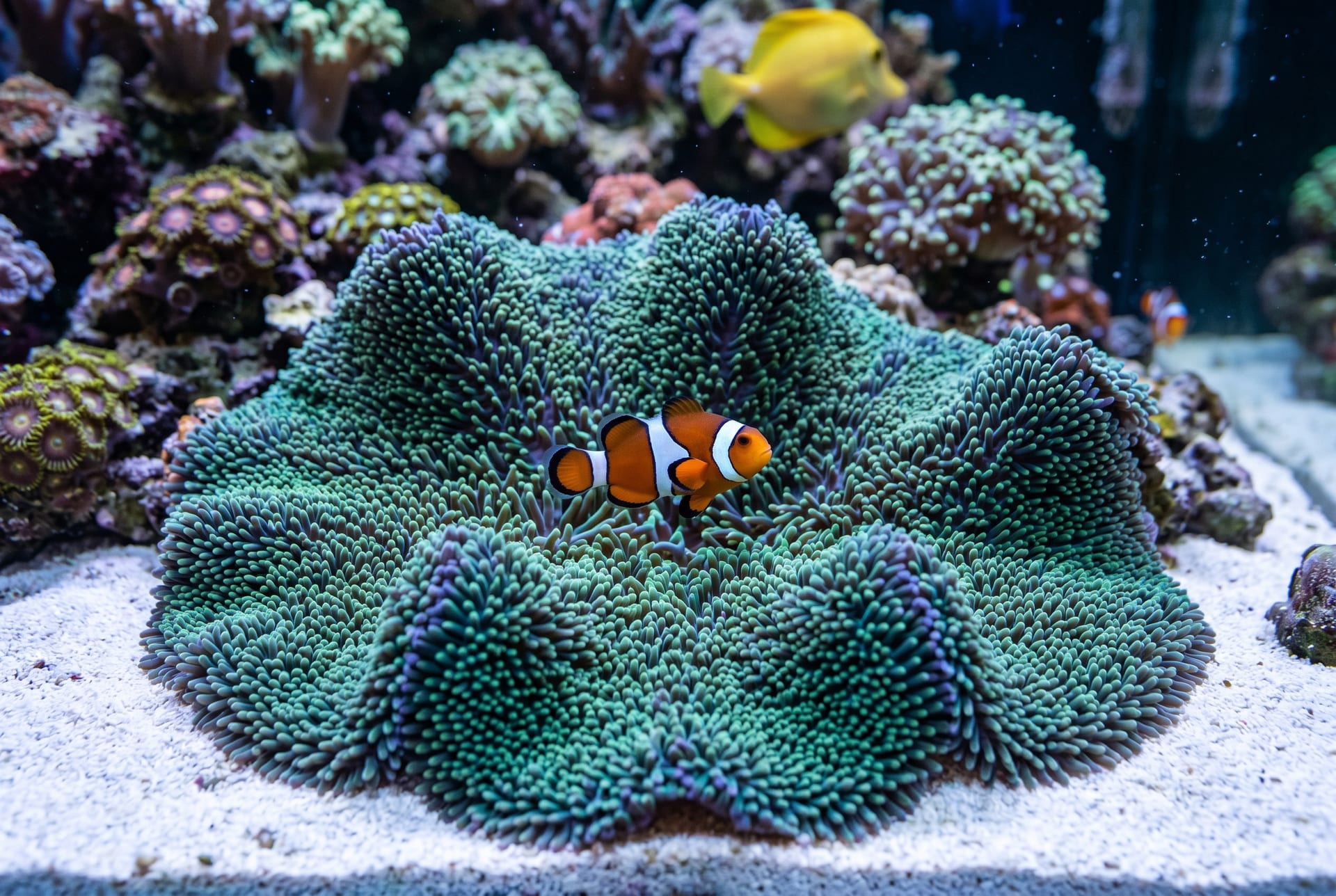
The sight of an ocellaris clownfish nestling into a sea anemone is one of the most beloved scenes in saltwater aquarium keeping. While this symbiotic relationship is commonly seen in nature, recreating it in an aquarium requires proper knowledge.
Clownfish can neutralize the anemone's nematocysts through mucus on their skin, allowing them to move freely among the tentacles without being stung. In return, the anemone benefits from food scraps and metabolic waste that the clownfish brings in. This is a mutually beneficial symbiotic relationship.
However, there are important caveats. Not all clownfish will accept all anemones; specific compatibility exists based on natural symbiotic pairings. Additionally, anemones demand even higher water quality and light intensity than corals, making them moderately challenging to maintain.
Characteristics of Three Main Anemone Species
Carpet Anemone (Stichodactyla gigantea)
This large anemone species is displayed even in public aquariums and can reach diameters of 50–100 cm. It has the highest compatibility with ocellaris clownfish and is the most frequently observed symbiotic pairing in nature. Its toxins are potent enough to sting human skin, so careful handling is essential.
Care difficulty is moderate to high. It requires strong lighting (metal halide or high-output LED) and stable water conditions. It's also prone to moving around if dissatisfied with water flow, so care must be taken to prevent contact with corals or equipment.
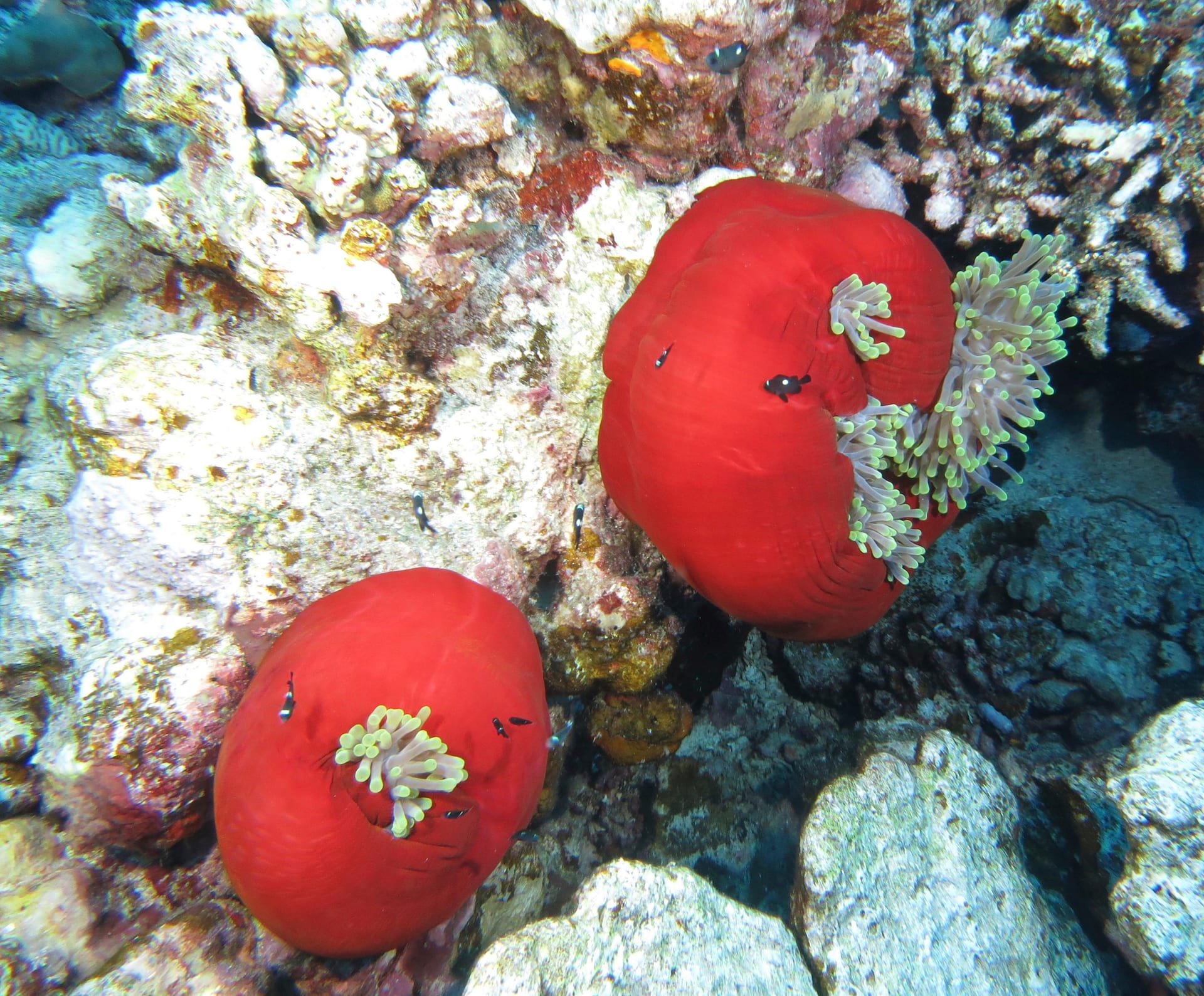
Magnificent Anemone (Heteractis magnifica)
This large species is distinguished by long tentacles often called "long tentacles." It hosts not only ocellaris clownfish but also pink skirt clownfish and maroon clownfish. Like the carpet anemone, it demands high light levels and is moderately difficult to maintain.
While it comes in many color variations (white, green, brown, purple) and is highly attractive, imported specimens often arrive in poor condition, so careful selection is needed.
Bubble Tip Anemone (Entacmaea quadricolor)
The easiest of the three species to keep, making it ideal for beginners. Its characteristic bubble-tipped tentacles make it visually distinctive, and it can be maintained with moderate lighting. It can also reproduce through splitting, adding to the experience.
While it can host ocellaris clownfish, its primary symbiotic partners in nature are titan triggerfish and bettas. However, in aquarium settings, ocellaris clownfish often inhabit it without issue, making the bubble tip anemone and ocellaris clownfish combination ideal for beginners.
Clownfish and Anemone Compatibility Chart
Clownfish
Recommended Anemone
Ocellaris Clownfish (Common Clownfish)
Carpet, Magnificent, Bubble Tip
Pink Skirt Clownfish
Magnificent, Bubble Tip
Tomato Clownfish
Bubble Tip (Bubble Tip)
Blue-Striped Clownfish
Magnificent
While symbiosis can occur with non-natural pairings, choosing compatible combinations will reduce stress and is recommended.
Required Equipment and Water Parameters
Lighting
Sea anemones host symbiotic zooxanthellae, photosynthetic organisms, which provide nutrition through photosynthesis. Strong lighting is therefore essential.
Carpet/Magnificent: 4+ T5 fluorescent tubes, 150W metal halide, or high-output LED (AI/Kessil equivalent)
Bubble Tip: Can tolerate lower lighting (documented success with standard saltwater LED fixtures)
Water Parameters
Specific Gravity: 1.023–1.025
pH: 8.1–8.3
Ammonia/Nitrite: 0 ppm
Nitrate: ≤20 ppm (preferably ≤10 ppm)
Temperature: 24–26°C (75–79°F)
Calcium: 380–450 ppm (for reef tanks)
Anemones are sensitive to poor water quality. High nitrate levels cause them to gape or retract their tentacles—signs of stress.
Steps for Introducing Symbiosis
Confirm the nitrogen cycle is complete and water parameters are stable (minimum 6 weeks)
Introduce the bubble tip anemone first and observe for 2–3 weeks
Once stable, introduce the clownfish
The clownfish may approach the anemone but often won't enter immediately. Be patient—it can take days to weeks.
Once the anemone settles into a fixed position in the tank, symbiosis is likely established.
Summary
Keeping clownfish and anemones in symbiosis requires dedication, but the reward is extraordinary.
For beginners, the bubble tip anemone and ocellaris clownfish combination is ideal
Success hinges on managing lighting and water quality, especially nitrate levels
Carpet and magnificent anemones are best attempted after gaining experience
At BreederDirect, you can purchase ocellaris clownfish directly from domestic breeders who have acclimated them to captive conditions. These fish adapt readily to aquarium life and are ideal for those looking to establish clownfish-anemone symbiosis.