Source: Wikimedia Commons
Saddleback Clownfish
BeginnerAmphiprion polymnus
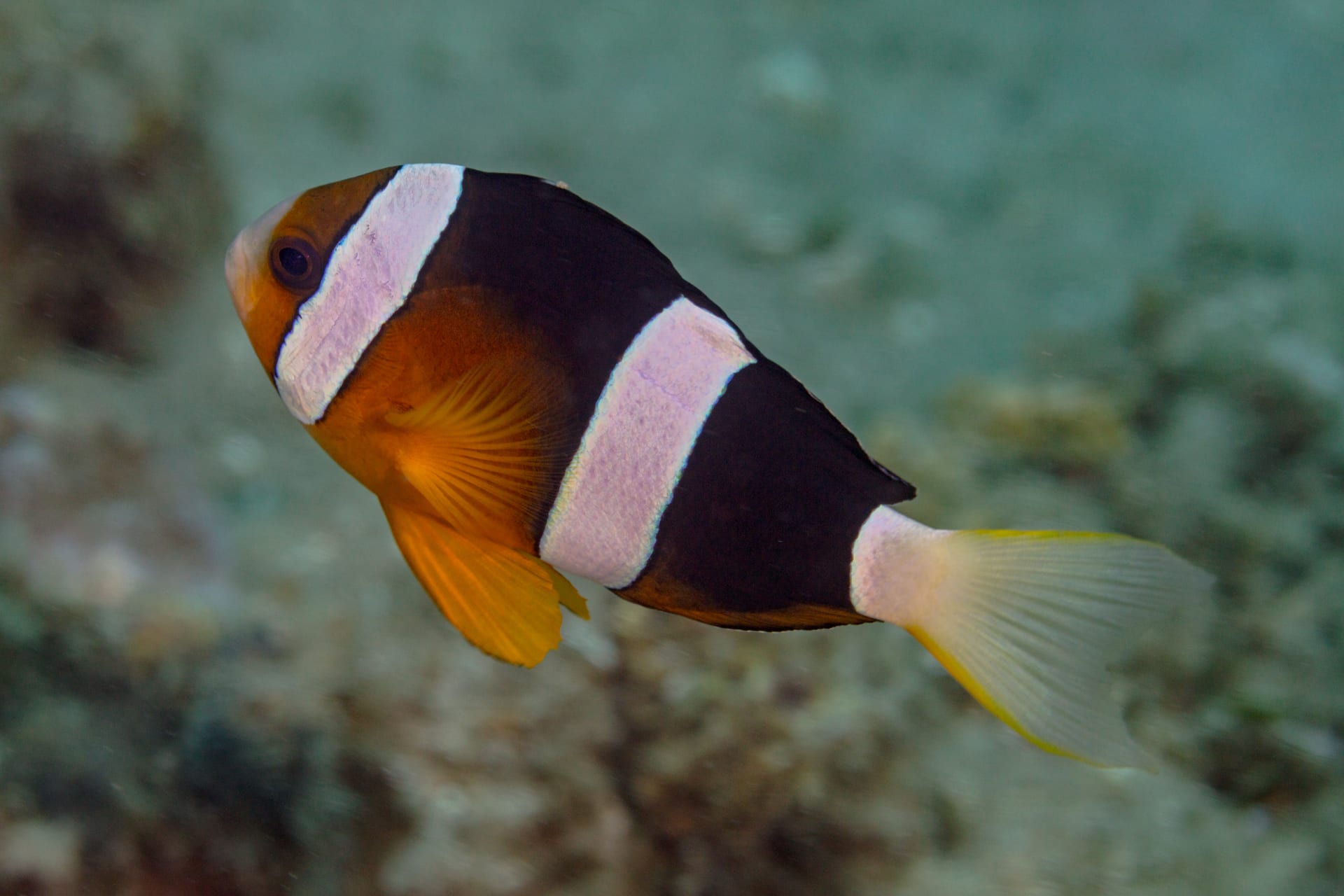
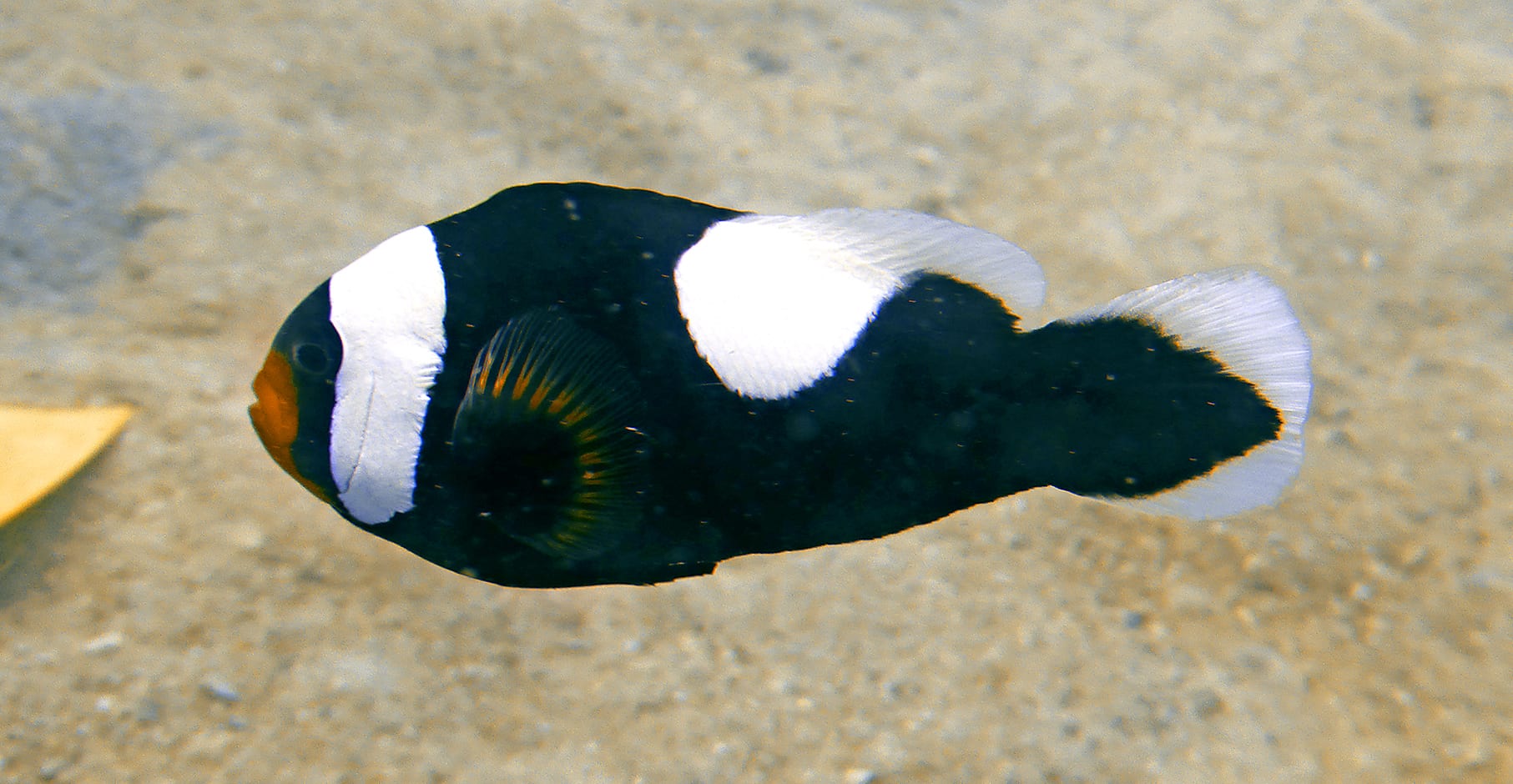
An anemonefish with a dark body, a white head bar and a saddle-shaped white patch on the back, and as the Japanese name suggests a reddish head. It lives with Haddon's carpet anemone on silty inshore bottoms and occurs in the Ryukyu Islands.
Difficulty
Beginner
Temperature
22〜26℃
Size
Up to 13cm
Diet
Pellets, flakes, frozen food (omnivore)
About
The Saddleback Clownfish (Amphiprion polymnus) ranges across the western Pacific from the Ryukyu Islands to Taiwan, the Gulf of Thailand, Indonesia, the Philippines, northern Australia and the Solomon Islands. Unlike most clownfish it inhabits silty lagoons and harbors at 2-30 m, living mainly with Haddon's carpet anemone (Stichodactyla haddoni) and the leathery anemone (Heteractis crispa). The dark brown to orange-brown body has a white head bar, a saddle-like white patch on the back and a white edge on the tail; the reddish head gives the Japanese name. Maximum length is 13 cm. It is a protandrous hermaphrodite that spawns in pairs on the substrate, with the male guarding the eggs. It has been reared in captivity and captive-bred fish are traded. It is hardy and easy to keep; a tank of 114 L or more is recommended. A host anemone is optional, but a tank with open sand shows its natural behavior. Keep one pair, as several clownfish of the same or different species fight over territory.
Source: Wikipedia (CC BY-SA 4.0)
Size of the Saddleback Clownfish
The Saddleback Clownfish grows to Up to 13cm.
Temperature & humidity for the Saddleback Clownfish
The ideal temperature for the Saddleback Clownfish is 22〜26℃.
Basic Info
Origin
Western Pacific: Ryukyu Islands, China, Viet Nam, Taiwan, Gulf of Thailand, Indonesia, Philippines, northern Australia, New Guinea, New Britain and Solomon Islands
Size
Up to 13cm
Temperature
Care Specifications
- pH
- 8.1–8.4
- Water Temp.
- 22–26℃
- Specific Gravity
- 1.02–1.025
- Min. Tank
- 114 L
Semi-aggressiveReef safePairBreeding: Easy
Sources: LiveAquaria / FishBase
References & Sources
Edited & verified by: BreederDirect editorial team
The taxonomic, regulatory, and husbandry data on this page are compiled and verified against the authoritative primary sources below.
Taxonomy & Authority
Accepted name: Amphiprion polymnus (Linnaeus, 1758)
Synonyms: Perca polymna, Amphiprion bifasciatus, Anthias bifasciatus, Amphiprion intermedius, Amphiprion laticlavius, Amphiprion trifasciatus, Lutjanus jourdin, Paramphiprion hainanensis
Authority databases: WoRMS · FishBase
Nomenclature follows global taxonomic authority databases.
Regulations & Conservation Status
Not CITES-listedIUCN LC · Least Concern
Sources: CITES Appendices (species not listed) / IUCN Red List
Regulations may change. Always verify the latest information with the relevant authorities.
Saddleback Clownfish Listings
Loading latest listingsFind listings for this species