Clownfish & Anemone Symbiosis Care Guide — Compatibility, Tank Setup & Management Tips | ブリちょく
Marine Fish| ✍️ BreederDirect Editorial
Clownfish & Anemone Symbiosis Care Guide — Compatibility, Tank Setup & Management Tips
How to successfully keep clownfish and anemones together: compatible pairings, tank environment requirements, lighting and flow for anemones, and management tips for this iconic marine duo.
Key Takeaways
How to successfully keep clownfish and anemones together: compatible pairings, tank environment requirements, lighting and flow for anemones, and management tips for this iconic marine duo.
Related Species
Cohabitation Guide for Clownfish and Sea Anemones | Compatibility, Tank Setup, and Care Tips
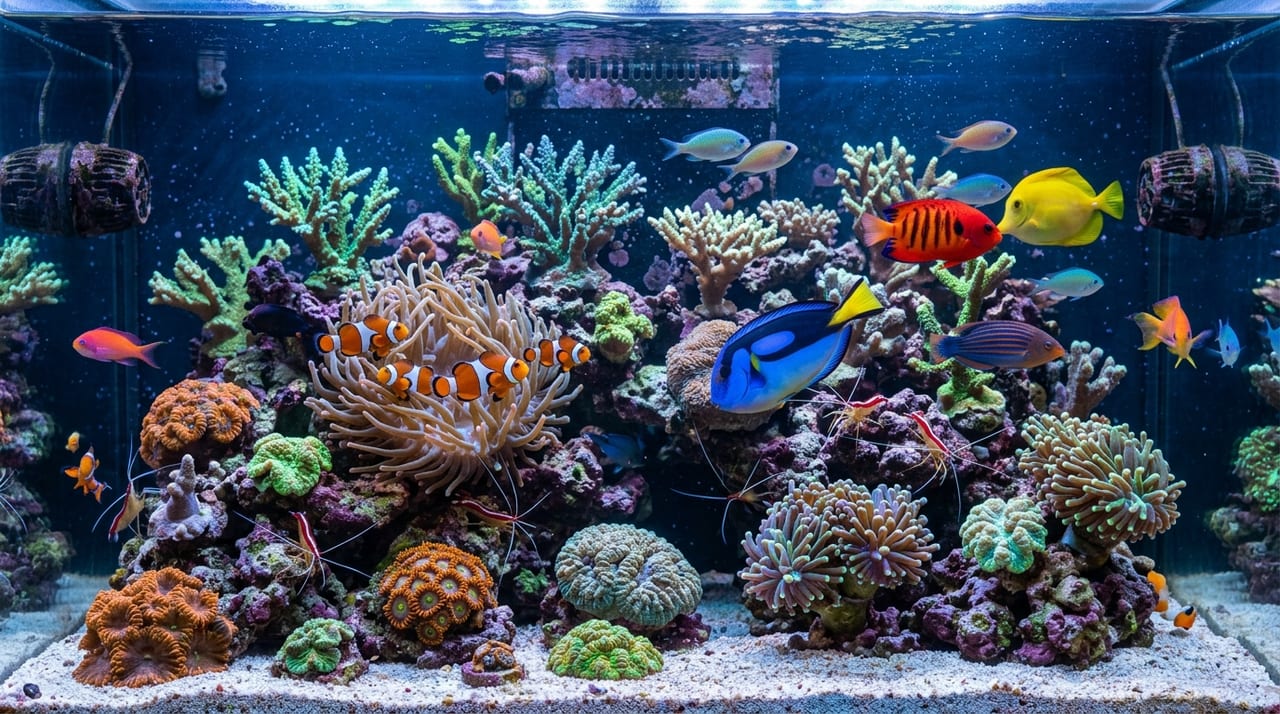
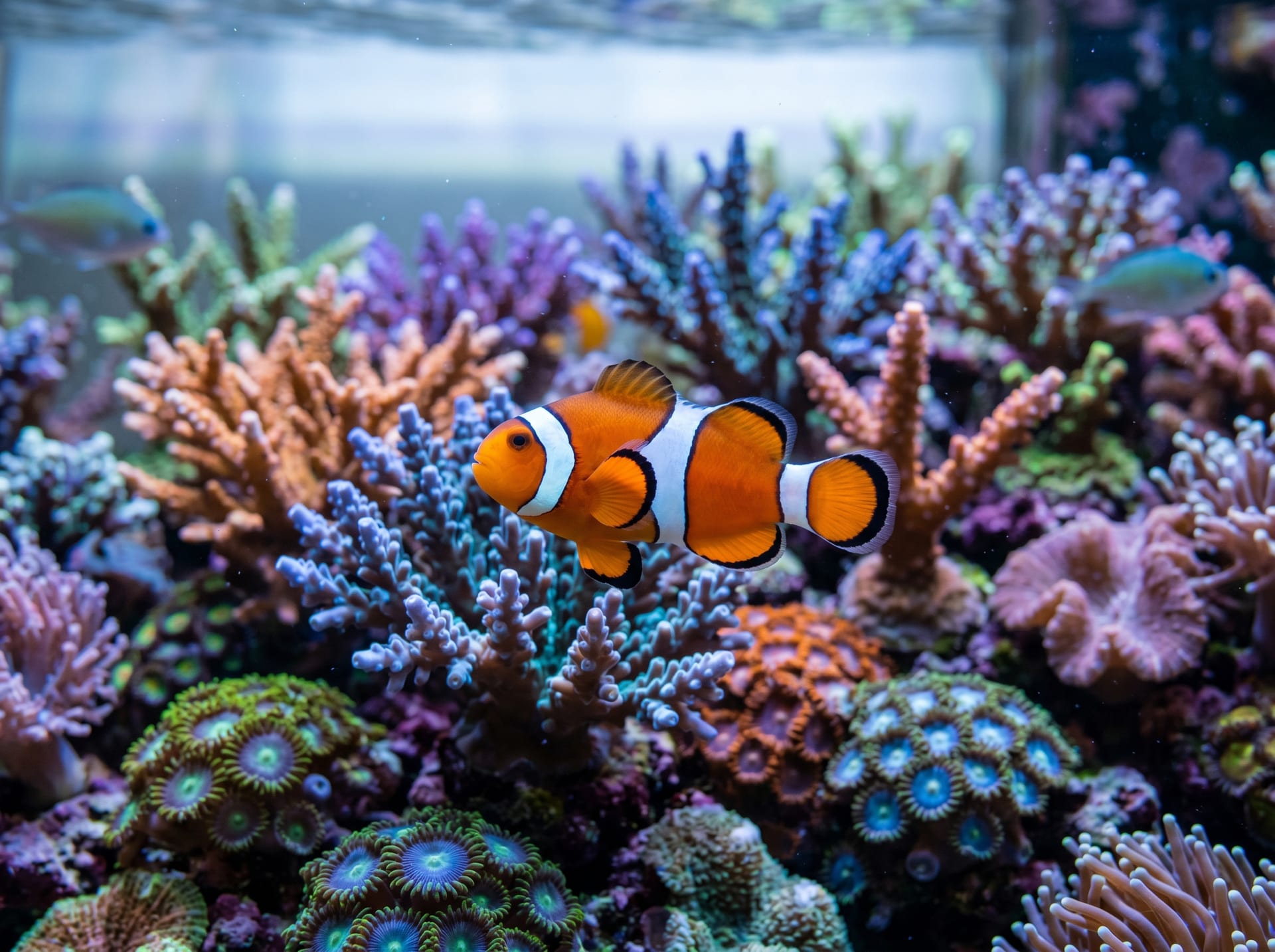
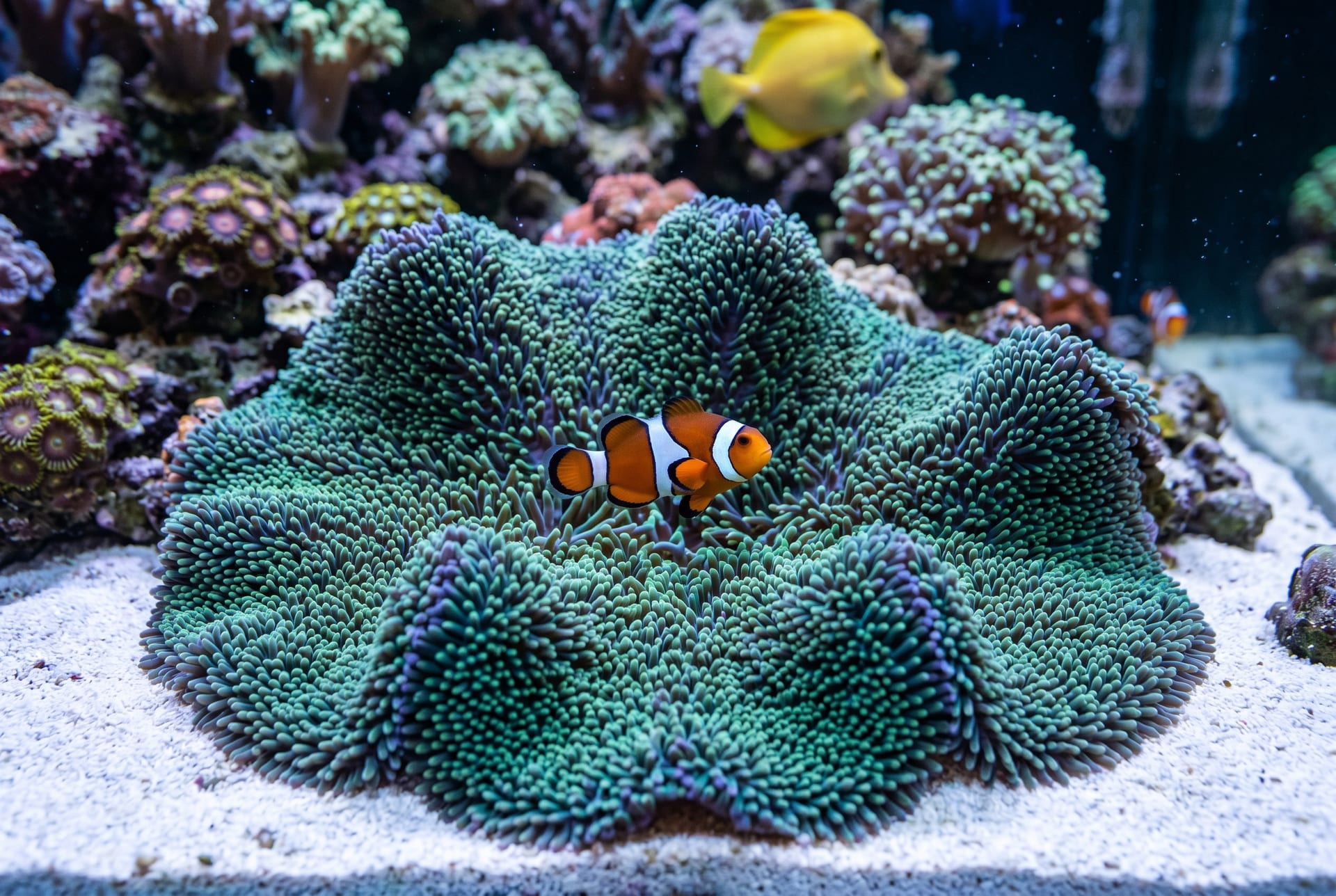
The Clownfish (Amphiprionidae), which gained worldwide popularity through "Finding Nemo," is one of the most commonly chosen fish for beginners in saltwater aquarium keeping. In nature, clownfish cohabitate with sea anemones, and this symbiotic relationship can be recreated in aquariums. However, anemone care is considered one of the most difficult aspects of saltwater fishkeeping, and mistakes in compatibility or water quality management can result in death. This article provides detailed guidance on successfully maintaining clownfish and sea anemones together.
The BreederDirect editorial team specializes in care information for animals, covering veterinary care and breeding to deliver beginner-friendly guides.
Find Marine Fish on BreederDirect
Buy directly from verified breeders
Browse Related Listings
Find Marine Fish listings related to this article on BreederDirect. Buy directly from verified breeders.
Sex Change: All clownfish start as males; when a pair forms, the larger individual transforms into a female
Anemone Dependency: Clownfish can be kept in aquariums without anemones
Territoriality: Once they establish a location, they may chase away other fish
Ease of Breeding: Captive-bred (CB) individuals are widely available in the trade
Basic Information on Sea Anemones and Compatibility
Sea Anemones Compatible with Clownfish
There are three main anemone species with which clownfish cohabitate in nature.
Species
Scientific Name
Compatibility
Care Difficulty
Saddle Anemone
Stichodactyla haddoni
◎ (Excellent)
★★★★★ (Most difficult)
Giant Sea Anemone
Stichodactyla gigantea
◎ (Excellent)
★★★★☆ (Difficult)
Magnificent Sea Anemone
Heteractis magnifica
○
★★★★☆
Bubble Tip Anemone
Entacmaea quadricolor
○ (Relatively easy)
★★★☆☆
Corkscrew Anemone
Bartholomea annulata
△
★★★☆☆
Most Recommended: The Bubble Tip Anemone is the easiest to maintain and has good compatibility with clownfish.
Water Quality Requirements for Anemone Care
Anemones harbor zooxanthellae (symbiotic algae) and obtain some of their nutrients through photosynthesis. Therefore, the following strict water quality parameters are necessary.
Parameter
Target Value
Temperature
24–27°C
Specific Gravity
1.023–1.025
pH
8.1–8.4
Ammonia
0 mg/L
Nitrite
0 mg/L
Nitrate
10 mg/L or below (ideally 5 or less)
Phosphate
0.05 mg/L or below
Calcium
380–420 mg/L
Magnesium
1250–1350 mg/L
Alkalinity (KH)
8–11 dKH
Lighting is especially critical. Anemones require sufficient light for their zooxanthellae to photosynthesize; standard LED lights may not provide adequate intensity.
Tank and Equipment Selection
Tank Size
Clownfish Only: 30 cm or larger saltwater tank
Clownfish + Anemone: 45–60 cm or larger recommended
Since some anemone species can expand to 20–30 cm or more, a spacious tank is advisable.
Lighting
For anemone care, lighting is the most critical piece of equipment.
LED (Saltwater/Coral-Specific): High-performance models like Radion or Hydra are ideal
Required Light Intensity: Approximately 30,000–50,000 lux (PAR value: 100–200 μmol or higher)
Lighting Duration: 10–12 hours
Protein Skimmer
A protein skimmer (an organic removal device using bubbles) is essential in saltwater aquariums. It is particularly crucial for maintaining high water quality when anemones are present.
Live Rock
Incorporating real coral reef rock (live rock) significantly improves biological filtration. Aim for approximately 20–30% of the tank's volume.
Clownfish Care Management
Acclimation at Introduction
Newly purchased clownfish should be acclimated carefully.
Acclimation Steps:
1. Float the bag in the tank to equalize temperature (15–20 minutes)
2. Gradually add tank water to the bag (over 30 minutes)
3. Discard the bag water and gently introduce the fish (do not add bag water to the tank)
Feeding
Frequency: Twice daily
Food Types: Saltwater fish flakes, frozen brine shrimp, pellets
Quantity: An amount they can consume in 2–3 minutes
Multiple Fish Keeping
Clownfish typically form a pair in a single anemone. Multiple same-species individuals will fight; therefore, keeping a single pair (2 fish) is appropriate.
Sea Anemone Care Management
Placement
Anemones naturally move to their preferred location. Choose a spot with moderate water flow and adequate lighting.
Caution: Anemones can be drawn into powerheads or intake tubes. Always attach a sponge guard to intake tubes.
Health Indicators
Condition
Meaning
Tentacles fully extended
Healthy state
Mouth closed
Normal
Body contracted (temporary)
Molting, digestion, or response to water changes
Whitening (bleaching)
Loss of zooxanthellae; severe stress
Mouth open continuously
Weakening; requires attention
Bleaching occurs due to temperature rise, excessive light, or poor water quality and can result in death if left untreated. Identify the cause and address it immediately.
Feeding (Optional)
Anemones can survive on photosynthesis alone, but providing small pieces of fish, shrimp, or copepods once or twice monthly promotes faster growth. Overfeeding degrades water quality.
Common Failures and Solutions
Failure
Cause
Solution
Anemone turns white
Insufficient lighting or poor water quality
Strengthen lighting or perform emergency water change
Anemone expels digestive filaments
Severe stress
Remove stress source
Clownfish does not cohabitate
Individual differences or insufficient anemone familiarity
Wait (adaptation can take days to weeks)
Anemone sucked into powerhead
Inadequate protection
Install sponge guard on intake
Conclusion
Cohabitation of clownfish and sea anemones is one of the most striking displays in a saltwater aquarium. While keeping clownfish alone is relatively straightforward, introducing an anemone requires adequate lighting and high water quality. A step-by-step approach—beginning with clownfish alone until water quality stabilizes, then introducing an anemone—leads to long-term success.