Natural System vs Berlin System | Complete Comparison of Saltwater Aquarium Filtration Methods
Thorough comparison of Natural and Berlin systems: mechanisms, costs, and maintenance differences. For intermediate aquarists struggling with filtration choices, this guide explains each system's characteristics and how to choose the right one for your style.
Key Takeaways
Thorough comparison of Natural and Berlin systems: mechanisms, costs, and maintenance differences. For intermediate aquarists struggling with filtration choices, this guide explains each system's characteristics and how to choose the right one for your style.
Natural System vs Berlin System — Which Should You Choose?
As you continue keeping saltwater fish and corals, you'll inevitably face the question: "Which filtration method should I use?" Especially as an intermediate hobbyist, doubts arise: "Is my current setup really adequate?" "Could there be a better approach?"
Two filtration methods are widely known for saltwater tanks: the "Natural System" and the "Berlin System." Both have been supported by marine aquarists for many years, but their philosophies and practical approaches are fundamentally different.
This article provides a thorough comparison of the two systems' mechanisms, merits, demerits, costs, and maintenance differences, so you can choose the approach that matches your aquarium style.
What is the Natural System?
Basic Philosophy
The Natural System is a filtration method aiming to replicate the natural ocean through "low nutrient levels, gentle water flow, and biological self-purification." Leo Tan's NSS (Natural Sea Water System), proposed in the late 1980s, is considered its predecessor.
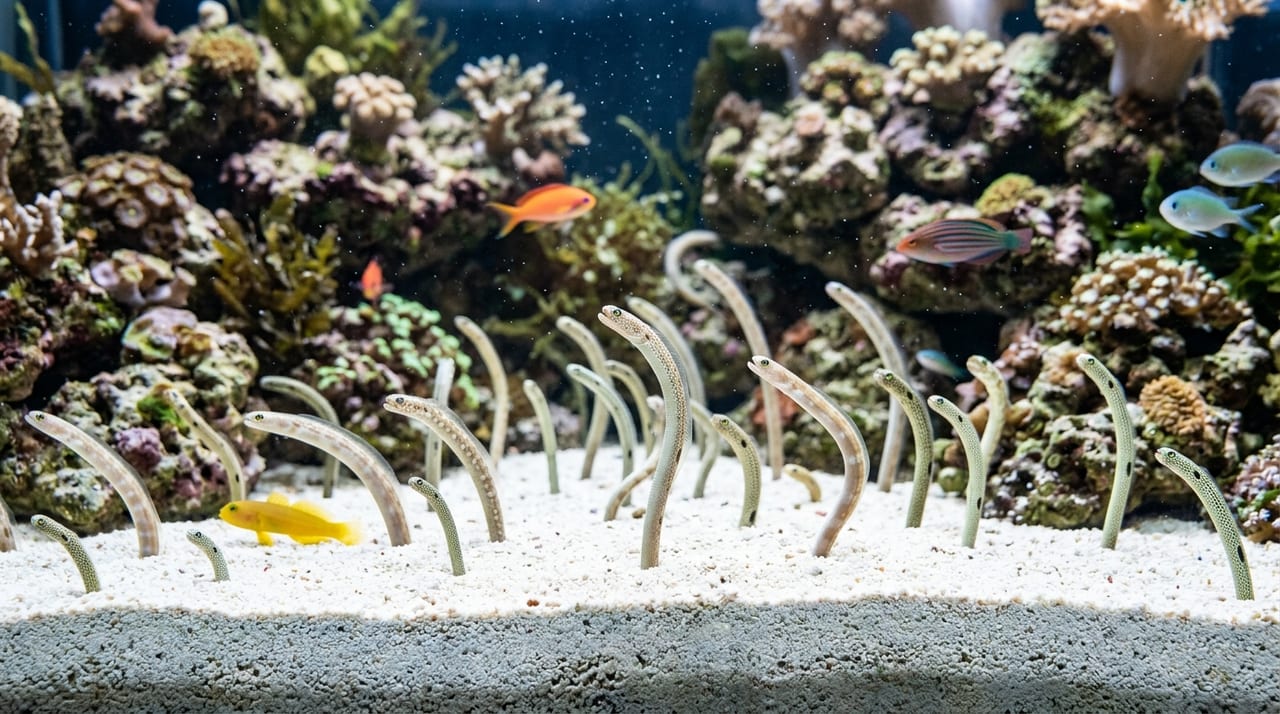
The core of this system is denitrification by anaerobic bacteria. In low-oxygen zones deep within thick sand beds (10–15cm or more) or live rock, anaerobic bacteria break down nitrate into nitrogen gas. This enables nitrate removal without relying solely on water changes.
Main Components
Deep Sand Bed (DSB): Lay sand with grain size around 0.5–1.5mm to a depth of 10–15cm or more, creating an anaerobic layer that promotes denitrification
Live Rock: Bacteria and microorganisms colonizing the porous rock provide biological filtration
Low Flow Design: Prioritize gentle circulation over strong currents, avoiding disturbance to the sand bed
Minimal Equipment: Either no skimmer or only a very small one
Microbial Diversity: Small creatures like amphipods, tiny polyps, and copepods stir the sand bed, preventing hydrogen sulfide accumulation
✍️
BreederDirect Editorial
The BreederDirect editorial team specializes in care information for animals, covering veterinary care and breeding to deliver beginner-friendly guides.
Find Marine Fish on BreederDirect
Buy directly from verified breeders
Browse Related Listings
Find Marine Fish listings related to this article on BreederDirect. Buy directly from verified breeders.
Natural systems typically take several months to establish, requiring patience until diverse life colonizes the sand and rock. Once stable, however, water changes become infrequent and power consumption is minimal.
Conversely, it's extremely sensitive to overstocking and overfeeding. Rapid nutrient spikes cause hydrogen sulfide production and risk of sand bed "collapse." Periodic partial sand replacement is recommended maintenance.
What is the Berlin System?
Basic Philosophy
The Berlin System was developed and popularized by German aquarists in the 1980s, characterized by "high filtration, strong water flow, and aggressive organic matter removal."
Its core is mechanical organic matter removal via protein skimmer. By physically removing dissolved organic compounds (DOC) before bacteria can break them down, water quality deterioration is prevented.
Main Components
Protein Skimmer (Foam Fractionator): The system's centerpiece, using bubbles to remove dissolved proteins and organic matter
Live Rock: Provides biological filtration like Natural systems, but Berlin systems use more of it
High Flow Pump: Creates strong water circulation throughout the tank, preventing organic buildup on the bottom
Thin Sand Bed or Bare Bottom: Omits DSB, using thin sand or no substrate to simplify management
Activated Carbon & Adsorbents: GAC (granular activated carbon) and phosphate-binding media frequently added
Operational Characteristics
Berlin systems use equipment to maintain water quality, achieving establishment relatively quickly with stable results. Stocking density flexibility is high, allowing varied feeding amounts.
However, regular protein skimmer cup cleaning and adjustment is needed, with maintenance costs. Equipment failure and power loss risks must be considered.
Complete Comparison of Both Systems
Filtration Mechanism Differences
Item
Natural System
Berlin System
Primary Filtration
Anaerobic bacterial denitrification (biological)
Organic matter mechanical removal by protein skimmer
Nitrate Handling
Reduced to nitrogen gas in anaerobic sand layer
Managed by adsorbents & water changes (prone to accumulation)
Phosphate Handling
Biological absorption & settlement
Removed by phosphate adsorbents & skimmer
Organic Matter Timing
Processed after bacterial breakdown
Removed physically before breakdown
Natural System replicates the ocean's natural cycle; Berlin actively removes via equipment. Former prioritizes biology; latter prioritizes machinery.
Cost Comparison
Item
Natural System
Berlin System
Initial Cost
Lower (sand & live rock focus)
Higher (expensive skimmer)
Electricity
Low (few pumps, no skimmer)
High (skimmer & powerful pump)
Running Costs
Low (few consumables)
Moderate (carbon & adsorbent replacement)
Setup Cost
High time investment (several months)
High equipment cost, quick setup
Overall, Natural System is more economical, but recovery from failure is difficult and re-establishment takes time.
Maintenance Differences
Natural System daily care is relatively simple: regular water changes (1–2 times monthly) and livestock observation, while carefully not disturbing the sand bed. Sand bed problems (collapse, hydrogen sulfide) are however difficult to address.
Berlin System requires weekly skimmer cup cleaning, regular carbon and adsorbent replacement. Daily equipment checks are necessary, but water quality issues are easier to identify and resolve.
Which Suits You? — Recommendations by Use Case
Natural System Fits You If:
You want a quiet tank: Ideal if skimmer noise bothers you
You want minimal running costs: Best for minimizing electricity and consumable expenses
You're interested in ecosystems: Enjoy observing the microbial world and biological cycles
You keep soft corals/LPS: Better suited to softs and LPS than SPS (Small Polyp Stony) demanding high precision
You can patience to stabilize slowly: Have several months for setup
Berlin System Fits You If:
You aim to seriously keep SPS corals: SPS (like Acropora) requires high water stability, where Berlin excels
You want more livestock density: Equipment's buffering capacity handles moderate overstocking
You want easier troubleshooting: Issues are easier to identify and resolve through equipment management
You want quick establishment: Achieves stability relatively quickly
You enjoy equipment tweaking: Love adjusting skimmers, adding new gear, hobby centered on equipment
Advice for Intermediate Aquarists — Hybrid Operation
Actually, many experienced aquarists don't purely adopt one method, instead using hybrid operation, such as:
Base Berlin with thin sand bed to also leverage sand bed bacteria
Add small skimmer to Natural System for water quality support
Combine with refugium (separate tank growing macroalgae) to absorb nutrients
What matters is creating "your system" matched to your tank's state, livestock composition, and lifestyle. Even non-textbook approaches work—if your tank is stable and animals are healthy, that's correct for you.
Best learning comes from experienced breeders actually keeping livestock. Breeder direct-sales platform "BreederDirect" features breeders nationwide selling directly, allowing you to ask husbandry advice during purchase. Start your saltwater fish and coral journey through connections with breeders.