Complete Guide to Nitrate Management in Saltwater Fish Tanks | From Causes to Removal Techniques | ブリちょく
Marine Fish| ✍️ BreederDirect Editorial
Complete Guide to Nitrate Management in Saltwater Fish Tanks | From Causes to Removal Techniques
Systematically explains causes of nitrate problems in saltwater fish and coral tanks, accumulation mechanisms, measurement methods, and removal techniques beyond water changes (refugium, denitrification systems, biopellets).
Key Takeaways
Systematically explains causes of nitrate problems in saltwater fish and coral tanks, accumulation mechanisms, measurement methods, and removal techniques beyond water changes (refugium, denitrification systems, biopellets).
Why Nitrate Is the Enemy of Saltwater Aquariums
In aquariums, the 'nitrogen cycle' progressively converts ammonia (highly toxic) → nitrite (highly toxic) → nitrate (low toxicity). However, unlike freshwater systems, the final product nitrate becomes a particular problem in saltwater systems.
✍️
BreederDirect Editorial
The BreederDirect editorial team specializes in care information for animals, covering veterinary care and breeding to deliver beginner-friendly guides.
Find Marine Fish on BreederDirect
Buy directly from verified breeders
Browse Related Listings
Find Marine Fish listings related to this article on BreederDirect. Buy directly from verified breeders.
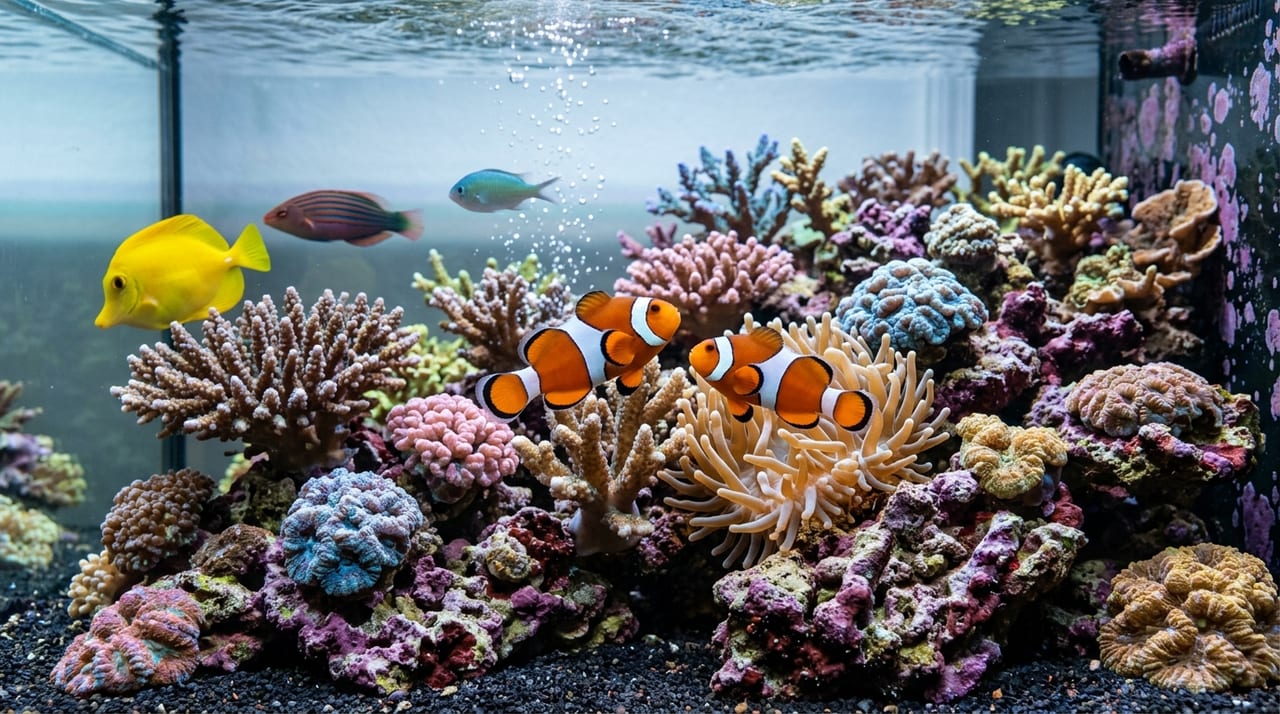
Corals, especially SPS (Acropora species), prefer ultra-low nutrient environments with nitrate below 5 ppm, ideally 1–3 ppm. When nitrate accumulates, zooxanthellae proliferate and corals turn brown (browning out), leading to bleaching and growth inhibition long-term. Even in fish-only tanks, below 20 ppm is ideal; 30 ppm or higher causes immune suppression and decreased disease resistance.
Causes of Nitrate Accumulation
Main sources of nitrate buildup:
Uneaten food and fish waste: Protein breaks down into ammonia and ultimately becomes nitrate
Overstocking: More fish = higher nitrate production
Inadequate filtration: Bacterial decomposition cannot keep up
Insufficient water changes: Neglecting regular changes allows accumulation
Dead organisms: Decaying fish, dead corals, and algae
Measurement Methods and Targets
Measure nitrate with NO3 test kits (chemical or electronic). Chemical kits offer high accuracy; combined with ReferenceKit (ICP analysis) for precise readings.
A refugium is a secondary chamber attached to the main tank where macroalgae like Caulerpa (Cape seaweed) or seaweed are mass-cultivated. Algae absorb nitrate as a nutrient source, and harvesting them regularly removes nitrate from the system. Maintenance is relatively easy if adequate lighting is provided, and it also serves as a breeding ground for copepods.
Denitrification Systems (VSV, Sulfur Pellets, etc.)
These systems use 'denitrification,' where anaerobic bacteria reduce nitrate to nitrogen gas. Sulfur pellet reactors offer good value and stable operation, but require knowledge to set up and carry hydrogen sulfide generation risk.
Biopellets (Biopolymers)
Polymer pellets serve as a carbon source in a reactor, promoting heterotrophic bacteria that consume nitrate and phosphate. Installation is relatively straightforward, but coordination with the sump skimmer is essential.
Controlled Water Changes
Water changes are fundamental regardless of system. Monthly 10–20% changes reset nitrate and trace elements. Using high-quality synthetic seawater prepared with RO/DI water is essential.
Biological Control (Denitrator Fauna)
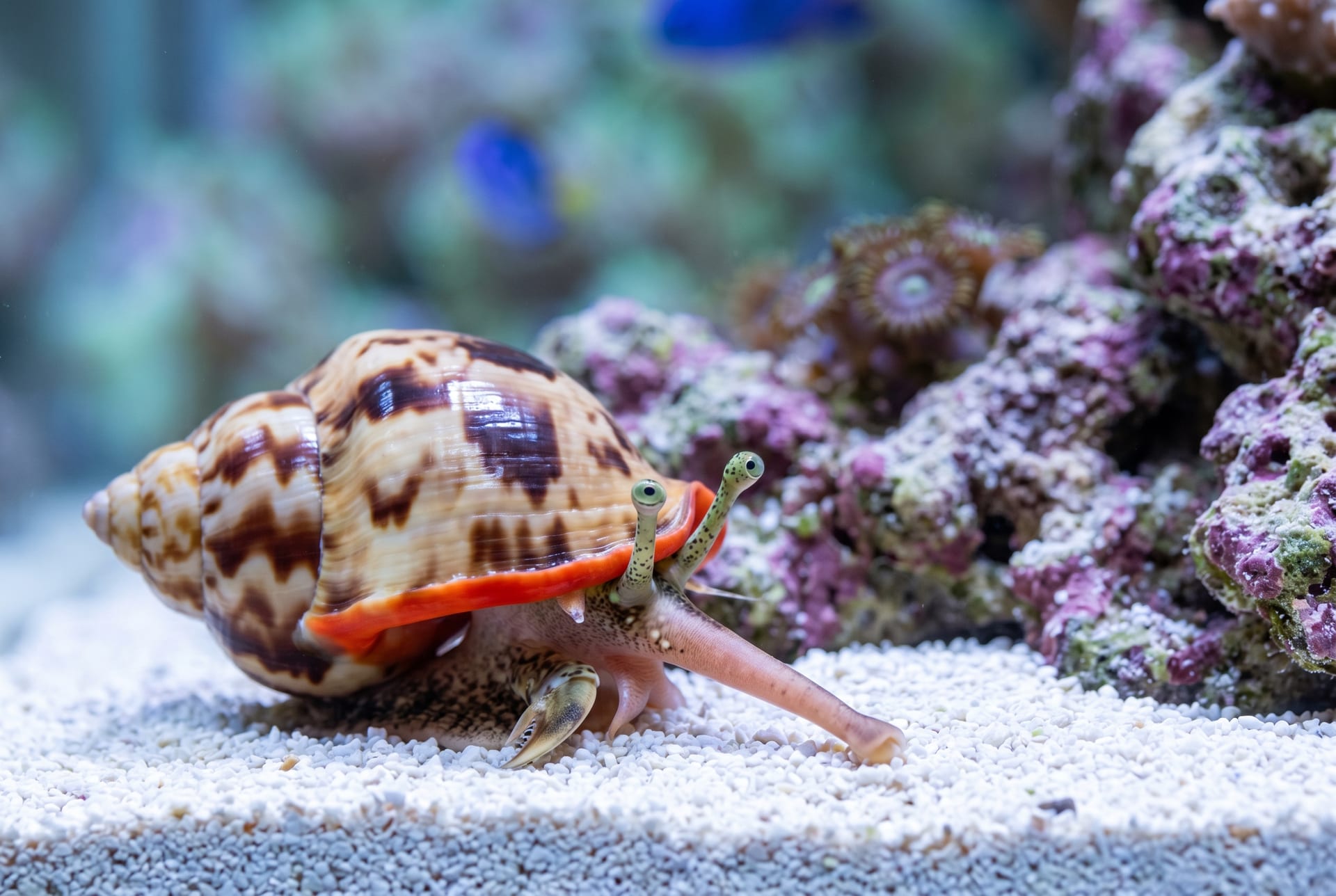
Algae-eating snails like turbo snails indirectly suppress nitrate accumulation by removing algae. Gobies stir detritus in the sand and promote bacterial breakdown.
Practical Troubleshooting
If nitrate doesn't drop despite water changes, detritus accumulated in substrate and live rock may be the source. Regularly vacuum the sand (removing sludge) and strengthen water flow around live rock. Equally important: an undersized skimmer won't solve the problem, so match skimmer specs to tank volume.