Source: Wikimedia Commons
Long Tentacle Anemone
IntermediateRadianthus doreensis
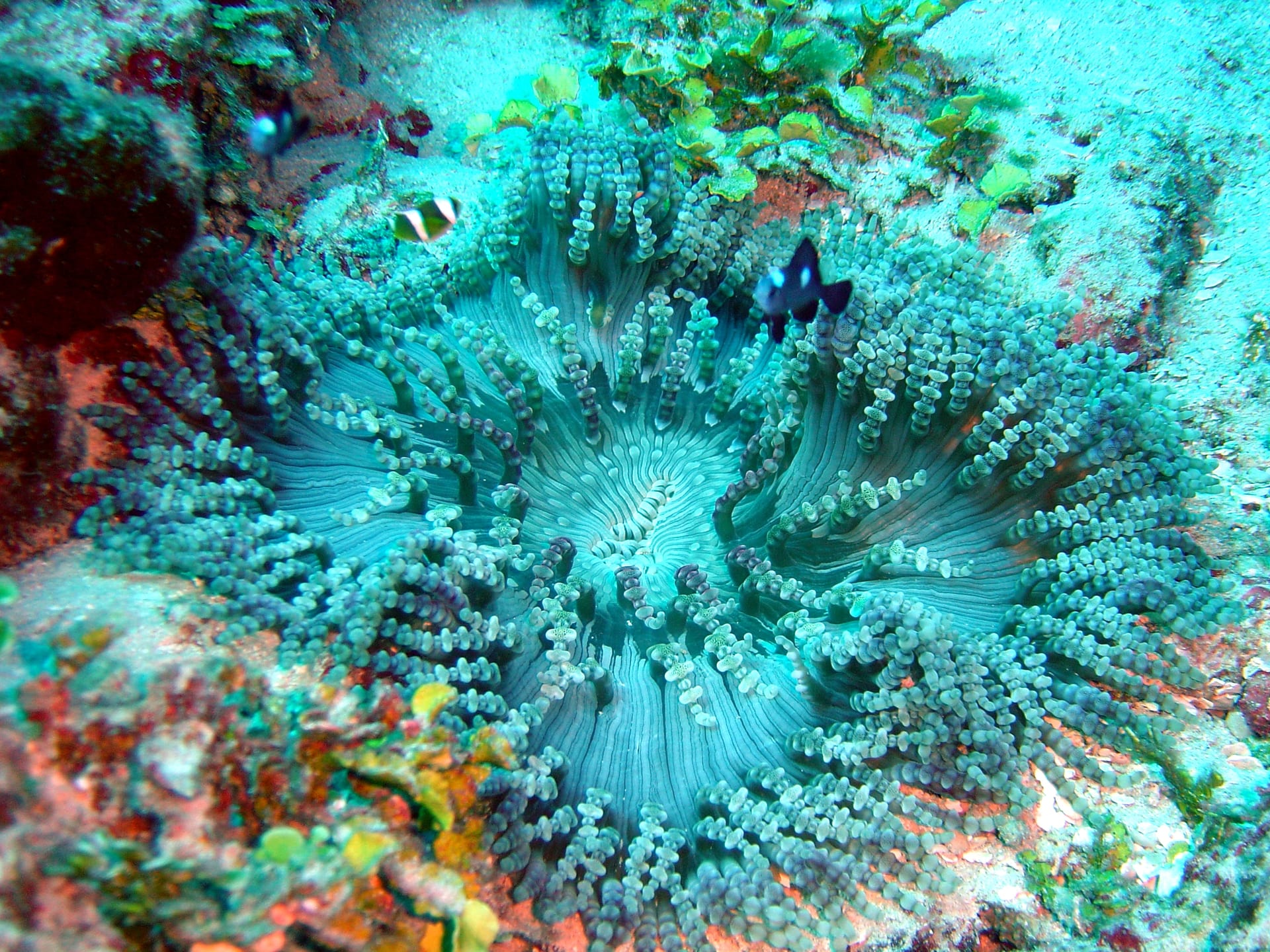
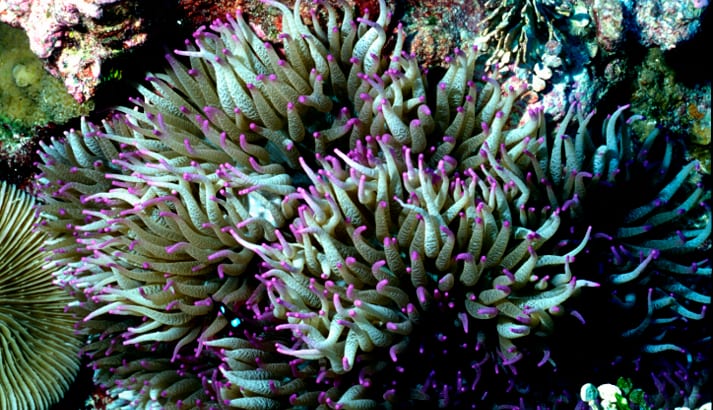
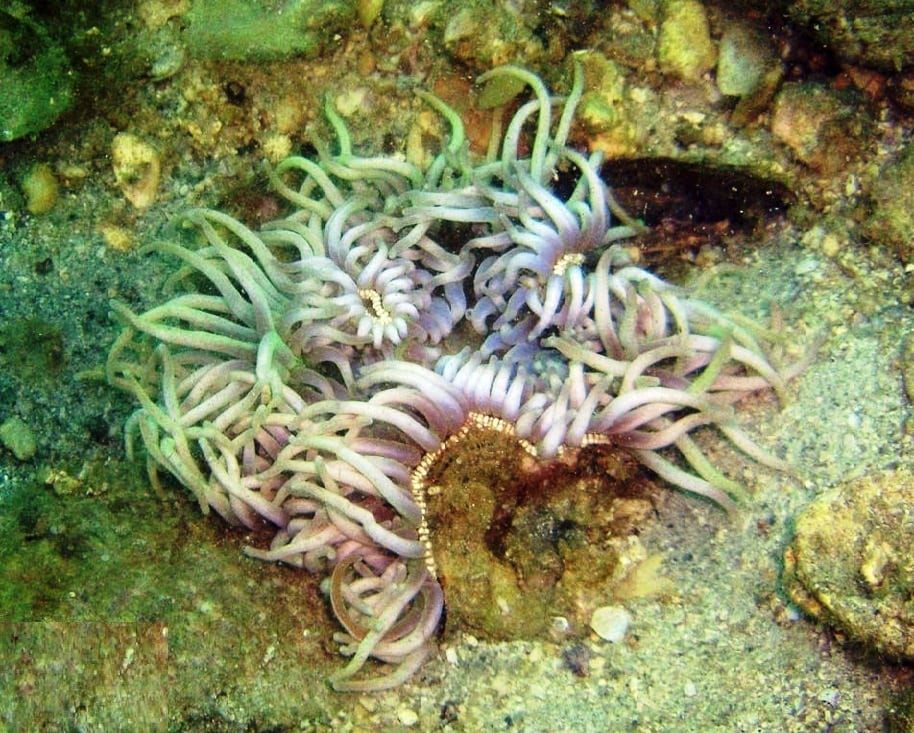
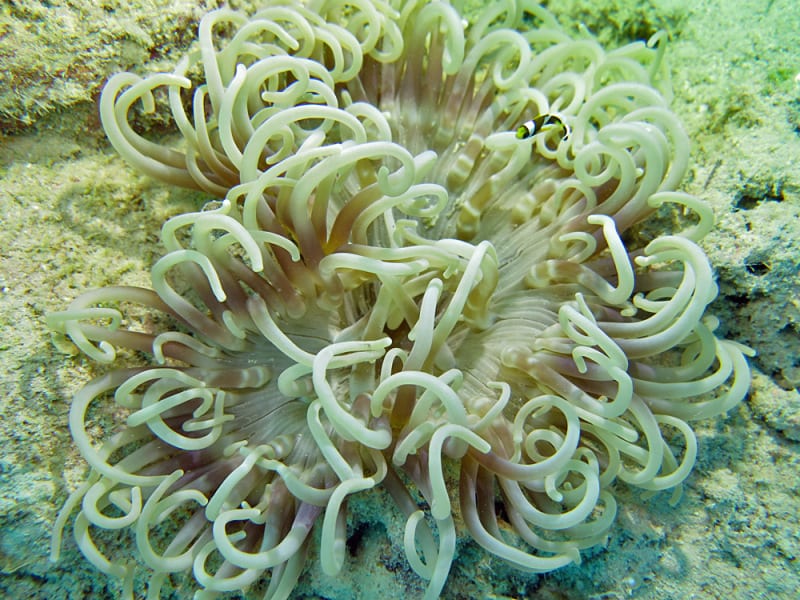
It has relatively few tentacles, all alike in size and colour, purplish-grey to brown, tapering evenly towards the tip and sometimes twisted into a corkscrew shape. The lower column is dull orange to bright red.
Difficulty
Intermediate
Temperature
22〜26℃
Diet
Nutrition from symbiotic zooxanthellae, supplemented about once a week with meaty foods such as fish, shrimp and clam.
About
Radianthus doreensis, known as the long tentacle anemone or corkscrew tentacle sea anemone, ranges from Japan south to the waters of New Guinea and northern Australia. It is commonly found on muddy bottoms at depths of 5 m or less, though SeaLifeBase records it to 15 m. It has relatively few tentacles, all alike in size and colour, purplish-grey to brown, sinuous and tapering evenly towards the tip, sometimes forming a corkscrew shape. The oral disc is also purplish-grey to brown, sometimes with a green cast, with white radial lines that sometimes extend onto the tentacles. It keeps its column buried in the sediment with only the oral disc at the surface; the lower column is dull orange to bright red and the upper part brownish, with rounded to ovoid verrucae in longitudinal rows. When disturbed, the tentacles either shrivel or stick to the hand, and the animal can retract entirely into the sediment. It hosts four species of anemonefish plus the threespot dascyllus.
Source: Wikipedia (CC BY-SA 4.0)
Temperature & humidity for the Long Tentacle Anemone
The ideal temperature for the Long Tentacle Anemone is 22〜26℃.
Basic Info
Origin
Japan south to the waters of New Guinea and northern Australia
Temperature
22〜26℃
Diet
Nutrition from symbiotic zooxanthellae, supplemented about once a week with meaty foods such as fish, shrimp and clam.
Care Guide
Care Specifications
- Water Temp.
- 22–26℃
- Specific Gravity
- 1.023–1.025
Light: Medium (PAR 50-150)Flow: MediumPlacement: Bottom
Sources: LiveAquaria (Long Tentacle Anemone) / SeaLifeBase
References & Sources
Edited & verified by: BreederDirect editorial team
The taxonomic, regulatory, and husbandry data on this page are compiled and verified against the authoritative primary sources below.
Taxonomy & Authority
Accepted name: Radianthus doreensis (Quoy & Gaimard, 1833)
Synonyms: Macrodactyla doreensis (Quoy & Gaimard, 1833), Actinia doreensis Quoy & Gaimard, 1833, Condylactis doreensis (Quoy & Gaimard, 1833)
Authority databases: WoRMS
Nomenclature follows global taxonomic authority databases.
Regulations & Conservation Status
Not CITES-listed
Sources: CITES Appendices (species not listed)
Regulations may change. Always verify the latest information with the relevant authorities.
Long Tentacle Anemone Listings
Loading latest listingsFind listings for this species