Long-Term Coral Tank Maintenance Guide | How to Keep It Stable for 3+ Years
We explain equipment replacement cycles, live rock management, sandbed refresh, and water quality trend monitoring.
Key Takeaways
We explain equipment replacement cycles, live rock management, sandbed refresh, and water quality trend monitoring.
Related Species
Even if a coral tank runs smoothly for the first six months after setup, unexplained issues can arise after a year or two. Long-term maintenance requires "creating systems to maintain stability." This article introduces concrete management methods for maintaining a stable coral tank for 3+ years. For emergency situations like sudden RTN or bleaching, it's also helpful to review the Coral Tank Emergency Response Manual.
Equipment Replacement Cycles
Aquarium equipment has a lifespan, and replacing it strategically before failure is key to long-term stability.
- Lighting (LED): LEDs gradually lose light output over 3-5 years. Measure with a PAR meter every six months; if it drops below 70% of the new value, it's time to replace. Even without bulb burnout, the wavelength spectrum changes, affecting coral coloration
- Protein Skimmer Pump: Impellers wear out in 1-2 years. If you notice weak air intake or odd noises, replacement is necessary. In most cases, just the impeller can be replaced
- Water Flow Pump: Magnetic models last 2-3 years, DC pumps 3-5 years. When flow weakens, detritus accumulates, causing water quality deterioration
- Heater: Replacement every 1-2 years is recommended. Failure occurs suddenly, so always keep a spare on hand
- RO/DI Membrane: Replace when the TDS of produced water reaches 5ppm or more. Usually 1-2 years, but varies greatly depending on tap water quality. Replace prefilters (sediment and carbon) every 3-6 months
- Tubing and Pipes: Silicone tubing hardens in 6 months to 1 year, and vinyl pipe connections deteriorate from salt creep. Conduct a comprehensive inspection once a year to check for cracks and looseness
Live Rock Management and Refresh
Live rock is the core of biological filtration, but over the years the porous structure can clog and filtration capacity declines.
- Detritus Accumulation: Organic sediment (detritus) collects in the crevices of live rock. Once a month during water changes, blow it away with a turkey baster or powerhead
- Partial Replacement: Replacing all rock at once collapses bacterial balance. It's recommended to replace 10-15% of the total with fresh live rock 1-2 times per year
- Use of Artificial Live Rock (Ceramic Rock): Recently, high-quality artificial live rock has become available. Using it mixed with natural live rock creates a highly sustainable filtration system
- Consideration for Cohabitant Invertebrates: If you keep animals like clams or soft corals suited for long-term care, be careful not to suddenly change water flow or lighting conditions during live rock replacement
- Coralline Algae Health Check: If purple or pink coralline algae is spreading healthily, it's a sign of good water quality and lighting. If bleaching or being replaced by green algae, environmental review is necessary
Sandbed Refresh
Bottom substrate is often overlooked, but it's an important management point for long-term maintenance.
- Thin Sandbed (1-2cm): Detritus tends to accumulate on the sand surface, so lightly siphon it during water changes. Add a thin layer of sand every six months to compensate for loss
- Thick Sandbed (DSB: 10cm or more): Denitrification occurs in the anaerobic layer, but hydrogen sulfide risk increases after 3-5 years. If there's an off odor or the sand is blackening, perform a partial replacement
- Bare Bottom as an Option: To prioritize long-term stability, bare bottom (no sand) is also effective. With no detritus accumulation site, maintenance is greatly simplified
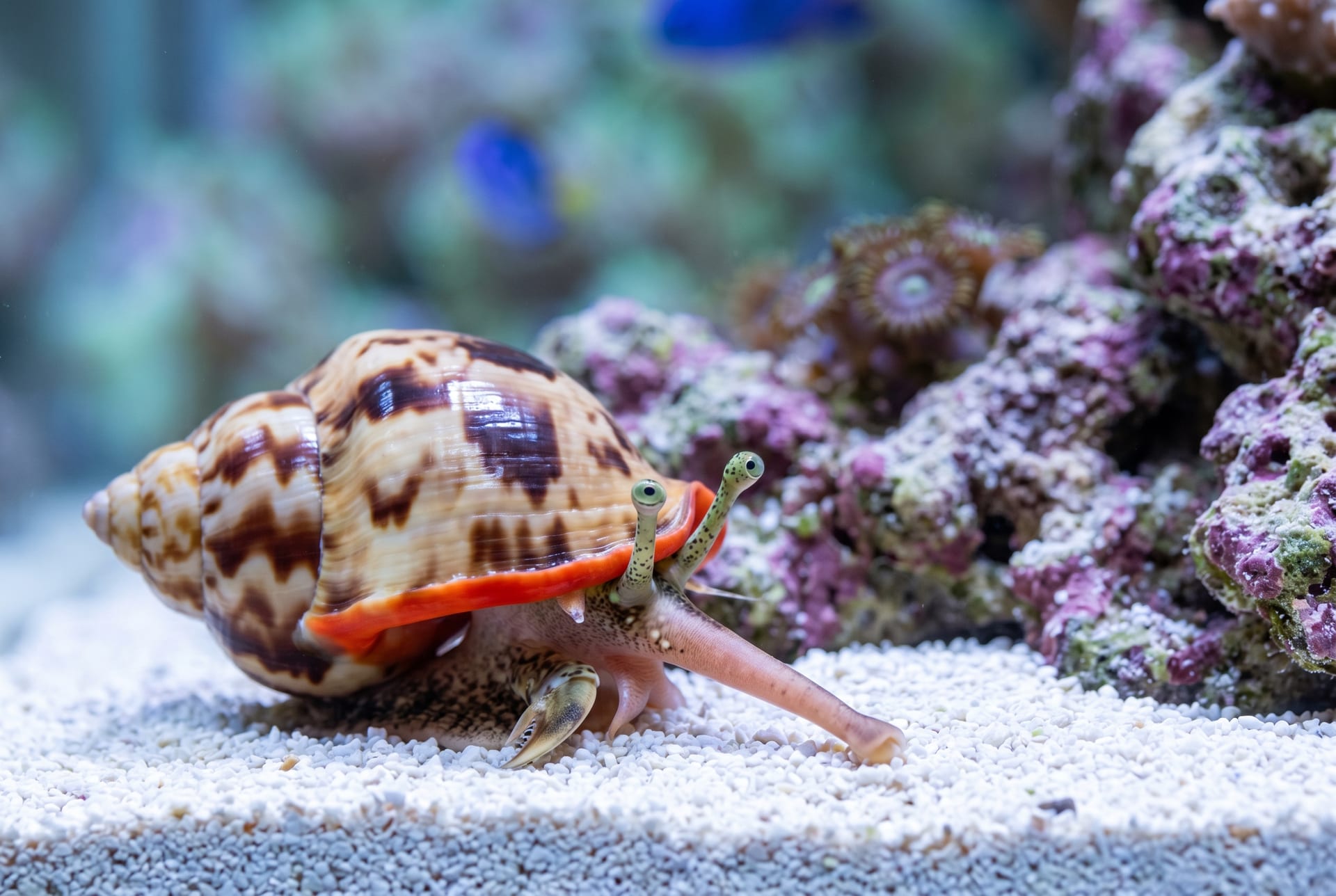
- Sand-Stirring Fauna: Turbo snails, margarita snails, and polychaete worms naturally stir the substrate. Regularly supplement cleaner animals
Recording and Analyzing Water Quality Trends
The most important aspect of long-term maintenance is grasping "trends in change" rather than single values.
- Parameters to Record: Record at minimum 7 items: calcium, alkalinity, magnesium, nitrate, phosphate, specific gravity, and temperature
- Measurement Frequency: Weekly is sufficient during stable periods. Measure every 2-3 days after introducing new corals or after equipment changes
- Use of Spreadsheets and Apps: Using apps like Aquarimate or Reef Alchemy Calculator to record data makes trends visible in graphs, enabling early detection of anomalies
- Inference from Consumption Rates: Alkalinity consumption rate reflects coral growth. If consumption rate suddenly changes, determine whether it's a good change (accelerated growth) or bad (bacterial bloom, etc.)
- Use of ICP-OES Testing: Once every 3-6 months, request detailed water quality analysis including trace elements via ICP-OES from an external lab. This reveals heavy metal contamination or trace element imbalances undetectable by standard test kits
Long-Term Review of Additives
As the tank matures, the required amounts of additives change.
- Increased Consumption with Coral Growth: As corals grow, consumption of calcium and alkalinity for skeleton formation increases. Recalculate addition amounts every six months
- Migration from Kalkwasser to Calcium Reactor: As corals increase, consider switching from manual addition or kalkwasser to a calcium reactor. It enables stable supply and suits long-term operation
- Trace Element Addition: Iodine, strontium, iron and other trace elements are supplemented through water changes, but if water change frequency is low, separate addition may be necessary. Always confirm deficiency via ICP testing before adding
- Activated Carbon and GFO Replacement: Replace activated carbon every 2-4 weeks, GFO (phosphate absorbent) every 1-2 months. Leaving exhausted adsorbents is forbidden as they begin releasing absorbed substances
Annual Maintenance Calendar
It's recommended to organize an annual schedule to implement planned maintenance.
- Weekly: Water quality testing (Ca, KH, Mg, NO3, PO4), glass algae cleaning, evaporation makeup check
- Monthly: 10-15% water change, detritus removal from live rock, carbon replacement, visual equipment inspection
- Every 3 Months: RO/DI prefilter replacement, skimmer disassembly cleaning, water flow pump cleaning (vinegar soak)
- Every 6 Months: ICP-OES testing, PAR measurement of lighting, partial live rock replacement, recalculation of addition amounts
- Annually: Heater replacement, comprehensive pipe inspection and replacement as needed, water flow pump impeller inspection
Enjoy Long-Term Coral Keeping with BreederDirect
At BreederDirect, you can purchase durable and beautiful corals suited for long-term care directly from breeders. The ability to ask breeders directly about rearing years and management methods is a unique advantage of direct sales. Bring home healthy individuals and aim for a beautiful reef tank that continues for years through planned maintenance.