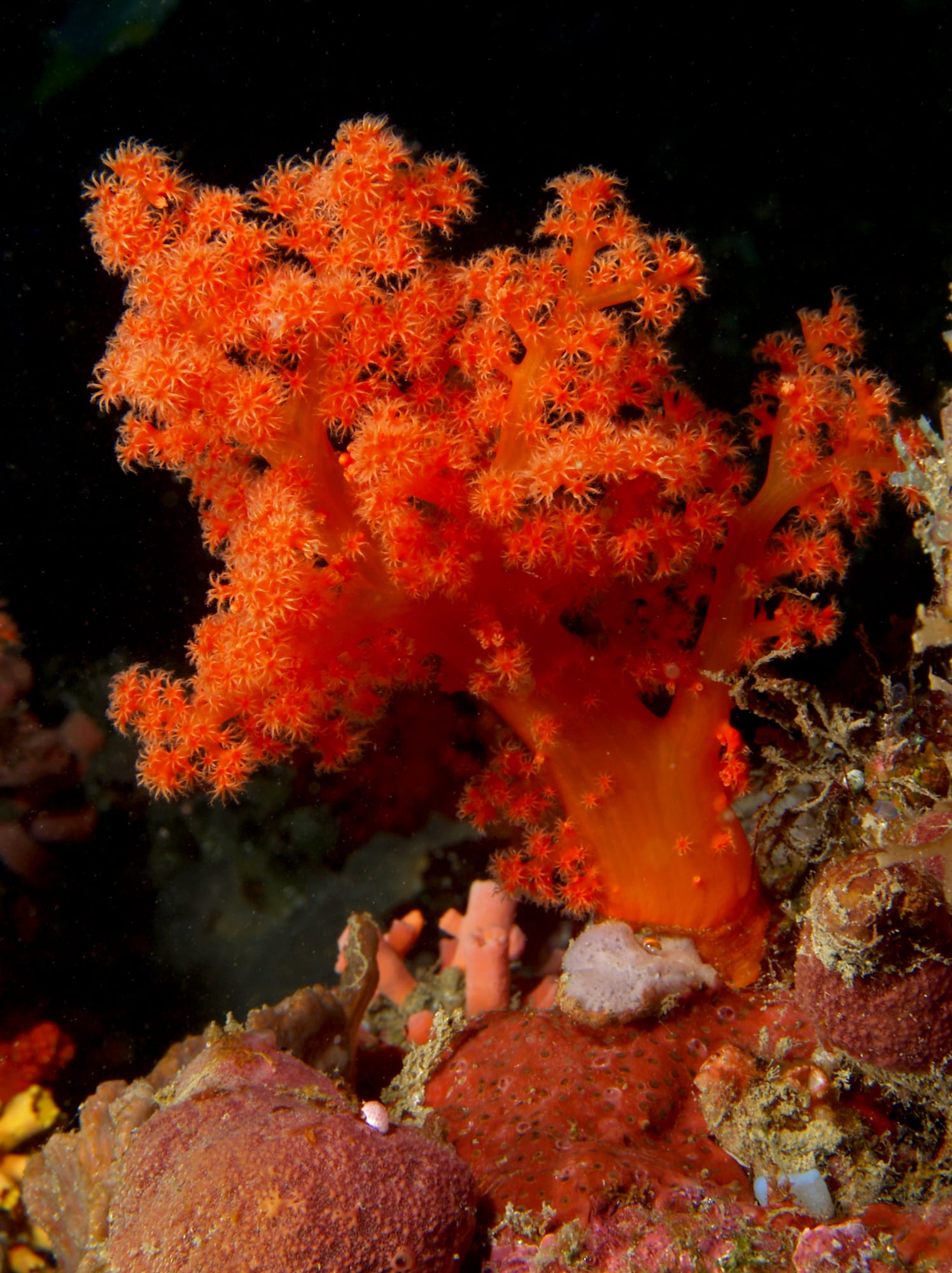
 © Nhobgood Nick Hobgood / CC BY-SA 3.0
Scleronephthya
Scleronephthya, known as "umi-ichigo" (sea strawberry) in Japanese, is a non-photosynthetic soft coral prized for its vivid red, orange, and white coloration. Compared to related Dendronephthya species, it forms shorter, more compact branches tipped with dense, cluster-like bundles of polyps. Because it lacks zooxanthellae, it cannot rely on light for nutrition and instead needs a constant supply of fine particulate food to thrive. This demanding feeding regimen makes it a challenging species best suited to experienced keepers who can maintain stable water quality and flow while feeding attentively.
View Scleronephthya encyclopedia →0% commission on your first sales!Register by September 30, 2026 and your first 2 sales are commission-free!
Breeder Wanted!
List on BreederDirect and sell directly to customers nationwide!
Br-Choku's 6 Transparency Standards
Our Breeder sellers disclose detailed care specs for all Coral listings. We prioritize Aquacultured/CB specimens, verify WYSIWYG photos, and provide difficulty ratings—avoiding wild-caught.
- Aquacultured
- WYSIWYG Photo
- Difficulty Disclosed
- Frag/Colony
- Care Info Included
- Trade name shown
Browse all 210 breeds
Difficulty
Verified breeders wanted for Coral
Breeders are signing up now ahead of launch. Subscribe to be notified when new listings go live.
Getting alerts is free with a member account. When new listings match your saved search, we'll notify you by email and in-app.
Browse other categories
Verified breeders (preview)
Scleronephthya key facts
- Care level
- Advanced
- Temperature
- 24〜26℃
- Diet
- Azooxanthellate and filter-feeding, needing a near constant supply of fine foods, phytoplankton above all.
- Lighting
- It has no zooxanthellae, so light is not needed; in the wild it attaches in dim places such as under overhangs and on cave ceilings. Under bright lighting algae settle on it and weaken the colony.
- Flow & Placement
- It grows where current is strong, so give it vigorous randomised flow and a position where suspended food keeps reaching the branches. Mounting it upside down under an overhang is closest to its natural posture.
- Water Temperature & Quality
- Water 24-26C, specific gravity 1.023-1.025 (salinity 33-35 ppt), pH 8.1-8.4, KH 8-12. Heavy feeding drives nutrients up, so run generous water changes and mechanical filtration.
- Feeding
- Success depends on feeding. AlgaeBarn notes that non-photosynthetic systems need large amounts of varied food across a range of particle sizes and recommends combinations that include live phytoplankton and bacterioplankton. Feeding several times a day, or dosing automatically, is the practical approach.
- Notes
- It is very demanding and long-term success is rarely reported; under-fed colonies shrink over weeks to months. Having no stony skeleton, it is not covered by the CITES coral listings.
About Scleronephthya
A guide to Scleronephthya (sea strawberry coral), a non-photosynthetic soft coral in red, orange, and white. This challenging species needs constant fine-particle feeding and suits experienced keepers.
7 things to know before welcoming a Scleronephthya
1A Non-Photosynthetic Species
Scleronephthya lacks zooxanthellae and does not photosynthesize. It relies on feeding rather than lighting for nutrition, which makes its care approach different from typical photosynthetic corals.
2Requires Constant Fine Feeding
Without zooxanthellae, it depends on frequent feedings of fine particulate food such as zooplankton. Gaps in feeding can gradually weaken the coral, so establishing a reliable feeding routine is essential.
3Cluster-Like Polyp Bundles
Its main appeal is the dense, cluster-like bundles of polyps that open at the branch tips. Compared to related Dendronephthya species, its branches are shorter and more compact, giving it a tidy overall shape.
4Water Flow and Quality Control
Frequent feeding tends to load the tank with extra nutrients, so consistent water flow is needed to distribute food evenly, alongside diligent water quality management.
5Vivid, Varied Coloration
Its standout feature is vivid coloration in shades of red, orange, and white. Since coloration varies between individuals, choosing one with your favorite hue is part of the enjoyment.
6A Species for Experienced Keepers
This coral is rated as suited to experienced keepers. Its demanding feeding routine and environmental requirements make it best attempted by those already comfortable with coral care.
7Before You Bring One Home
Before acquiring one, make sure you can consistently prepare and provide fine particulate food. Since feeding can shift water parameters, it also helps to have a habit of monitoring water quality in place.
Frequently asked questions about Scleronephthya
- Q.Can beginners keep Scleronephthya?
- A.It is considered a challenging species suited to experienced keepers. Since it lacks zooxanthellae and cannot photosynthesize, it needs frequent feedings of fine food, which requires practiced feeding management.
- Q.Does it need strong lighting?
- A.Since Scleronephthya is non-photosynthetic and lacks zooxanthellae, it doesn't rely on strong light for nutrition. If lighting is used for tankmates, it's best positioned away from very intense direct light.
- Q.What kind of food does it need?
- A.It requires frequent feedings of fine particulate food such as zooplankton to sustain a near-constant food supply. Long gaps between feedings can cause it to weaken.
- Q.How is it different from Dendronephthya species?
- A.Scleronephthya is closely related to Dendronephthya but forms shorter, more compact branches, with polyps opening in dense cluster-like bundles at the branch tips, giving it a tidier overall shape.
- Q.Are there any international trade regulations?
- A.Scleronephthya is not subject to CITES.
Useful tools for Scleronephthya care
Learn more about Scleronephthya in the encyclopedia
View Scleronephthya encyclopedia entry →
Care difficulty, lifespan, size and diet — all basics covered.
More in this category
Can't find the one you're looking for?
Post your wishes for free and breeders with matching animals will contact you with introductions.