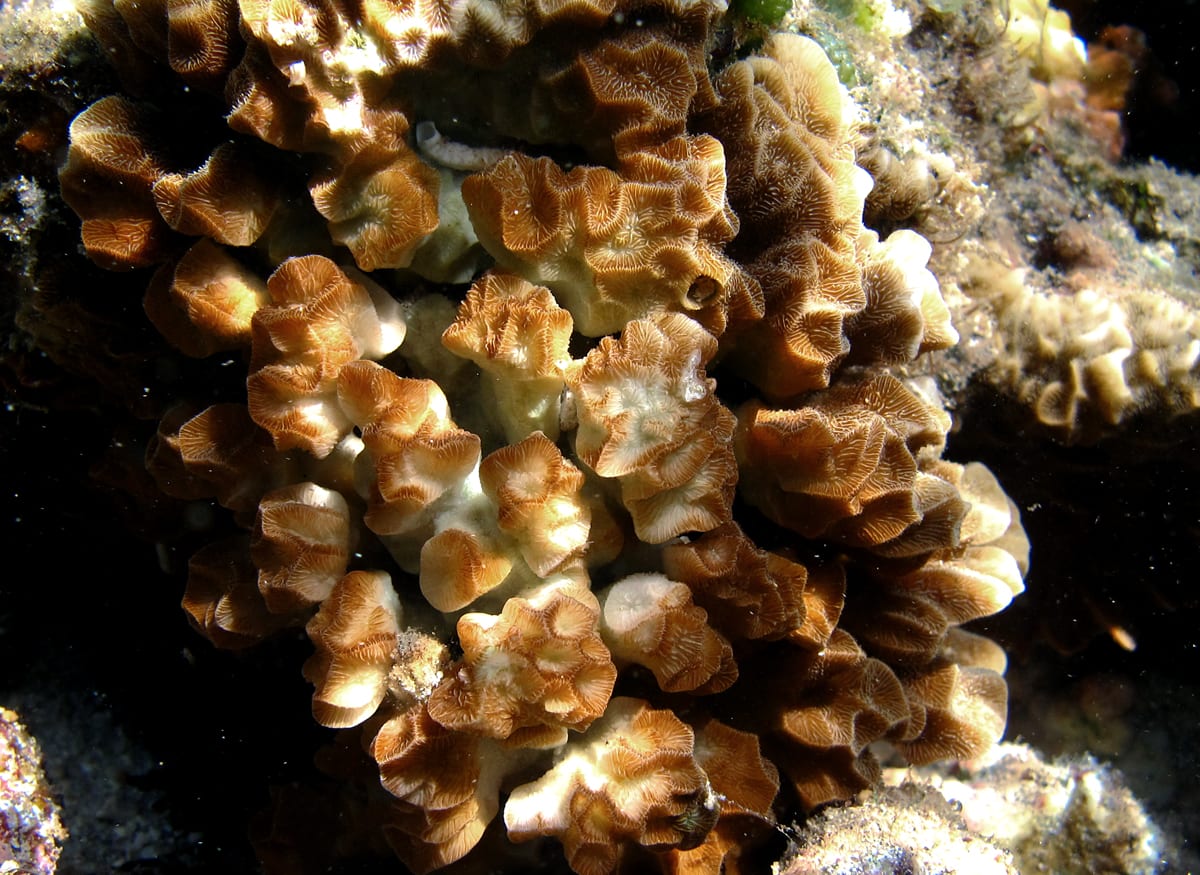
 © Philippe Bourjon / CC BY-SA 3.0
Psammocora
Psammocora, known in the trade as "Samokora," is a reef-building coral whose colony surface looks almost dusted with fine sand — a texture created by corallites so small they barely stand out to the naked eye. Colony shape varies widely by species, from encrusting mats that hug the rock to columnar or leaf-like forms, giving keepers a surprisingly diverse range of looks within a single genus. Its understated color and distinctive surface texture make it a quietly striking presence in a reef tank. Because it calls for some hands-on reef-keeping experience, it's best suited to intermediate keepers looking to add variety to their collection.
View Psammocora encyclopedia →0% commission on your first sales!Register by September 30, 2026 and your first 2 sales are commission-free!
Breeder Wanted!
List on BreederDirect and sell directly to customers nationwide!
Br-Choku's 6 Transparency Standards
Our Breeder sellers disclose detailed care specs for all Coral listings. We prioritize Aquacultured/CB specimens, verify WYSIWYG photos, and provide difficulty ratings—avoiding wild-caught.
- Aquacultured
- WYSIWYG Photo
- Difficulty Disclosed
- Frag/Colony
- Care Info Included
- Trade name shown
Browse all 210 breeds
Difficulty
Verified breeders wanted for Coral
Breeders are signing up now ahead of launch. Subscribe to be notified when new listings go live.
Getting alerts is free with a member account. When new listings match your saved search, we'll notify you by email and in-app.
Browse other categories
Verified breeders (preview)
Psammocora key facts
- Care level
- Intermediate
- Size
- Colonies to several tens of cm, varying by species
- Temperature
- 24〜27℃
- Diet
- Mainly nutrition from symbiotic zooxanthellae, supplemented with powdered coral foods and phytoplankton.
- Lighting
- Stable under moderate light. A sudden jump to very strong light bleaches it, so start at reduced intensity and raise it gradually.
- Flow & Placement
- Give moderate randomised flow and place it at mid-height on the rockwork. Encrusting species will grow over neighbours, so leave clearance.
- Water Temperature & Quality
- Water 24-27C, specific gravity 1.023-1.025 (33-35 ppt), KH 8-12, calcium 400-450 ppm, magnesium 1280-1350 ppm. Sudden swings in alkalinity are the most common cause of tissue recession.
- Feeding
- Most of its nutrition comes from photosynthesis by its zooxanthellae. Powdered coral foods and phytoplankton can be offered as a supplement, but stable light and water chemistry matter more than feeding.
- Notes
- This profile covers the genus Psammocora as a whole, and growth form and light requirement differ between species. As scleractinians they fall under the blanket CITES Appendix II listing and trade requires permits.
About Psammocora
Psammocora ("Samokora") is a reef coral with a sand-textured surface and tiny corallites; colony shape (encrusting, columnar, or leaf-like) varies by species. Best suited to intermediate keepers.
7 things to know before welcoming a Psammocora
1Its Texture Is the Highlight
The corallites are extremely small, so unlike many corals it doesn't rely on prominent polyps for visual interest. Instead, the finely textured, sand-dusted surface of the colony is the main attraction, shifting in appearance depending on how light falls across it.
2Colony Shape Varies by Species
Within the same genus, some colonies grow as encrusting mats over rock, others rise as columns, and still others spread as leaf-like plates. Checking which growth form a specific specimen has before buying makes it much easier to picture how it will fit into your layout.
3An Intermediate-Level Coral
This species is generally considered suitable for keepers who already have some grounding in reef basics — water quality, lighting, and flow management. If this would be your first coral, it's worth building experience with easier species first before adding it.
4Placement Should Match Its Shape
Encrusting specimens tend to do well tucked into rock crevices or at the base of the reefscape, while columnar or leaf-like forms benefit from open space around them as they grow. Planning your layout with future spread in mind helps the colony develop well.
5Watch for Signs of Bleaching
Stress or declining water quality can cause the coral's surface to pale or turn whitish around the corallites. Knowing its normal coloration helps you catch changes early, so you can review water parameters and lighting promptly if something looks off.
6Adjust Flow and Light Gradually
Excessively strong flow or lighting can damage its delicate surface tissue. After placing a new colony, it's best to observe it for a while and fine-tune flow and light based on how its color and surface condition respond.
7Give It Time to Settle In
The stress of shipping and acclimation can make its color and surface texture look slightly different right after arrival. Keep water conditions stable for the first few days to weeks, and avoid handling or moving it unnecessarily so it can settle in.
Frequently asked questions about Psammocora
- Q.What does "Samokora" mean?
- A.Samokora is the trade name used for corals in the genus Psammocora. It derives from part of the scientific name and is the term commonly used by shops and hobbyist references.
- Q.Is it suitable for beginners?
- A.Psammocora (Samokora) is generally considered an intermediate-level coral. It's best to get comfortable with reef-keeping basics before adding it to your tank.
- Q.Do all colonies have the same shape?
- A.No — growth form varies by species, including encrusting, columnar, and leaf-like shapes. It's worth checking which form a specific specimen has before you buy it.
- Q.Is it listed under CITES?
- A.Psammocora is listed in CITES Appendix II. International trade requires a permit from the exporting country, but as far as CITES is concerned, no registration is needed to buy or sell individuals already legally in Japan.
- Q.How large does it grow?
- A.Colonies typically reach a diameter of several tens of centimeters, though the exact size depends on the species. It's worth factoring in future growth when choosing a placement.
Useful tools for Psammocora care
Learn more about Psammocora in the encyclopedia
View Psammocora encyclopedia entry →
Care difficulty, lifespan, size and diet — all basics covered.
More in this category
Can't find the one you're looking for?
Post your wishes for free and breeders with matching animals will contact you with introductions.