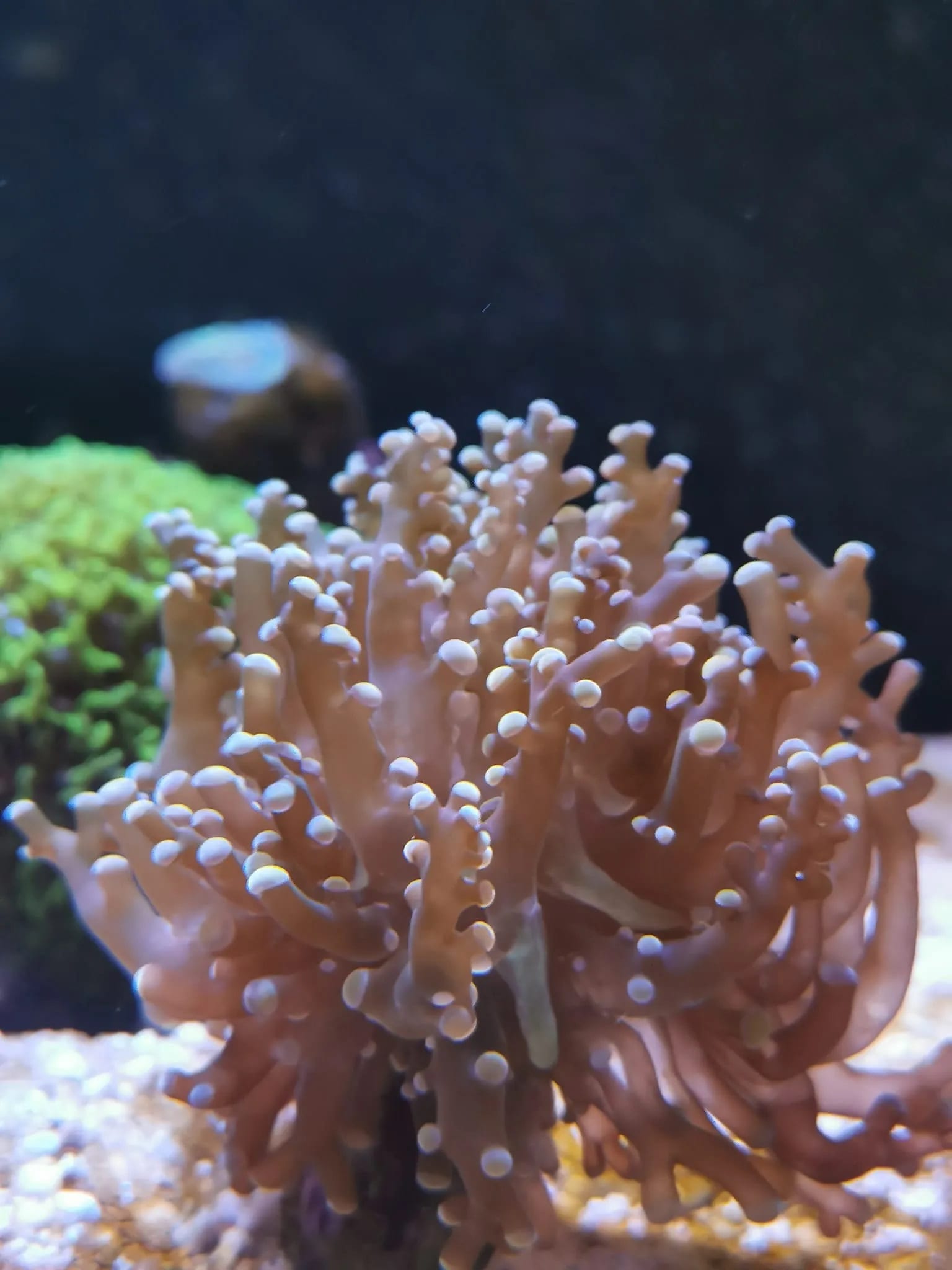
 © Laszlo / CC BY-SA 4.0
Yaeyama Euphyllia
Yaeyama Euphyllia was first described in 1980 by Shohei Shirai, a stony coral in the Euphylliidae family whose species name honors Japan's Yaeyama Islands. It belongs to the same group as Hammer and Frogspawn corals, but stands apart with short, densely packed tentacles that give it a distinctive, textured look as the polyps sway in the flow. It's seen less often in the trade than other Euphyllia species, making it something of a collector's favorite. Rated as suitable for intermediate keepers, it generally follows the same care approach used for Hammer and Frogspawn corals, so aquarists with experience keeping those should find it approachable.
View Yaeyama Euphyllia encyclopedia →0% commission on your first sales!Register by September 30, 2026 and your first 2 sales are commission-free!
Breeder Wanted!
List on BreederDirect and sell directly to customers nationwide!
Br-Choku's 6 Transparency Standards
Our Breeder sellers disclose detailed care specs for all Coral listings. We prioritize Aquacultured/CB specimens, verify WYSIWYG photos, and provide difficulty ratings—avoiding wild-caught.
- Aquacultured
- WYSIWYG Photo
- Difficulty Disclosed
- Frag/Colony
- Care Info Included
- Trade name shown
Browse all 210 breeds
Difficulty
Verified breeders wanted for Coral
Breeders are signing up now ahead of launch. Subscribe to be notified when new listings go live.
Getting alerts is free with a member account. When new listings match your saved search, we'll notify you by email and in-app.
Browse other categories
Verified breeders (preview)
Yaeyama Euphyllia key facts
- Care level
- Intermediate
- Temperature
- 24〜27℃
- Diet
- Photosynthesis via zooxanthellae plus zooplankton feeding
- Lighting
- Moderate LED lighting; avoid abrupt changes in intensity and acclimate gradually.
- Flow & Placement
- Gentle low to moderate flow; direct jets damage the tentacles.
- Water Temperature & Quality
- Keep 24-27 C with KH 7-12 and calcium 400-450 ppm, held stable.
- Feeding
- Feed zooplankton or pellets once or twice a week for better growth and colour.
- Notes
- Sweeper tentacles sting neighbours. As a scleractinian it is CITES Appendix II.
About Yaeyama Euphyllia
Yaeyama Euphyllia is a Euphylliidae stony coral described in 1980, known for its short, densely packed tentacles and limited trade availability. Suited to intermediate keepers using Hammer/Frogspawn-style care.
7 things to know before welcoming a Yaeyama Euphyllia
1Short, Densely Packed Tentacles
Yaeyama Euphyllia is known for its short tentacles that sit closely packed together, giving it a texture unlike other Euphyllia species. Watching the tentacles sway gently in the flow is one of the pleasures of keeping this coral.
2Care Follows Hammer/Frogspawn
General husbandry is said to follow the same approach used for Hammer and Frogspawn corals. If you've already kept those species, you'll likely find this one approachable using similar routines.
3Rated for Intermediate Keepers
This species is rated as suitable for intermediate keepers. Some background in basic coral husbandry and water quality management helps keep it stable long-term.
4Less Common in the Trade
Within the Euphyllia family, this species is said to appear less often than other members. Since availability can be limited, it helps to have your setup and care plan ready before you find one.
5Give Tentacles Room to Extend
Like other Euphyllia corals, extended tentacles can irritate neighboring corals they come into contact with. Leave enough space between this coral and its neighbors when choosing a placement.
6Adjust Flow and Lighting
Because the tentacles sit close together, flow that's too strong can keep them closed, while flow that's too weak can let debris accumulate. Watch how the polyps open after placement and fine-tune flow and lighting accordingly.
7Acclimate Carefully After Arrival
Newly arrived specimens are stressed from transport, so a slow, careful acclimation and a calm environment afterward are important. Keep an eye on its condition for the first few days before settling into a feeding routine.
Frequently asked questions about Yaeyama Euphyllia
- Q.How difficult is it to keep Yaeyama Euphyllia?
- A.It's rated as suitable for intermediate-level keepers. Having some prior experience with coral husbandry makes it easier to manage water quality and lighting for this species.
- Q.If I already keep Hammer coral, can I care for this the same way?
- A.Its care requirements are said to follow the same approach used for Hammer and Frogspawn corals. If you have experience with those species, you should be able to apply a similar setup here.
- Q.Is it safe to keep alongside other corals in the same tank?
- A.Euphyllia species can extend their tentacles and irritate neighboring corals they touch, so it's recommended to leave adequate spacing around this coral. It's worth planning placement carefully when first arranging your tank.
- Q.Is Yaeyama Euphyllia hard to find?
- A.It's said to appear less often in the trade than other Euphyllia species. Since availability can be limited, it helps to have your tank ready in advance so you can bring one home when you find a healthy specimen.
- Q.What's the story behind its name and key features?
- A.It was described in 1980 by Shohei Shirai, with its species name derived from Japan's Yaeyama Islands. Its short, densely packed tentacles are what set it apart most clearly from other Euphyllia species.
Useful tools for Yaeyama Euphyllia care
Learn more about Yaeyama Euphyllia in the encyclopedia
View Yaeyama Euphyllia encyclopedia entry →
Care difficulty, lifespan, size and diet — all basics covered.
More in this category
Can't find the one you're looking for?
Post your wishes for free and breeders with matching animals will contact you with introductions.