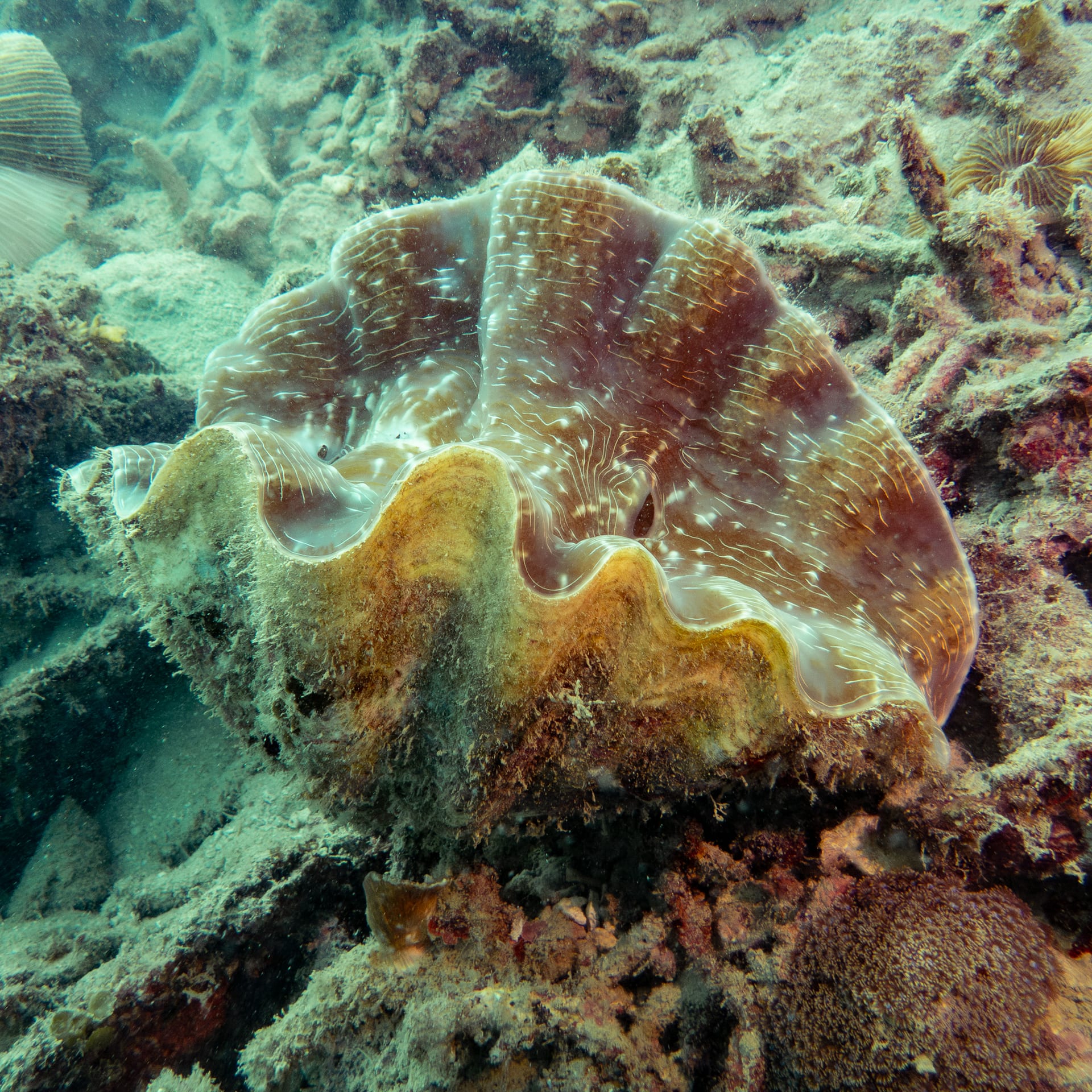
 © Pierre Pericard / CC BY 4.0
China Clam (Hippopus Porcellanus)
China Clams are a large species of giant clam found only in waters around the Philippines. They closely resemble the Shagou clam, but their shells are thinner with a translucent, porcelain-like quality — the source of their English name, "China Clam." At full maturity, shell length can reach up to 41cm, giving them real presence in a display tank. Their mantles can show striking coloration, but keeping one requires strong lighting and long-term water stability, making this a species best suited to experienced aquarists.
View China Clam (Hippopus Porcellanus) encyclopedia →0% commission on your first sales!Register by September 30, 2026 and your first 2 sales are commission-free!
Breeder Wanted!
List on BreederDirect and sell directly to customers nationwide!
Br-Choku's 6 Transparency Standards
Our Breeder sellers disclose detailed care specs for all Coral listings. We prioritize Aquacultured/CB specimens, verify WYSIWYG photos, and provide difficulty ratings—avoiding wild-caught.
- Aquacultured
- WYSIWYG Photo
- Difficulty Disclosed
- Frag/Colony
- Care Info Included
- Trade name shown
Browse all 210 breeds
Difficulty
Verified breeders wanted for Coral
Breeders are signing up now ahead of launch. Subscribe to be notified when new listings go live.
Getting alerts is free with a member account. When new listings match your saved search, we'll notify you by email and in-app.
Browse other categories
Verified breeders (preview)
About China Clam (Hippopus Porcellanus)
China Clam (Hippopus porcellanus) is a large giant clam growing to a shell length of up to 41cm, known for its thin, porcelain-like translucent shell. Native to waters around the Philippines and listed as Vulnerable by the IUCN, it's best suited to experienced keepers.
7 things to know before welcoming a China Clam (Hippopus Porcellanus)
1Strong Lighting Is Essential
China Clams host photosynthetic algae in their tissue and get much of their nutrition from light. Your tank needs a powerful light source that runs consistently for long hours.
2Stable Water Quality Is Critical
These clams are sensitive to sudden water quality swings and need a steady supply of calcium and strontium to support shell growth. Consistent, attentive water management is essential.
3Grows Up to 41cm
Shell length can reach up to 41cm at maturity, so even when bringing home a small specimen, plan your tank size around its eventual full-grown size. A cramped tank makes long-term care difficult.
4Keep Its Spot Fixed
Once settled, avoid moving the clam and place it securely on sand or live rock where it won't tip over. Frequent relocation causes stress and can damage the shell.
5Copper Medications Are Off-Limits
Clams are highly sensitive to copper, so any tank treated with copper-based medication is unsafe for them. Keep a separate treatment tank if other tankmates need medicating.
6Protect the Mantle
Be cautious mixing China Clams with fish that nip at mantle tissue or predators like mantis shrimp. Research tankmate compatibility carefully before adding anything new.
7Suited to Experienced Keepers
With a range limited to waters around the Philippines and an IUCN Vulnerable listing, China Clams are considered an advanced-level species. Adequate knowledge and experience are recommended before bringing one home.
Frequently asked questions about China Clam (Hippopus Porcellanus)
- Q.Is this species suitable for beginners?
- A.China Clams require strong, consistent lighting and stable water parameters, making them an advanced-level species. It's best to gain experience with corals or other marine invertebrates before keeping one.
- Q.Do I need to feed it?
- A.Since it gets most of its nutrition from photosynthetic algae living in its tissue, feeding generally isn't required. Providing strong, stable lighting is the most important part of its care.
- Q.How big does it get?
- A.Shell length can reach up to 41cm at maturity. You'll want to choose your tank size with that eventual size in mind.
- Q.Can it live with other tankmates?
- A.Avoid pairing it with fish that nip at the mantle or predators like mantis shrimp that prey on clams. Always research compatibility before adding new tankmates.
- Q.Is this species regulated under CITES?
- A.China Clams are not subject to CITES.
Useful tools for China Clam (Hippopus Porcellanus) care
Learn more about China Clam (Hippopus Porcellanus) in the encyclopedia
View China Clam (Hippopus Porcellanus) encyclopedia entry →
Care difficulty, lifespan, size and diet — all basics covered.
More in this category
Can't find the one you're looking for?
Post your wishes for free and breeders with matching animals will contact you with introductions.